Imagine a world where your car's braking system is controlled by code written in seconds by an algorithm, not years by a human. If that code has a bug, the consequences are physical, not just digital. This is the reality facing engineers today. As AI code generation becomes standard, we face a critical gap: we can produce code faster than we can check it. The solution isn't just better coding; it's building a layer of trust through verification, provenance, and watermarking. These three pillars are transforming how we ensure that machine-written logic is safe, traceable, and accountable.
Why Traditional Code Review Is Failing
The core problem is volume. OpenAI reported in late 2025 that their systems handle over 100,000 external pull requests per day. When you add in internal development, the sheer amount of AI-generated code exceeds the capacity of human oversight. It’s impossible for a team to manually inspect every line of code produced by a Large Language Model (LLM) in real-time. This creates a "black box" scenario where decisions are made without clear reasoning paths, leading to subtle bugs that traditional static analysis might miss because they don't violate syntax rules but break logical intent.
Human reviewers are tired. Studies show that after reviewing a few hundred lines, attention drops significantly. AI doesn't get tired, but it makes probabilistic errors. It might write code that looks correct but fails under specific edge cases. To fix this, we need automated systems that don't just look at the code, but prove its behavior. This shift from "reviewing" to "verifying" is the foundation of trustworthy AI for code.
Verification: From Guessing to Proving
Formal verification is the mathematical backbone of this new era. Unlike unit tests, which only check if code works in known scenarios, formal methods derive guarantees through deduction on fully specified rule-sets. Tools like TrustInSoft Analyzer use this approach to provide mathematically proven memory safety. If the tool says the code is safe, it is safe-there is no ambiguity. This is crucial for safety-critical applications like medical devices or autonomous vehicles, where a 99% success rate isn't good enough.
However, formal methods have historically been slow and complex. That’s changing. New techniques like Zero-Knowledge Proofs (ZKPs) are entering the scene. Companies like Provably.ai are using ZK protocols to allow agents to prove the correctness of SQL computations in less than two seconds. This means you can verify that a database query returned the right data without revealing the data itself. It’s fast, private, and cryptographically sound. For developers, this shifts the burden from "trust me" to "here is the proof."
Provenance: Knowing Where Code Comes From
If you find a bug in production, who is responsible? Was it the human developer who prompted the AI? Or the AI model itself? This is where Code provenance comes in. Provenance tracks the lineage of code artifacts. It answers questions like: Which model version generated this function? What was the prompt? Did a human modify it afterward? Without this trail, debugging AI-generated code is like solving a crime with no witnesses.
GitHub’s updated documentation in January 2026 emphasizes context verification as a key step in reviewing AI code. They recommend checking if the code fits the repository's existing patterns and dependencies. But manual tracking is tedious. Modern CI/CD pipelines are now integrating metadata tags that automatically log the origin of each commit. If a bug appears, you can trace it back to the specific inference run. This accountability is essential for legal compliance, especially under the EU AI Act, which requires appropriate technical measures to address risks in critical infrastructure.
Watermarking: The Digital Fingerprint
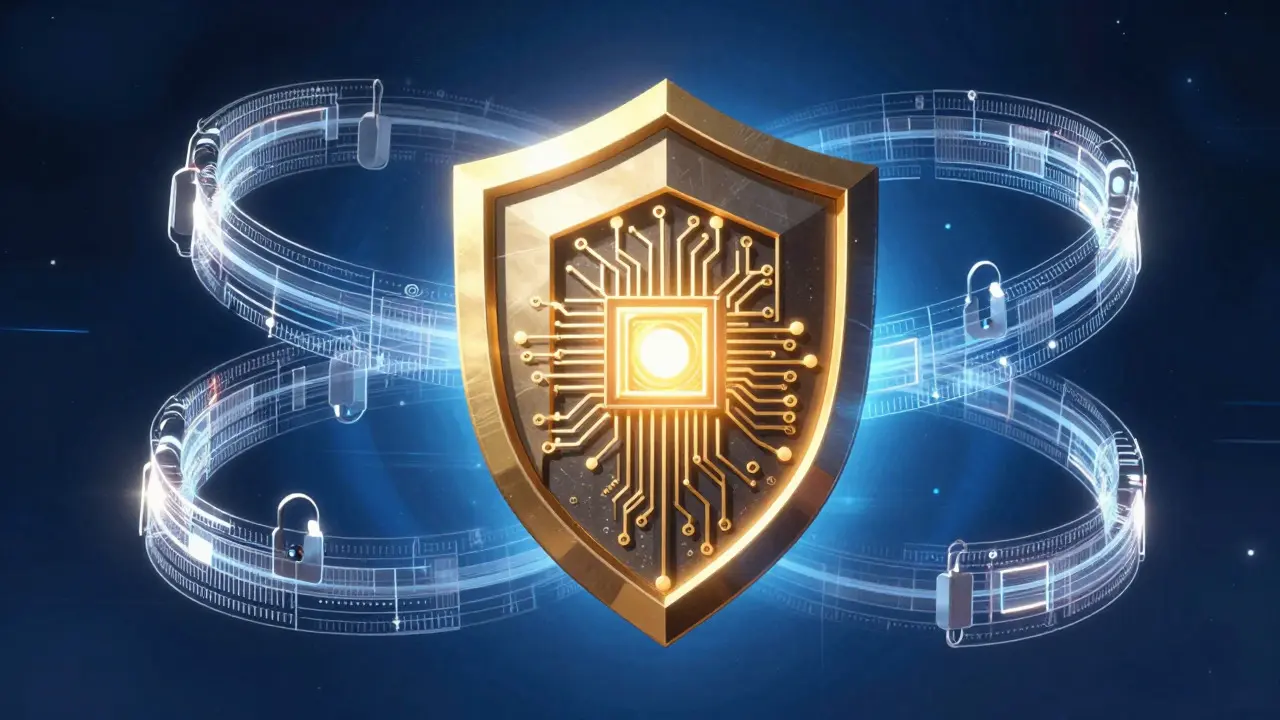
What if you could tell instantly that a piece of code was written by an AI? Code watermarking does exactly that. Just as images can be watermarked to detect copyright infringement, code can be embedded with subtle statistical signatures. These watermarks don't change the functionality of the code but alter the probability distribution of token selection during generation. When you scan the code, you can detect these patterns and confirm its AI origin.
This is vital for intellectual property disputes and quality control. If a competitor claims to have written a proprietary algorithm, but the code contains a watermark from a public LLM, the claim falls apart. Watermarking also helps in auditing. If a company mandates that all security-critical code must be human-reviewed, watermarks help identify which parts of the codebase require extra scrutiny. It’s a lightweight, non-intrusive way to maintain transparency in a hybrid human-AI workflow.
Comparing the Approaches
Not all verification tools are created equal. Some prioritize speed, others accuracy, and some mathematical rigor. Here is how the leading approaches stack up in practice:
| Mechanism | Primary Goal | Speed/Latency | Best Use Case |
|---|---|---|---|
| Formal Verification | Mathematical Proof of Correctness | Slow (Minutes to Hours) | Safety-critical systems (Avionics, Medical) |
| ZK Proofs | Cryptographic Verification of Computation | Fast (< 2 Seconds) | Database queries, Financial transactions |
| Static Analysis | Detecting Common Bugs/Vulnerabilities | Medium (Seconds) | General application development |
| Watermarking | Identifying AI Origin | Near Instant | IP Protection, Audit Trails |
Notice the trade-off between rigor and speed. Formal verification gives you certainty but takes time. ZK proofs give you cryptographic assurance quickly but are currently limited to specific types of computations. Static analysis is fast and easy to integrate but misses deep logical errors. A robust strategy often combines these layers: use static analysis for daily checks, ZK proofs for critical data operations, and formal verification for the core safety logic.

Implementation Challenges and Real-World Impact
Adopting these technologies isn't plug-and-play. GitHub’s survey in January 2026 found that 63% of developers struggle with integrating new verification tools into existing workflows. The learning curve is steep. Teams report needing 15-20 hours of training just to understand how to interpret the output of advanced review tools. Furthermore, false positives remain a headache. In Reddit discussions, 28% of users complained about spending 15-20 minutes dismissing irrelevant alerts. This friction can lead to tool abandonment, rendering the safety net useless.
Despite these hurdles, the impact is measurable. Developers implementing structured review processes report 40% fewer production bugs in AI-generated code. In financial services, early adopters of ZK verification report 99.98% accuracy for SQL queries. The market is responding too. Gartner predicts that by 2028, 90% of enterprise AI code generation will require integrated verification solutions. The question is no longer *if* you should verify AI code, but *how* to do it efficiently.
Future Trajectory: Smarter, Faster, Integrated
Where is this heading? The next frontier is real-time verification. Currently, most checks happen post-generation. Future models will likely generate code and verify it simultaneously, correcting errors before they even reach the editor. TrustInSoft is developing AI-specific formal verification templates expected in Q2 2026, aiming to reduce implementation time by 40%. Meanwhile, Provably.ai plans to extend ZK protocols to JavaScript and Python environments by Q3 2026, moving beyond databases into general application logic.
We are moving toward a state where trust is built-in, not bolted-on. The code will carry its own passport: a watermark proving its origin, a provenance log detailing its history, and a cryptographic proof confirming its behavior. For developers, this means less time worrying about hidden bugs and more time focusing on innovation. The era of blind trust in AI code is ending. Welcome to the age of verified intelligence.
Is formal verification necessary for all AI-generated code?
No. Formal verification is resource-intensive and best reserved for safety-critical systems like medical devices or autonomous vehicles. For general web applications, a combination of static analysis, unit testing, and lightweight cryptographic checks is usually sufficient and more cost-effective.
How does code watermarking work without breaking the code?
Watermarking works by subtly biasing the probability of certain tokens during the generation process. The resulting code is still syntactically valid and functional, but the statistical pattern of token choices deviates slightly from random chance, creating a detectable signature that proves AI origin.
What is the main advantage of Zero-Knowledge Proofs in code verification?
The main advantage is speed and privacy. ZKPs allow you to verify that a computation (like a database query) was executed correctly without revealing the underlying data or the full computation steps. This enables verification in under two seconds, making it feasible for real-time applications.
Can AI verify its own code effectively?
Yes, but with caveats. Using a different, larger model to review the output of a smaller generator has shown high effectiveness, catching many high-severity issues. However, because both are probabilistic, there is always a risk of shared blind spots. Therefore, AI verification should complement, not replace, deterministic checks like formal methods or rigorous testing.
How long does it take to implement these verification tools?
Implementation times vary. Basic static analysis integration can take days. More complex systems involving formal methods or ZK proofs typically require 3-6 months for enterprise adoption, including tuning, team training, and workflow integration. Expect a significant initial investment in time and expertise.