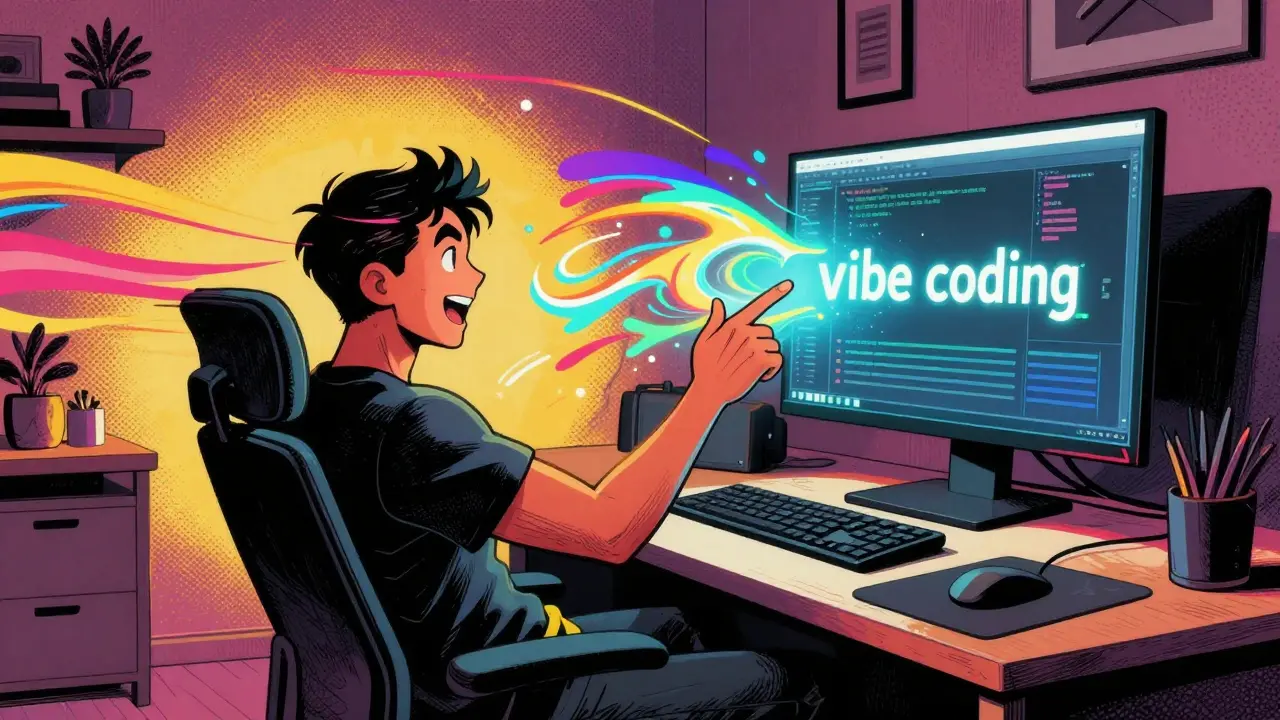
Imagine building a full-scale application without writing a single line of syntax, just by describing the "feeling" and flow of the app. Now imagine a different scenario where you give a high-level goal to a digital employee, and it spends the next four hours planning, coding, testing, and fixing bugs while you grab coffee. These aren't far-off fantasies; they are the two dominant ways we interact with AI today. Choosing between Agentic Systems and Vibe Coding isn't just about picking a tool-it's about deciding how much of your creative control you're willing to trade for raw speed.
The Intuitive Flow of Vibe Coding
If you've used Cursor is an AI-native code editor that allows developers to iterate on software through natural language conversation or GitHub Copilot to quickly spin up a prototype, you've already experienced vibe coding. This approach is all about a conversational, human-in-the-loop workflow. You aren't managing a project; you're "vibing" with the AI, prompting it to make changes and immediately seeing the result. It's an intuitive dance where the developer steers the ship in real-time.
Vibe coding thrives in the "green-field" phase-those early days of a project where you're moving from a rough concept to a working demo. According to data from Sourcedesk.io, vibe coding has a 92% success rate for simple CRUD (Create, Read, Update, Delete) applications. It's the ultimate tool for rapid prototyping because the feedback loop is nearly instantaneous. You prompt, it suggests, you accept or tweak. Because you are reviewing every single change, the risk of a catastrophic "silent failure" is low.
However, this speed comes with a hidden cost. Because the AI is responding to immediate prompts rather than a long-term architectural plan, the resulting code can often become "spaghetti code." Analysis by Apiiro.com suggests that vibe-coded projects often require 30-40% rework before they are actually production-ready. You get to the finish line faster, but you might find the road was a winding mess.
The Power of Agentic Systems
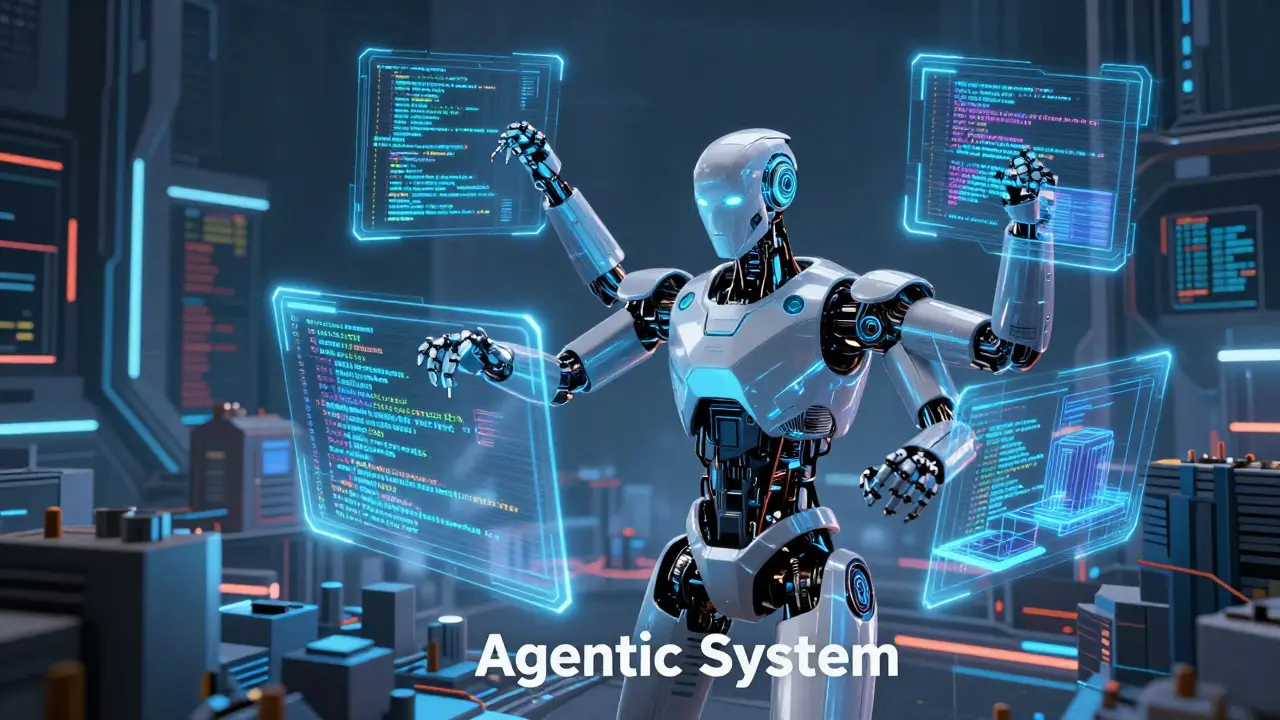
While vibe coding is a conversation, Agentic Systems is autonomous AI frameworks capable of goal-driven planning, execution, and self-correction with minimal human intervention is a delegation. Instead of saying "change this button to blue," you tell an agent, "Migrate this entire legacy Java codebase to Kotlin and ensure all unit tests pass." The system doesn't just suggest code; it plans the migration, executes the changes, runs the tests, finds the errors, and fixes them-all without you needing to prompt it every five seconds.
Systems like Devin is an autonomous AI software engineer capable of handling complex engineering tasks independently leverage massive models (typically 30B+ parameters) and specialized planning modules. This high level of autonomy makes them superior for the "grind" of software engineering: large-scale refactoring, CI/CD maintenance, and technical debt cleanup. In enterprise case studies, these systems have shown a 76% reduction in refactoring time compared to manual or prompt-based methods.
The trade-off here is the "black box" effect. When an agent handles 10,000 lines of code autonomously, it can introduce subtle bugs-like race conditions in multi-threaded applications-that aren't immediately obvious. Rocket.new reported that 37% of production issues in early agentic setups were caused by these silent failures. You trade the tediousness of manual review for the anxiety of hoping the agent didn't miss a critical edge case.
| Feature | Vibe Coding | Agentic Systems |
|---|---|---|
| Autonomy Level | Moderate (Human-steered) | High (Goal-driven) |
| Primary Use Case | Rapid Prototyping / MVPs | Refactoring / Maintenance |
| Risk Profile | Low (Immediate review) | Higher (Silent failures) |
| Best For | Creative exploration | Repetitive, complex tasks |
| Hardware/Cost | Standard Workstation / Low | GPU Accelerated / High ($29-99/mo) |
When to Use Which? A Decision Framework
Choosing the right autonomy level depends on where your project sits in its lifecycle. If you are in the Discovery Phase-trying to figure out if an idea even works-vibe coding is your best friend. It allows for the "creative flow" and rapid pivots that are essential when requirements are still blurry. In fact, agentic systems often fail (up to 62% of the time) when requirements are ambiguous because they try to execute a plan based on a guess.
Once you hit the Scaling and Maintenance Phase, the pendulum should swing toward agentic systems. When you have a stable product and need to update a dependency across 50 modules or optimize database queries across a massive schema, the consistency of an agent is far more valuable than the creativity of a prompt. Senior architects are increasingly adopting this approach to manage complex system health without getting bogged down in the minutiae.
For those caught in the middle, the trend is moving toward a hybrid pipeline: Human-Prompted → Agent-Executed → Human-Reviewed. In this model, you use vibe coding to sketch the architecture and define the goals, deploy an agent to do the heavy lifting of implementation, and then return to a manual review process to ensure quality and security.
The Human Cost of High Autonomy
We need to talk about a growing concern in the industry: skill atrophy. When you spend six months letting an agent handle all your low-level debugging and complex refactoring, your own mental muscles start to weaken. Microsoft's internal studies have already shown a 23% decline in low-level debugging proficiency among teams relying heavily on autonomous agents.
There is also the risk of creating "black box applications." This happens when a non-developer uses vibe coding tools like Lovable to build a functioning app without actually understanding how the code works. When a bug inevitably appears, they are powerless to fix it because they never learned the underlying logic. This lack of understanding contributes to roughly 41% of maintenance challenges in no-code or low-code projects.
To fight this, the best teams are implementing "autonomy gates." These are mandatory checkpoints where an agent must stop and explain its reasoning to a human before proceeding. It transforms the agent from a black box into a transparent collaborator, ensuring that the human remains the ultimate authority in the codebase.
Looking Ahead: Swarms and Dials
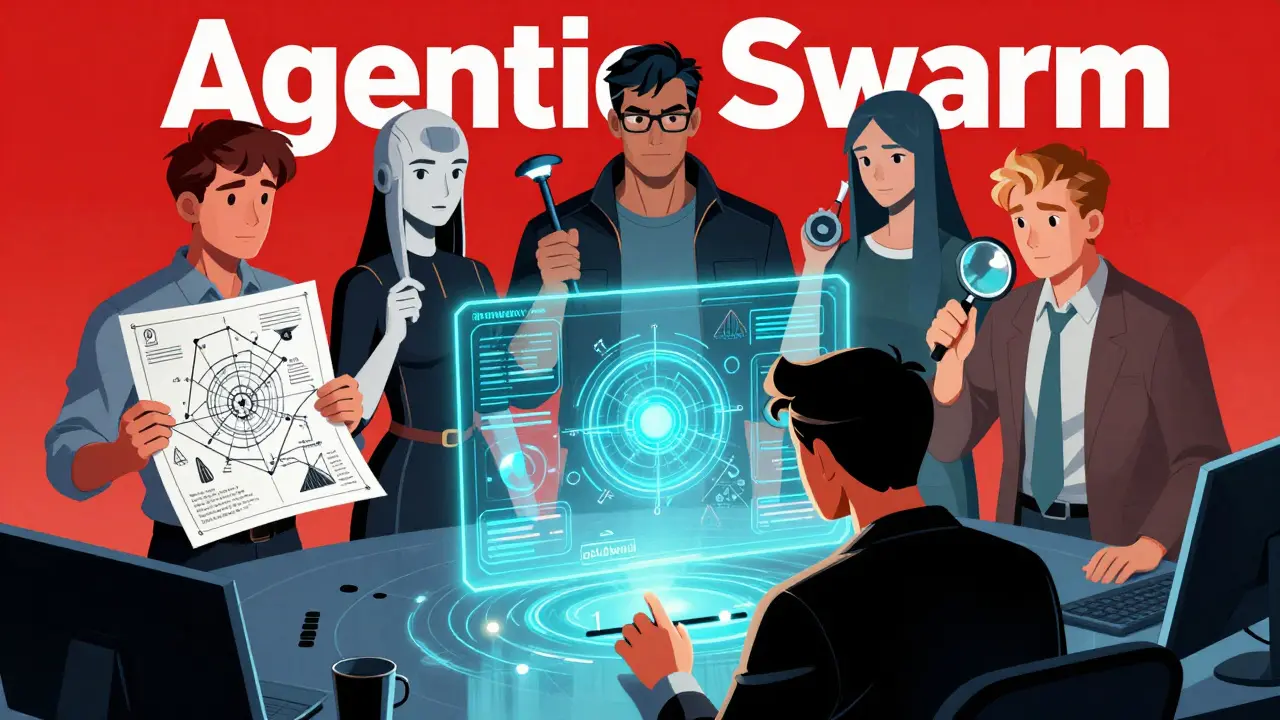
The future isn't a choice between vibes and agents; it's the integration of both. We are already seeing the rise of Agentic Swarm Coding is a multi-agent architecture where specialized AI roles (Planner, Coder, Reviewer) collaborate to complete a project . Instead of one giant AI trying to do everything, you have a "swarm" of experts. A Planner agent maps the requirements, a Coder agent writes the logic, and a Reviewer agent attempts to break the code. This mimics a real-world engineering team and significantly reduces the rate of silent failures.
We're also seeing tools introduce "autonomy dials." Imagine a slider in your IDE: at 0%, the AI only suggests completions (classic vibe coding); at 50%, it can write entire functions; and at 100%, it can independently open PRs and merge them after passing tests. This allows developers to scale the AI's independence based on the criticality of the task. You might use 100% autonomy for a CSS update but drop it to 10% for a critical security patch in a payment gateway.
What is the main difference between vibe coding and agentic systems?
Vibe coding is a conversational, human-led process where the developer steers the AI in real-time through prompts to iterate quickly. Agentic systems are goal-driven and autonomous; you provide a high-level objective, and the AI plans, executes, and tests the solution independently with minimal human input.
Can vibe coding lead to poor code quality?
Yes, because vibe coding focuses on immediate results based on short-term prompts, it can result in "spaghetti code" that lacks a cohesive long-term architecture. Research indicates that about 30-40% of vibe-coded work may require significant rework before it's ready for a production environment.
Which approach is better for beginners?
Vibe coding is generally better for beginners due to its low barrier to entry and intuitive nature. Tools like Cursor and Lovable allow newcomers to build working MVPs in a fraction of the time it would take to learn traditional syntax, with many reporting productivity gains within a single week.
What are "silent failures" in agentic systems?
Silent failures occur when an autonomous agent implements a feature or fix that appears to work but introduces subtle, hidden bugs (like race conditions or logic gaps) that aren't caught by the agent's own tests. These issues often don't surface until the code is in production, making them high-risk.
How do I prevent skill atrophy when using AI agents?
To avoid losing your technical edge, implement "autonomy gates" where you force yourself to review and justify the AI's logic. Additionally, engage in structured skill maintenance, such as manual debugging sessions or contributing to open-source projects without AI assistance, to keep your low-level engineering skills sharp.