
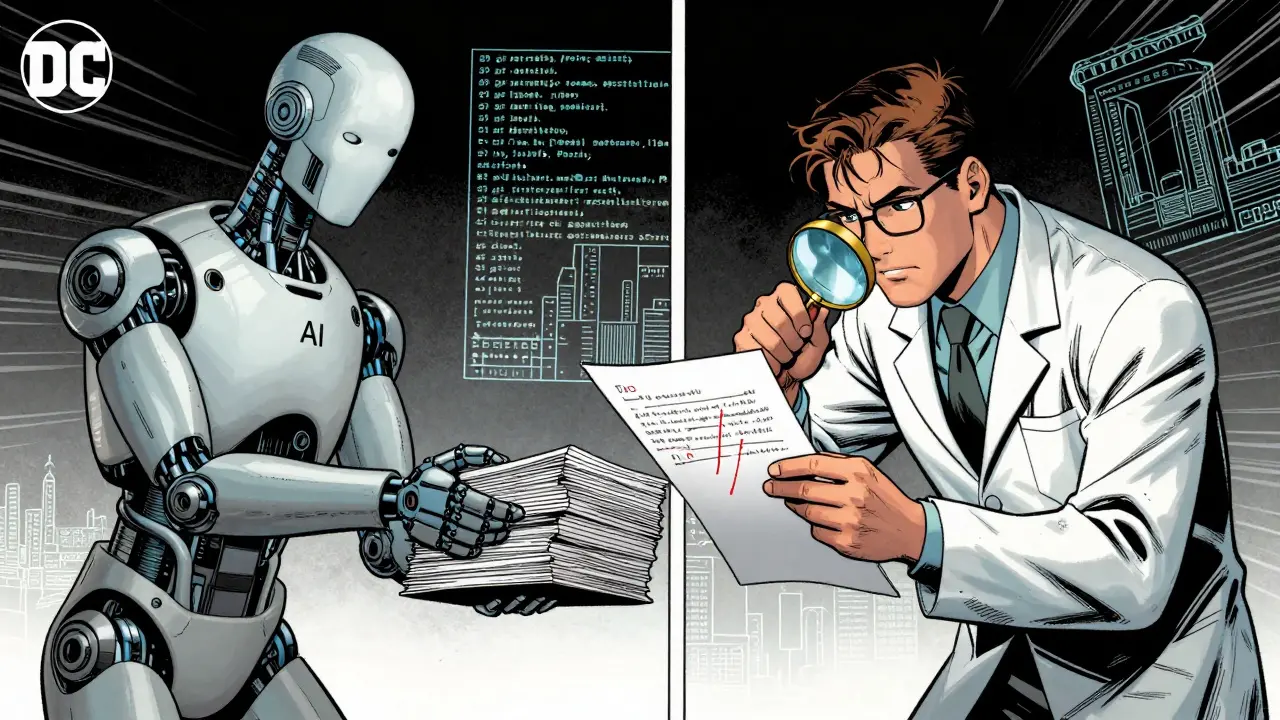
You hit "Generate" and the screen fills with perfect-looking documentation. It’s structured, grammatically correct, and covers all the bases. But if you publish it as-is, you are setting your team up for failure. This is the trap of modern technical documentation in the age of large language models (LLMs) that can produce text instantly but lack contextual truth. The output is not the final product; it is a raw draft. The real work begins when you stop treating AI as an author and start treating it as a junior intern who needs supervision.
This approach, often called Documentation First methodology, shifts the focus from speed to accuracy and reasoning. It demands that every piece of AI-generated content undergoes rigorous human review to inject rationale, verify facts against source code, and ensure alignment with organizational standards. Without this step, your documentation becomes a liability-misleading developers, confusing users, and eroding trust in your systems.
The Illusion of Completeness
Why does AI-generated documentation feel so complete yet fail in practice? Because LLMs predict the next likely word based on patterns in their training data, not on the specific reality of your codebase or business logic. They hallucinate plausible-sounding details that simply aren’t true. For example, an AI might describe an API endpoint as accepting a `user_id` parameter because that’s common in many frameworks, even if your actual implementation uses `account_uuid`. If no one checks, that error propagates into your public docs, causing integration failures for your customers.
The core principle here is simple: AI provides structure and syntax; humans provide semantics and truth. When you treat AI output as a draft, you acknowledge its strength in generating outlines, boilerplate text, and initial summaries while recognizing its weakness in understanding intent, nuance, and proprietary context. This mindset prevents the "copy-paste-and-publish" habit that leads to technical debt in documentation.
Injecting Rationale: The Human Edge
The most critical gap in AI-generated content is the absence of rationale. AI can tell you *what* a function does, but it cannot explain *why* it was built that way. Did the engineering team choose a NoSQL database over SQL because of expected write volume? Was a specific algorithm selected due to latency constraints? These decisions are buried in Slack threads, meeting notes, and developer memories. AI doesn’t have access to this institutional knowledge unless explicitly prompted-and even then, it struggles to synthesize complex trade-offs accurately.
Human reviewers must add this layer of explanation. When documenting a bug fix, don’t just list the steps. Explain why the previous solution failed and why the new one works. When describing a system architecture, clarify the design choices that led to the current state. This rationale transforms documentation from a static reference into a living narrative that helps future developers understand the system’s evolution. It turns a manual into a mentor.
Practical Workflow: From Prompt to Publish
Implementing this workflow requires intentional steps at each stage. Start with precise prompt engineering. Instead of asking "Write docs for this module," provide context: "I need a README for a Python service that handles payment processing using Stripe. It includes endpoints for creating charges and refunds. Highlight security considerations and rate limits." Specificity reduces the amount of correction needed later.
Once the draft is generated, follow a verification checklist:
- Fact-Check Against Source Code: Verify every function name, parameter type, and return value against the actual implementation. Use tools like Swagger or OpenAPI generators to cross-reference API specs.
- Validate Audience Fit: Is this doc for internal engineers, external partners, or end-users? Adjust tone and depth accordingly. AI tends to default to a generic technical level that may be too dense for beginners or too shallow for experts.
- Add Contextual Notes: Insert warnings about known limitations, deprecated features, or upcoming changes that AI wouldn’t know about.
- Review for Tone and Brand Voice: Ensure the language aligns with your company’s style guide. AI often sounds robotic or overly formal; human editing adds warmth and clarity.
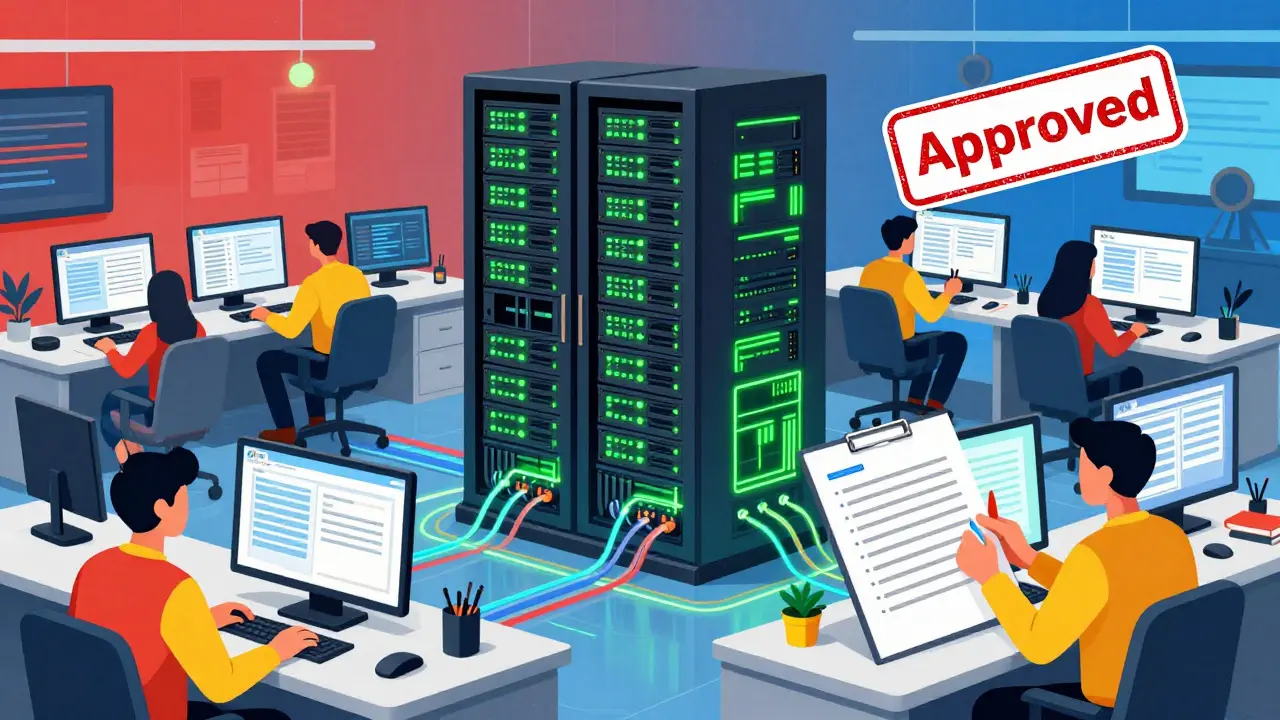
Integrate this review process into your CI/CD pipeline. Make documentation updates a deployment gate. Just as you wouldn’t ship untested code, don’t ship unreviewed docs. Tools like GitLab AI or GitHub Copilot can flag outdated sections automatically, but the final approval must come from a human subject matter expert.
Templates and Standards: Training Your AI
To reduce the burden on reviewers, invest in high-quality templates and style guides. Train your AI tools on these standards so they generate drafts that are closer to the mark. IBM recommends fine-tuning models on your existing high-level documentation, including architecture diagrams and product requirements. This gives the AI a baseline for what "good" looks like in your organization.
Create reusable prompt templates for common tasks. For instance, have a standard prompt for summarizing API endpoints, another for writing troubleshooting guides, and a third for drafting release notes. Consistency in input leads to consistency in output, making the review process faster and more predictable. Over time, your team will develop a shared vocabulary and structure that minimizes confusion.
Maintaining Currency in a Changing System
One of the biggest challenges in documentation is keeping it up-to-date. Code changes constantly, but docs often lag behind, becoming obsolete within weeks. The Documentation First approach tackles this by embedding updates into the development workflow. Whenever a feature is added or modified, trigger an AI-assisted doc update. The AI scans the diff, identifies affected sections, and proposes revisions. Humans then review these proposals, accepting accurate changes and rejecting hallucinations.
This continuous cycle ensures that documentation reflects the current state of the system rather than a snapshot from months ago. Version control for docs should mirror version control for code. Tag each major update, link docs to specific commits, and archive old versions for historical reference. This creates a traceable audit trail that supports compliance and debugging efforts.
Governance and Accountability
In regulated industries like healthcare or finance, documentation isn’t just helpful-it’s mandatory. Treating AI output as a draft ensures accountability. Humans must sign off on risk analyses, data privacy statements, and model performance metrics. AI can compile these elements, but only a qualified professional can attest to their accuracy and completeness. This governance layer protects your organization from legal liabilities and builds trust with stakeholders.
Establish clear roles and responsibilities. Who owns the documentation? Who reviews it? Who approves publication? Define these roles explicitly. Avoid the "everyone is responsible" trap where nothing gets done. Assign documentation ownership alongside code ownership. If a developer writes a module, they are also responsible for ensuring its docs are accurate and reviewed.
Is AI-generated documentation reliable enough to use?
AI-generated documentation is useful as a starting point but not reliable enough to publish without human review. LLMs lack access to your specific codebase context and can hallucinate incorrect details. Always verify facts, add rationale, and adjust tone before publishing.
How do I prevent AI from hallucinating in my docs?
Prevent hallucinations by providing highly specific prompts with context, such as code snippets, API specs, or project goals. Cross-check all generated content against source code and official standards. Never assume AI knows your internal systems unless you’ve explicitly fed it that information.
What is the role of rationale in documentation?
Rationale explains the "why" behind technical decisions, such as why a certain library was chosen or why a feature was implemented in a specific way. AI cannot infer this from code alone. Human reviewers must add this context to help future developers understand the system’s design philosophy and avoid repeating past mistakes.
Should I integrate documentation reviews into my CI/CD pipeline?
Yes. Making documentation a deployment gate ensures that no code goes live without corresponding, reviewed documentation. Use automated tools to flag outdated sections, but require human approval for all changes. This keeps docs synchronized with code and maintains quality standards.
How can I train AI to follow my company’s style guide?
Create detailed templates and prompt examples that reflect your style guide. Fine-tune your AI tool on existing high-quality documentation, including architecture diagrams and product requirements. Provide clear instructions on tone, terminology, and structure in every prompt to guide the AI toward consistent output.

Michael Richards
June 12, 2026 AT 00:23Stop treating AI like a magic wand and start treating it like the liability it is. I see teams shipping garbage docs because they think 'it looks good' means 'it is correct'. It doesn't. You are setting your engineers up to fail every single time you skip the human review step. The code is the source of truth, not the LLM's hallucination. If you aren't verifying every parameter against the actual implementation, you aren't documenting; you're lying.
Lisa Nally
June 12, 2026 AT 12:30Oh, please. As if any of you actually read the output anyway.
I've been in this game for fifteen years and I can tell you that the 'junior intern' analogy is cute but fundamentally flawed. LLMs don't have intent, they have probability distributions. When I generate a Swagger spec from my Python decorators, I get 99% accuracy on types and 100% on endpoints. The issue isn't the AI, it's your lazy prompt engineering. You want rationale? Feed the model the commit history and the PR comments. Stop blaming the tool for your inability to curate context. It’s not rocket science, it’s just basic information retrieval mixed with generative syntax. Get over yourselves.
Laura Davis
June 14, 2026 AT 00:22Lisa, calm down! We all know AI makes mistakes, but Michael has a point about the mindset shift needed here.
I used to just copy-paste everything too, until our support team started getting tickets about non-existent API parameters. It was embarrassing. Now I make sure to add those 'why' notes. It takes five extra minutes per module, but it saves hours of debugging later. Plus, it feels way better knowing the docs actually help people instead of confusing them. Let's try to be more collaborative about improving our workflows rather than fighting over who is right!
Edward Gilbreath
June 14, 2026 AT 11:38the whole documentation first thing is just corporate speak for making devs do unpaid overtime. nobody reads docs anyway. they just look at the code. or they ask someone in slack. why bother writing it if its gonna be outdated in two weeks anyway. ai writes faster than us so might as well let it lie. trust no one. especially not the machine learning models trained on stolen data.
kimberly de Bruin
June 16, 2026 AT 10:38truth is a social construct shaped by the observer. when we document we are not capturing reality but creating a narrative framework for future selves to inhabit. the ai does not know the why because the why is ephemeral existing only in the collective unconscious of the team at the moment of decision. perhaps the error is not in the doc but in the assumption that knowledge can be static. we are all just ghosts in the machine trying to leave breadcrumbs for other ghosts. silence is also a form of documentation.