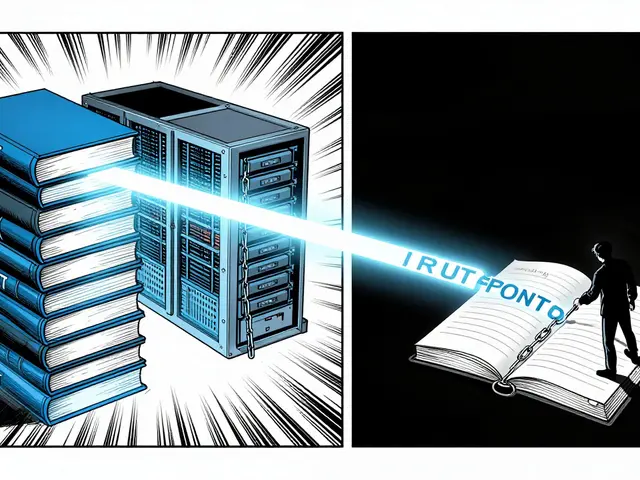
You have a brilliant idea for an AI application. You spend two days building a prototype using OpenAI's GPT-4 API, and it works perfectly. Your demo impresses stakeholders. Then comes the hard part: moving it to production. Suddenly, your monthly bill jumps from $50 to $5,000. Latency spikes during peak hours. Users complain about inconsistent answers. This is the "production cliff" that trips up most AI teams.
The core dilemma isn't just technical; it's architectural. Should you stick with the convenience of proprietary APIs, or should you invest in self-hosting open-source Large Language Models (LLMs) like Llama 3 or Mistral? The answer depends on where you are in your development lifecycle. Rapid prototyping demands speed and low upfront cost. Production hardening demands control, predictability, and scalability. Let’s break down exactly how to navigate this transition without burning cash or losing momentum.
Why APIs Win at the Prototype Stage
When you are validating a product-market fit, speed is everything. You don’t want to spend weeks configuring GPU clusters or debugging CUDA drivers. You want to test if users actually care about your feature. Proprietary APIs like those from OpenAI or Anthropic offer immediate access to state-of-the-art intelligence with zero infrastructure overhead.
Using frameworks like LangChain, you can build complex chains of reasoning in hours. You focus on prompt engineering and logic flow rather than server maintenance. For early-stage startups or internal tools, this is unbeatable. You get high-quality outputs out of the box. The trade-off? You pay per token, and you have no visibility into what happens behind the curtain. But for a prototype, that’s acceptable. You are buying time, not permanence.
Consider a simple use case: a customer support chatbot. In the prototype phase, connecting to the GPT-4 API allows you to demonstrate natural language understanding instantly. You validate the user experience. If users love it, you move forward. If they don’t, you pivot without having sunk thousands of dollars into hardware. This agility is the primary value proposition of API-driven development.
The Hidden Costs of Scaling APIs
Here is where things get tricky. As your user base grows, so do your costs. API pricing is linear but deceptive. A single prompt might cost fractions of a cent. But when you have 10,000 users sending long-context queries daily, those fractions add up fast. Worse, agentic loops-where an AI tool calls itself repeatedly due to poor error handling-can spiral costs overnight. One infinite loop can drain your budget before your monitoring alerts even fire.
Beyond cost, there is latency. Every API call involves network round-trips. Even with optimized endpoints, you are at the mercy of the provider’s infrastructure load. During peak times, response times can degrade. For real-time applications like voice assistants or live coding helpers, sub-second latency is non-negotiable. APIs often struggle to guarantee this consistently across all regions.
Data privacy is another silent killer. When you send sensitive data to a third-party API, you are trusting their security protocols. For industries like healthcare (HIPAA) or finance (GDPR), this risk is often unacceptable. Even if the provider claims data anonymity, many enterprises prefer zero external exposure. This regulatory pressure is a major driver for shifting away from pure API dependence as you scale.
Production Hardening with Open-Source LLMs
Once you have validated your concept, it is time to think about sustainability. This is where open-source LLMs deployed on self-managed infrastructure shine. Models like Llama 3, Mistral, or Qwen allow you to host the intelligence within your own firewall. You gain complete control over data, latency, and costs.
Self-hosting requires upfront investment. You need GPUs-typically NVIDIA A100s or AWS Inferentia instances-and expertise in MLOps. But the long-term economics flip dramatically. Instead of paying per token, you pay for compute capacity. At high volumes, the cost per inference drops significantly. A recent enterprise case study showed a 45% reduction in total cost after migrating a contract review system from GPT-4 API to a fine-tuned open-source model hosted on AWS SageMaker.
Performance also improves. By fine-tuning models using techniques like LoRA (Low-Rank Adaptation), you can optimize them for specific domains. In the same case study, the custom model achieved a 12% improvement in ROUGE scores compared to the baseline API output. More importantly, inference latency dropped to 1.2 seconds per document page-a critical requirement for high-volume workflows that APIs struggled to meet consistently.
Privacy and compliance become manageable. Since data never leaves your infrastructure, you maintain full audit trails and control. This is essential for regulated industries. You can implement strict access controls, encryption standards, and retention policies tailored to your legal requirements. The operational complexity increases, but so does your strategic autonomy.

The Hybrid Approach: Best of Both Worlds
You don’t have to choose one extreme. The most robust production architectures today use a hybrid strategy. This approach balances cost, performance, and reliability by routing requests intelligently based on context.
Imagine a tiered routing system:
- 70% of traffic: Routed to a self-hosted open-source model like Llama 8B. These handle routine, high-volume tasks efficiently and cheaply.
- 20-25% of traffic: Sent to mid-tier APIs for coverage on edge cases where the open-source model lacks confidence.
- 5-10% of traffic: Reserved for frontier models like GPT-4 or Claude for complex reasoning or creative tasks requiring top-tier quality.
This structure reduces costs by 60-80% while maintaining high performance. It also provides redundancy. If your self-hosted cluster goes down, the API fallback keeps your service alive. Conversely, if the API provider experiences an outage, your local models continue operating. This diversification mitigates vendor lock-in and enhances resilience.
Semantic caching further optimizes this setup. By storing responses to similar queries, you can avoid redundant computations. If a new query has a cosine similarity above 0.95 with a cached entry, you return the cached result instantly. This can achieve cache hit rates of 50-70% in repetitive domains, slashing both latency and cost. Context caching, supported natively by some APIs, caches static prompt components, charging only for new tokens. Combining these techniques creates a highly efficient pipeline.
Evaluating Performance in Production
Prototyping evaluation is often manual and limited. You test a few examples and assume success. Production evaluation requires rigor. You need automated metrics for regression testing across 100% of outputs. Tools like LangSmith provide observability, tracking token usage, latency, and anomalies. Prometheus and Grafana visualize these metrics in real-time.
But numbers aren’t enough. You need qualitative assessment. Use an LLM-as-evaluator to score outputs continuously on a sample of traffic (10-20%). Reserve human review for high-stakes decisions (5-10% of traffic). This hybrid evaluation method ensures quality without breaking the bank. Budget for human evaluators-they are essential for calibrating automated systems and catching subtle drifts in tone or accuracy.
Watch out for prompt drift. Prompts that work in development often fail in production because real user inputs differ from test cases. Vocabulary shifts, format variations, and edge cases emerge. Implement weekly random sampling of 100 production inputs against established baselines. If performance degrades by more than 5%, trigger an investigation. This proactive monitoring prevents silent failures that erode user trust.
Infrastructure and Operational Maturity
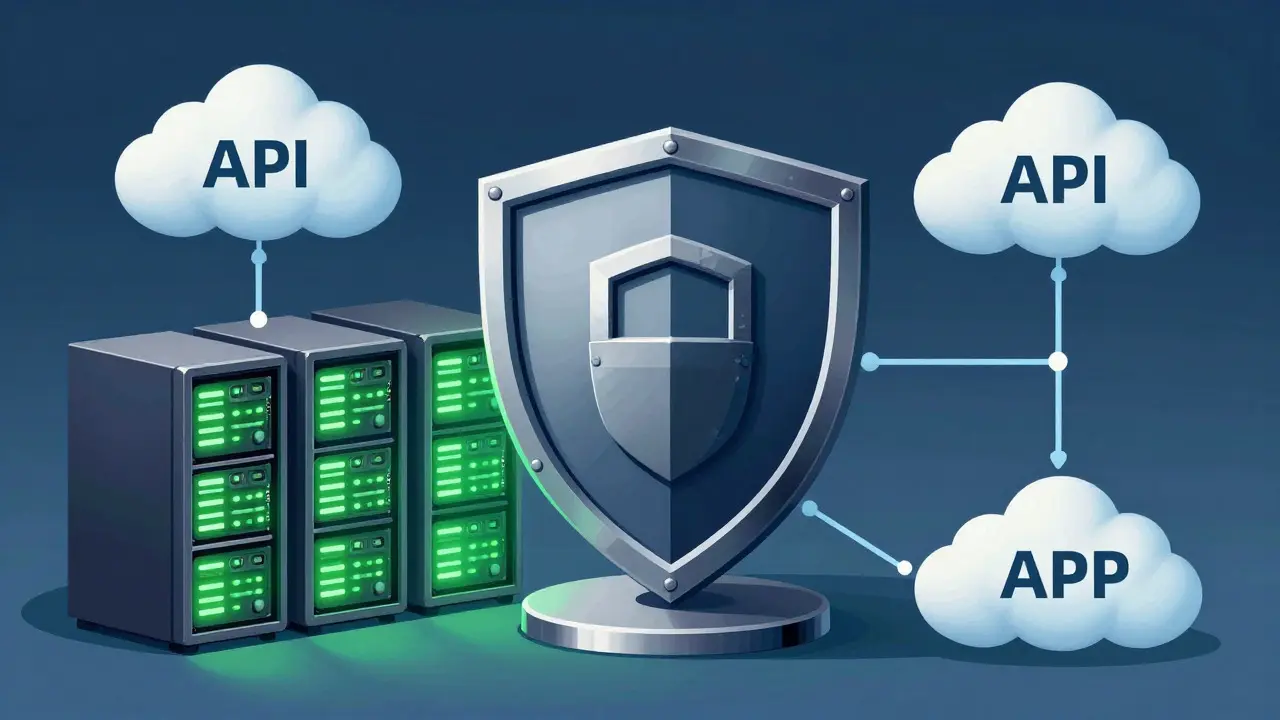
Moving to production means embracing operational complexity. You need clean abstractions between your application layer and model layer. Use API gateways like NGINX or Istio to manage traffic, enable canary releases, and control access. This decoupling allows you to swap providers or models without rewriting code.
Versioning becomes critical. Unlike traditional software, LLM outputs are non-deterministic. Identical inputs can yield different results. Track model versions, prompt templates, and configuration parameters meticulously. Use tools like MLflow or DVC for model versioning. This traceability is vital for debugging and compliance audits.
Disaster recovery planning is also essential. Self-hosted models require backup strategies for hardware failures. Cloud-based APIs rely on provider uptime SLAs. Understand your dependencies. Build fallback mechanisms. Test failure scenarios regularly. Operational maturity separates successful production systems from failed prototypes.
| Feature | API Prototyping | Self-Hosted Production |
|---|---|---|
| Initial Cost | Low (Pay-per-use) | High (Hardware/MLOps) |
| Scalability | Limited by rate limits/cost | High (Controlled scaling) |
| Latency | Variable (Network dependent) | Predictable (Sub-second possible) |
| Data Privacy | Risk (External transmission) | High (On-premise control) |
| Customization | Limited (Prompt tuning) | Full (Fine-tuning/LoRA) |
| Operational Overhead | Minimal | Significant (Monitoring/Maintenance) |
Decision Framework: When to Switch?
So, when should you make the jump? Consider these factors:
- Volume: Are you processing millions of tokens monthly? If yes, self-hosting likely breaks even within months.
- Latency Sensitivity: Do users expect instant responses? If yes, local hosting offers better control.
- Data Sensitivity: Is your data regulated? If yes, keep it in-house.
- Task Specificity: Does your app require domain-specific knowledge? If yes, fine-tuning open-source models yields superior results.
If you answer "yes" to most of these, start planning your migration. Begin by identifying the highest-volume, lowest-complexity tasks. Move those to a self-hosted model first. Monitor performance and costs. Gradually expand as your team gains confidence. Don’t boil the ocean-iterate strategically.
Is it worth switching from OpenAI API to open-source models?
It depends on your scale and needs. For low-volume apps, APIs remain cheaper and easier. For high-volume, latency-sensitive, or data-private applications, self-hosting open-source models like Llama 3 offers significant cost savings (up to 45%) and better control. Evaluate your token volume and compliance requirements before deciding.
What is the best open-source LLM for production in 2026?
Models like Meta's Llama 3 and Mistral's large language models are leading choices due to their strong performance, community support, and licensing flexibility. They balance capability with efficiency, making them ideal for fine-tuning and self-hosting on standard GPU infrastructure.
How do I reduce latency with self-hosted models?
Optimize your deployment using quantization (e.g., INT8 or FP8) to reduce memory footprint. Use specialized hardware like NVIDIA A100s or AWS Inferentia. Implement semantic caching to avoid redundant computations. Finally, benchmark your models on real-world tasks to identify bottlenecks and tune configurations accordingly.
Can I use a hybrid approach for my AI app?
Yes, hybrid architectures are recommended for production. Route routine traffic to self-hosted open-source models for cost efficiency, and reserve proprietary APIs for complex edge cases or fallback redundancy. This balances cost, performance, and reliability effectively.
What tools help monitor LLM performance in production?
Use LangSmith for end-to-end observability of LLM chains. Integrate Prometheus and Grafana for real-time metric visualization (latency, throughput). Implement automated evaluation pipelines using LLM-as-a-judge for continuous quality checks. Regular human review remains essential for high-stakes outputs.