
Building a Retrieval-Augmented Generation (RAG) pipeline feels like assembling a complex machine where every gear matters. You have the retrieval component fetching documents, the generation component crafting answers, and the vector database holding it all together. But here is the hard truth: getting it to work in your local environment is only half the battle. The other half-keeping it accurate, fast, and safe once users start hitting it with real questions-is where most teams stumble.
You can spend weeks tuning your embedding models and prompt templates, but if you don't know how to measure success, you are flying blind. This is why the industry has split into two distinct camps for evaluation: those who rely heavily on synthetic query testing for controlled validation, and those who prioritize real traffic monitoring for production insights. Neither approach is perfect on its own. To build a robust system, you need both. Let's break down how to use them effectively without burning through your budget or losing sleep over hallucinations.
The Case for Synthetic Queries: Controlled Precision
Synthetic queries are your safety net before launch. They involve creating a dataset of pre-defined questions with known correct answers (ground truth). Think of this as a practice exam for your AI. You ask specific questions, check if the retrieved context matches the answer, and verify that the final output is factually consistent.
This method gives you repeatable results. If your score drops after an update, you know exactly what broke. However, creating these datasets is expensive in terms of time. According to analysis from Braintrust.dev, building high-quality synthetic datasets consumes 40-60% of total RAG development time. You aren't just writing questions; you are curating edge cases, ambiguous phrasings, and domain-specific jargon that your actual users might throw at the system.
To make this manageable, many teams turn to open-source frameworks like Ragas. Released in 2022, Ragas has become the standard for reference-free evaluation. It doesn't just check if the answer is right; it scores three critical dimensions:
- Faithfulness: Does the generated answer stick strictly to the retrieved context? A score between 0.6 and 0.9 is typical for production systems.
- Answer Relevancy: Does the answer actually address the user's question?
- Context Relevancy: Are the retrieved documents useful, or is the system pulling noise?
For retrieval-specific metrics, you should also track Recall@k and Mean Reciprocal Rank (MRR). Enterprise systems typically aim for a Recall@5 of at least 0.75, meaning the correct document appears in the top five results 75% of the time. If you miss this benchmark, your generation model is working harder than it needs to, trying to fix bad inputs.
The Reality of Real Traffic: Where the Rubber Meets the Road
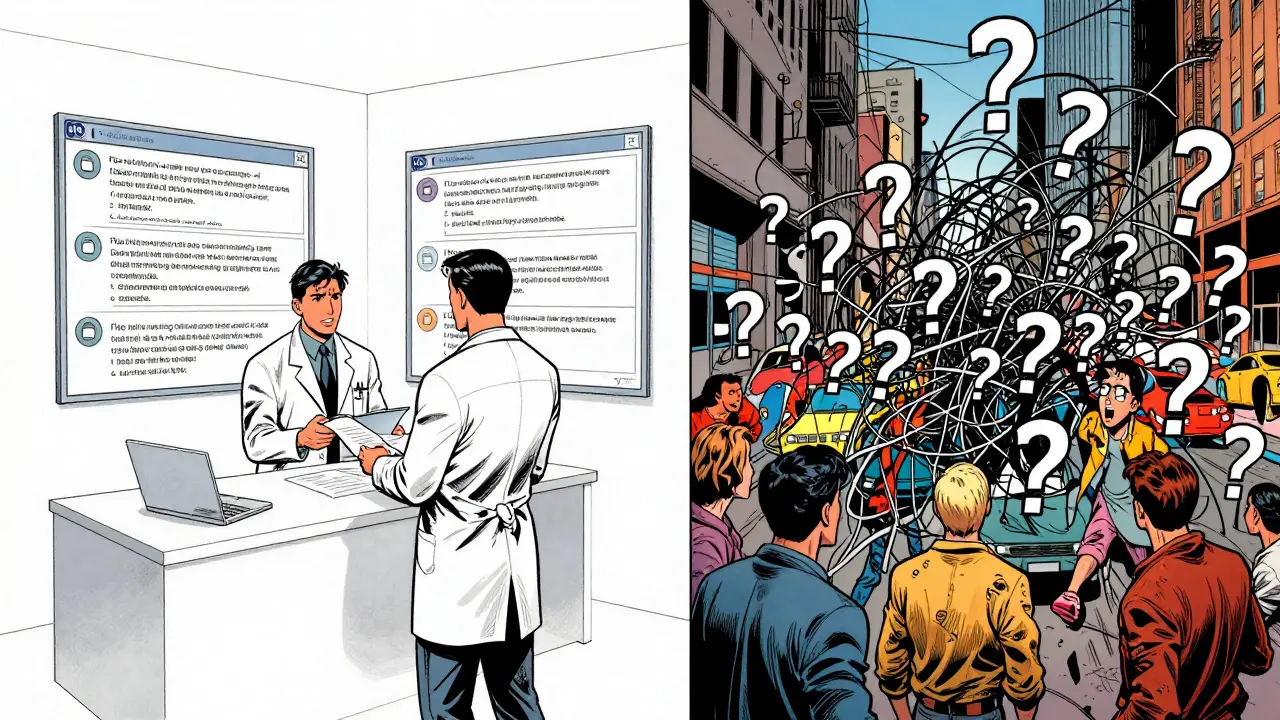
Synthetic tests are clean. Real traffic is messy. Users type incomplete sentences, use slang, ask multi-turn follow-ups, and sometimes just want to chat rather than get information. Dr. James Zhang from MIT noted that synthetic queries often underrepresent complex, multi-turn interactions by 45-60% compared to real-world patterns. That gap is where your failures hide.
Monitoring real traffic requires distributed tracing. You need to see the entire lifecycle of a request: from the initial user input, through the vector search, to the LLM generation, and finally back to the user. Tools like Maxim AI and Langfuse capture 100% of this traffic with minimal overhead (less than 50ms per request). This allows you to spot latency spikes or cost anomalies instantly.
The challenge with real traffic is the lack of ground truth. You don't always know if the AI gave the "right" answer because the user didn't explicitly say so. Instead, you look for operational proxies:
- Session Duration: Longer sessions might indicate confusion or deep engagement.
- Query Refinement Rates: If users rephrase their question frequently, the first attempt likely failed.
- Failure Rates: Track explicit rejection signals if your UI includes "thumbs down" buttons.
Neptune.ai reports that 72% of production RAG implementations struggle to establish reliable evaluation baselines for these real queries. Without clear metrics, you are guessing whether performance improvements are real or just statistical noise.
| Feature | Synthetic Queries | Real Traffic |
|---|---|---|
| Primary Goal | Validation & Regression Prevention | Discovery & Continuous Improvement |
| Ground Truth | Available (Curated) | Often Missing (Inferred) |
| Cost Efficiency | High upfront effort, low recurring cost | Low setup effort, higher ongoing compute costs |
| Coverage | Controlled scenarios (60-70% of failure modes) | Unpredictable user behavior (100% of live issues) |
| Key Metrics | Faithfulness, Recall@k, NDCG | Latency, Cost per Query, Session Duration |
Bridging the Gap: The Feedback Loop
The biggest mistake teams make is treating synthetic testing and real traffic monitoring as separate silos. They should be connected. The most effective RAG systems convert production failures into synthetic test cases within 24 hours. This creates a closed feedback loop.
Here is how it works in practice. Your monitoring tool flags a query with high latency or a low confidence score. An engineer reviews it, determines the correct answer, and adds that pair to your synthetic dataset. Next time you run your automated tests, that edge case is included. Over time, your synthetic dataset grows to reflect the actual complexity of your user base.
Vellum has integrated this workflow directly into their platform, allowing automatic conversion of high-latency queries into synthetic test cases. This reduces the manual burden on engineers while ensuring your test suite stays relevant. Without this loop, your synthetic tests become stale quickly, passing checks for problems that no longer exist while missing new ones that do.
Managing Costs and Performance
Evaluation isn't free. Running comprehensive checks on every single production query can skyrocket your costs. Patronus.ai reported that evaluation costs average 15-25% of total RAG infrastructure expenses. To manage this, you need a sampling strategy.
For high-volume systems, scoring 100% of traces with heavy metrics like Faithfulness is often impractical. A common heuristic is to batch-score a 10% random sample for detailed analysis while using lightweight metrics (like latency and token count) for 100% coverage. Langfuse data shows that full trace scoring costs approximately $15 per 1,000 queries, whereas batch scoring a 10% sample drops that to $1.50 per 1,000 queries. You trade granularity for cost efficiency.
Keep an eye on latency too. Production RAG systems typically target 1-5 seconds per query. If your evaluation pipeline adds significant delay, it impacts user experience. Ensure your observability tools operate asynchronously, capturing data without blocking the response.
Security and Compliance in Evaluation
As RAG systems handle more sensitive data, security becomes part of the evaluation process. Patronus.ai documented that 68% of tested RAG systems had vulnerabilities to prompt injection attacks in their 2024 audit. Synthetic testing is crucial here. You should include adversarial prompts in your synthetic dataset-questions designed to trick the AI into revealing instructions or leaking private data.
Additionally, regulatory pressures are mounting. The EU AI Act requires rigorous documentation of AI performance for financial services. Having a structured evaluation framework with historical data on accuracy and failure rates is no longer optional; it's a compliance requirement. Keep logs of your evaluation metrics to prove due diligence.

Choosing the Right Tool Stack
The market for RAG evaluation tools is growing fast, projected to reach $480M by 2026. You have several options depending on your team's size and budget.
- Open Source (Ragas, TruLens): Best for startups and teams with strong engineering resources. Zero licensing cost, but expect 20-40 hours of maintenance per month. Ragas is excellent for metric calculation, while TruLens helps with instrumentation.
- Commercial Platforms (Maxim AI, Vellum, Langfuse): Ideal for enterprises needing out-of-the-box dashboards and support. Pricing ranges from $1,500 to $5,000 per month based on volume. They offer features like automated synthetic generation and CI/CD integration.
If you are integrating with CI/CD pipelines, look for tools that support automated quality gates. Braintrust.dev found that platforms with automated gates prevent 83% of potential regressions before they reach production, compared to only 22% with manual testing. This saves countless hours of debugging later.
Next Steps for Implementation
Start small. Don't try to monitor everything at once. Begin by setting up basic latency and cost tracking for real traffic. Then, create a small synthetic dataset of 50-100 core questions that represent your most important use cases. Run these through Ragas to establish a baseline.
As you gather data, identify the top 10 failure modes in production. Convert those into synthetic tests. Iterate this process monthly. Within six months, you will have a robust evaluation framework that catches errors early and provides clear insights into system health. Remember, the goal isn't perfection-it's continuous improvement backed by data.
What is the best metric for evaluating RAG faithfulness?
Faithfulness measures whether the generated answer is supported by the retrieved context. Using frameworks like Ragas, you can score this on a 0-1 scale. A score above 0.8 is generally considered good for production systems, indicating that the LLM is not hallucinating information outside the provided documents.
How much does it cost to monitor RAG pipelines in production?
Costs vary based on volume and tool choice. Open-source tools have no license fee but require engineering time. Commercial platforms charge $1,500-$5,000/month. For evaluation compute, full trace scoring costs ~$15 per 1,000 queries, while sampling 10% reduces this to ~$1.50 per 1,000 queries.
Why are synthetic queries insufficient for RAG testing?
Synthetic queries cover only 60-70% of failure modes observed in production. They often miss complex, multi-turn interactions and unpredictable user phrasing. Real traffic reveals edge cases and behavioral patterns that curated datasets cannot anticipate.
What is Recall@5 in RAG evaluation?
Recall@5 measures the percentage of times the correct document appears in the top 5 retrieved results. Enterprise systems typically target a Recall@5 of at least 0.75. High recall ensures the generation model receives relevant context, reducing hallucination risks.
How do I handle ground truth for real traffic monitoring?
Since ground truth is often unavailable for live queries, use proxy metrics like session duration, query refinement rates, and user feedback signals (e.g., thumbs up/down). Additionally, implement a feedback loop where flagged errors are manually reviewed and added to synthetic datasets for future testing.

Tyler Springall
May 21, 2026 AT 02:46I simply cannot believe how many people treat RAG like it is some magical black box that just works. It does not. The notion that you can just throw data at an LLM and expect coherent output is laughable. Most teams are too incompetent to even set up proper ground truth datasets, so they flail around in production hoping for the best. This article barely scratches the surface of why your system is failing because you lack the intellectual rigor to curate synthetic queries properly.
Colby Havard
May 21, 2026 AT 11:42One must consider the ethical implications of relying solely on synthetic data; for it creates a false sense of security; which is morally bankrupt when dealing with user trust. The distinction between controlled validation and real-world chaos is not merely technical; but philosophical. We are building systems that reflect our biases; and if we do not monitor them with rigorous moral scrutiny; we are complicit in their failures. The cost is not just financial; it is existential.
Gareth Hobbs
May 23, 2026 AT 09:40They want you to think this is about accuracy but its all about control. Big tech wants you spending 60% of your time on synthetic tests so you never see the real traffic patterns. Its a conspiracy to keep us dependent on their expensive tools like Vellum. Wake up sheeple. The Recall@5 metric is a lie designed to make you feel safe while they harvest your data. Trust no one.
Zelda Breach
May 25, 2026 AT 00:55Your grammar in the third paragraph is atrocious. You wrote 'You aren't just writing questions' which should be 'You are not just writing questions'. Contractions are lazy and unprofessional. Furthermore, citing Braintrust.dev without providing a direct link is negligent. I have seen better documentation from my toaster. Fix your prose before you lecture me on RAG pipelines.
Alan Crierie
May 25, 2026 AT 04:10Hi there! 👋 I really appreciate this detailed breakdown. It's easy to get overwhelmed by all the metrics, but breaking it down into Faithfulness and Relevancy helps a lot. 😊 I found the part about converting production failures into synthetic tests particularly insightful. It feels like a great way to keep the system learning over time. Thanks for sharing this! 🌟
Nicholas Zeitler
May 26, 2026 AT 01:14You are doing great work here! Keep pushing forward. The feedback loop idea is solid. Don't let the complexity stop you. Just start small as suggested. You got this!
Teja kumar Baliga
May 27, 2026 AT 22:39This is very helpful. In India, we often face unique challenges with multilingual queries. Synthetic data helps, but real traffic shows the true diversity of language use. Good points on cost management.