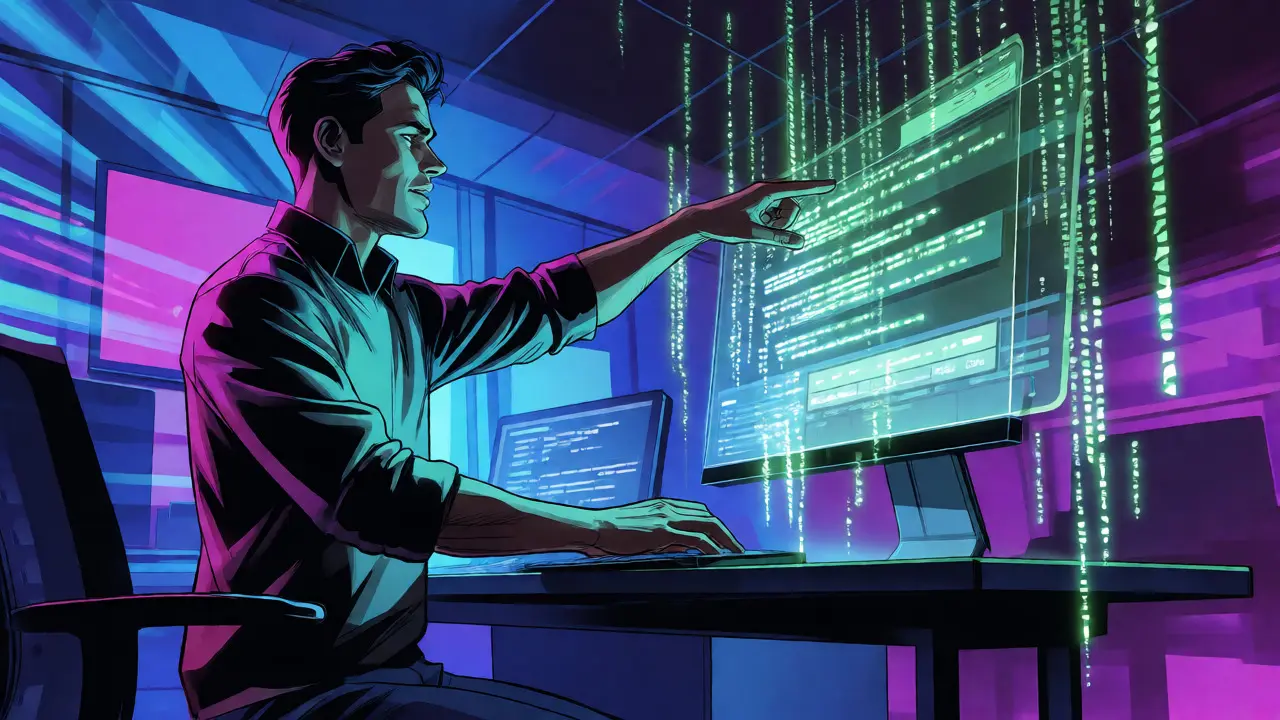
Imagine you’re building a prototype for a new app idea. In the old days, you’d spend hours setting up the environment, writing boilerplate code, and debugging syntax errors before seeing anything on the screen. Today, you type a prompt into an AI tool, hit enter, and watch functional code appear in seconds. But here’s the catch: do you really need to understand every single line that the AI just spat out? If you follow vibe coding, the answer is no. And that might feel uncomfortable if you’re used to traditional engineering standards.
The term "vibe coding" was coined by computer scientist Andrej Karpathy in early 2025. He described it as "giving in to the vibes, embracing exponentials, and almost forgetting that code even exists." It sounds reckless, doesn’t it? Like driving blindfolded. But the philosophy isn’t about ignoring quality; it’s about shifting your focus from syntax to intent. The goal isn’t perfection in the first draft-it’s validation. Let’s break down why stopping to dissect every line of AI output is actually slowing you down, and how to use this approach without breaking your project.
The Shift From Authoring Syntax to Directing Intent
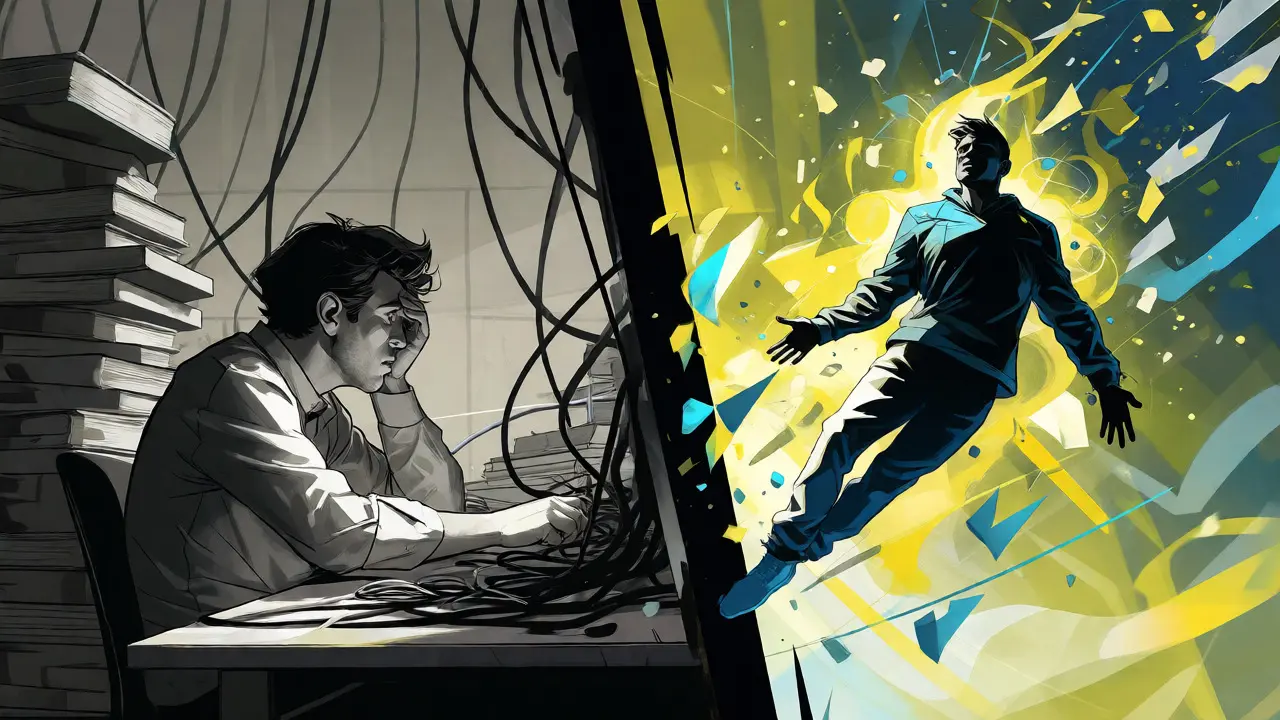
Traditional programming requires you to be both the architect and the bricklayer. You design the system, then manually place every brick (line of code). Vibe coding changes the role. You become the director, telling the AI what scene you want, while it handles the camera angles and lighting. This shift frees up mental energy. Instead of worrying about whether your `for` loop has the right increment operator, you focus on whether the feature solves the user’s problem.
When you insist on understanding every line during the generation phase, you create friction. You stop the flow to read, analyze, and critique. In vibe coding, the workflow is iterative: describe, generate, run, iterate. If it works, move on. If it breaks, tell the AI what’s wrong and let it fix it. This "code first, refine later" mindset prioritizes speed and experimentation over immediate structural purity. For experienced developers, this acts as a productivity multiplier. You can scan generated code in seconds, spot obvious errors, and move forward, rather than reading it like a novel.
Why Complete Comprehension Is a Bottleneck
Let’s look at the practical implications. Modern software stacks are massive. A simple web app might involve frontend frameworks, backend APIs, database connections, and authentication layers. Trying to hold all these implementation details in your head simultaneously is cognitively expensive. Vibe coding acknowledges that not all code needs deep understanding at the moment of creation. Some code is disposable-prototypes, demos, or quick scripts that prove a concept. Does it matter if you don’t fully grasp the regex pattern the AI wrote for email validation if the form submits correctly?
This approach lowers the barrier to entry significantly. Non-technical creators can build functional tools because they don’t need to know Python or JavaScript syntax. They only need to know what they want the software to do. Even for pros, this means less time fighting with boilerplate and more time solving business logic problems. The value proposition is clear: time-to-validation supersedes code comprehension. You get a working product faster, which allows for quicker feedback loops with users or stakeholders.
| Aspect | Traditional Coding | Vibe Coding |
|---|---|---|
| Primary Focus | Syntax correctness and architecture upfront | Outcome validation and rapid iteration |
| Code Understanding | Required for every line during writing | Required for critical paths; skimmed for others |
| Role of Developer | Author and Implementer | Director and Reviewer |
| Speed to Prototype | Slow (hours/days) | Fast (minutes/hours) |
| Risk Profile | Low technical debt initially | Potential hidden bugs/security issues |
The Safety Net: When You Must Understand the Code
Does this mean you never read the code? Absolutely not. There is a crucial distinction between understanding code during generation and understanding it before deployment. Vibe coding doesn’t eliminate the need for review; it shifts when that review happens. You don’t need to parse every line while the AI is typing. But you do need to verify functionality, security, and integration points before shipping.
Security risks are real here. AI models can hallucinate dependencies or miss standard security practices like proper input sanitization or error handling. If you blindly deploy AI-generated code without any oversight, you might introduce vulnerabilities. The OnSecurity analysis warns that generated code can overlook critical regulations, exposing organizations to penalties. So, while you skip the line-by-line dissection during the creative flow, you must implement mandatory human review phases. Think of it like hiring a contractor: you don’t need to know how to wire the house yourself, but you definitely need an inspector to check the work before you move in.

Practical Strategies for Effective Vibe Coding
So, how do you practice this without ending up with a mess? First, embrace small iterations. Don’t ask the AI to build the entire app in one prompt. Break it down. Ask for the login page, then the dashboard, then the API endpoint. This keeps the context manageable and makes it easier to spot when the AI goes off-track. Second, use automated tests. If you have unit tests running, you can trust the code more without reading it deeply. If the tests pass, the logic likely holds, even if you didn’t scrutinize the implementation details.
Another key tactic is "pairing" with the AI. Treat the AI like a junior developer who types fast but lacks context. You provide the direction, and it provides the execution. When something breaks, instead of diving into the debugger immediately, try describing the error back to the AI. Often, it will fix its own mistake faster than you can find it. This preserves your momentum. Finally, establish cleanup routines. After the prototype works, take time to refactor. Now is the time to read the code, optimize performance, and ensure security compliance. This separates the creative phase from the maintenance phase, allowing each to benefit from different cognitive modes.
Who Benefits Most From This Approach?
Vibe coding isn’t for everyone, but it’s powerful for specific scenarios. It’s ideal for prototyping, hackathons, and internal tools where speed matters more than long-term maintainability. Startups trying to validate product-market fit can save weeks of development time by skipping the perfect architecture for now. Experienced developers use it to automate tedious tasks, freeing them to tackle complex algorithmic challenges. Meanwhile, non-technical founders can build MVPs without hiring a full dev team immediately.
However, it’s less suitable for mission-critical systems where downtime costs millions or where regulatory compliance is strict. In those cases, the risk of unreviewed code outweighs the speed benefits. The key is knowing which project stage you’re in. Are you exploring ideas? Vibe code. Are you finalizing a payment gateway? Slow down and read the lines.
Is vibe coding safe for production environments?
It can be, but only with rigorous review processes. While you don't need to understand every line during generation, you must audit the code for security vulnerabilities, performance bottlenecks, and architectural consistency before deploying to production. Automated testing and peer reviews are essential safeguards.
Do I still need to know how to code to use vibe coding?
Not necessarily for basic prototypes, but yes for effective management. Knowing how to code helps you debug when the AI gets stuck, understand limitations, and refactor code later. However, the barrier to entry is much lower than traditional development, allowing non-experts to create functional software.
What happens if the AI generates buggy code?
In vibe coding, you treat bugs as part of the iteration loop. Instead of manually fixing the bug, you describe the issue to the AI (e.g., "The login button isn't responding") and ask it to correct the code. This often resolves the issue faster than manual debugging, keeping the flow intact.
How does vibe coding affect technical debt?
It can increase short-term technical debt because code may lack optimization or consistent style. However, this is managed by scheduling dedicated refactoring phases after the initial validation. The speed gained in the early stages often outweighs the cost of later cleanup, provided the debt is acknowledged and addressed.
Can vibe coding replace traditional software engineers?
No, it transforms their role. Engineers shift from writing every line to designing systems, guiding AI outputs, and ensuring quality. Their expertise becomes more valuable in high-level architecture, security, and complex problem-solving, rather than routine syntax implementation.