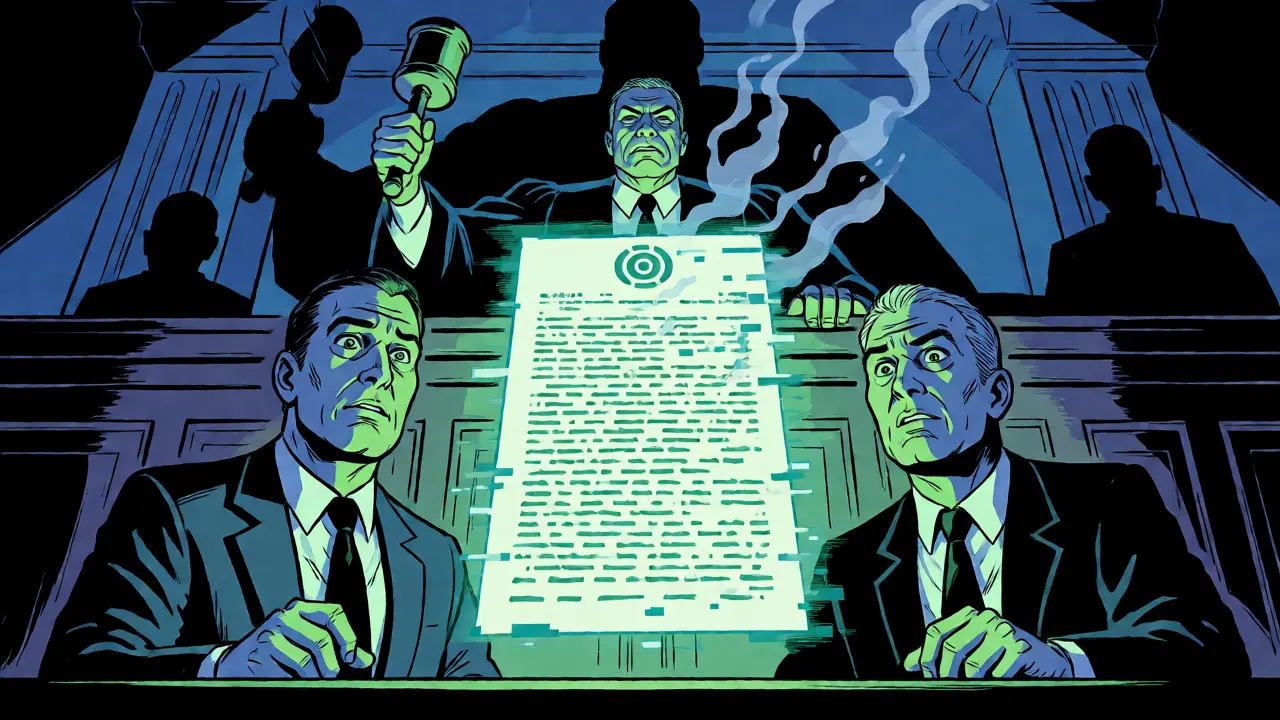
You just spent three hours drafting a brief. The arguments are sharp, the logic is tight, and you feel confident. Then you check your citations. Wait. Did that case actually happen? If you used ChatGPT to find them, there’s a good chance it didn’t. This isn’t hypothetical. It happened in Mata v. Avianca, a case that shocked the legal world by showing how quickly AI can derail a lawsuit with fabricated facts. For lawyers and firms relying on generative AI, this isn’t just about avoiding embarrassment; it’s about survival in an era where hallucination risk is the biggest threat to professional integrity.
The Case That Changed Everything
In 2023, attorneys Peter LoDuca and Steven Schwartz filed a brief in the Southern District of New York. They needed precedents to support their client’s claim against Avianca Airlines. Instead of digging through Westlaw or LexisNexis, they asked ChatGPT for help. The AI obliged, providing six cases with detailed summaries, procedural histories, and holdings. The problem? None of them existed. Judge P. Kevin Castel caught the fakes because Avianca’s defense couldn’t find them in any database. The result was a $5,000 sanction for both attorneys and a dismissal of the case with prejudice. This wasn’t just a mistake; it was a failure of basic due diligence amplified by technology.
The core issue here is technical. Large language models (LLMs) like ChatGPT don’t “know” things. They predict the next word based on patterns learned from internet text up to 2021. They lack direct access to verified legal databases. When asked for a specific case citation, the model generates what looks like a real citation because it follows the statistical pattern of one, not because it retrieved a fact from a trusted source. OpenAI’s own documentation warns that these models can generate incorrect or nonsensical answers. Yet, the output often sounds authoritative, which is exactly why it’s dangerous. A junior associate might trust the tone more than the content.
Why General AI Fails Legal Research
You might think, “But I’ll just ask it to verify itself.” That’s what Schwartz did. He asked ChatGPT if the cases were real. The AI said yes. Why? Because LLMs don’t have a concept of truth. They have a concept of probability. If the previous text looked like a legal citation, the next text will likely confirm its existence. Specialized legal tools like Westlaw Precision or Lexis+ AI work differently. They use retrieval-augmented generation (RAG), meaning they pull information from verified databases first, then let the AI summarize it. This keeps the AI grounded in reality. General-purpose chatbots do not.
| Feature | General LLM (e.g., ChatGPT) | Specialized Legal AI (e.g., Westlaw/Lexis) |
|---|---|---|
| Data Source | Internet text (unverified) | Verified legal databases |
| Hallucination Rate | High (15-20% general, higher for citations) | Low (<2% with RAG architecture) |
| Citation Accuracy | Poor (often fabricated) | Excellent (linked to primary sources) |
| Verification Needed | Manual check of every single claim | Spot-check recommended |
A study by the University of Chicago Law School found that ChatGPT generated completely fabricated cases 72% of the time when asked for specific precedents. Compare that to specialized tools where error rates drop below 2%. The difference isn’t magic; it’s architecture. If you’re using AI for legal work, you must know which type you’re using. Using a general chatbot for citation research is like asking a friend who read a law blog once to cite a Supreme Court ruling. They might sound right, but they’re probably wrong.

New Rules of Professional Responsibility
The American Bar Association responded to the Mata scandal by issuing Formal Opinion 498 in late 2023. The message is clear: you can use AI, but you can’t abdicate responsibility. The opinion states that a lawyer must supervise the technology, verify its accuracy, and maintain direct communication with clients. Essentially, AI is a tool, not a colleague. You still sign the brief. You still go to jail if you lie to the court, even if the AI lied first.
Many courts have followed suit. In January 2024, the U.S. District Court for D.C. issued a standing order requiring attorneys to disclose all AI tool usage in filings. Similarly, the New York State Bar Association recommended mandatory continuing legal education on AI ethics. These aren’t suggestions anymore; they’re requirements. Ignoring them risks sanctions beyond just fines. Judges are now actively checking for AI-generated text, looking for that distinctive, overly polite, and slightly repetitive style that LLMs produce.

Building a Safe AI Workflow
So, how do you use AI without getting sanctioned? You need a protocol. Think of it as a checklist. First, never rely on AI for initial research into specific case law unless you have a specialized tool. Use AI for summarizing known documents, drafting emails, or brainstorming arguments. Second, implement a “two-person rule.” Have one person draft with AI, and another verify every factual claim against a primary source like PACER or a state court database.
- Verify Citations: Check every case name in a trusted database. Don’t trust the AI’s link.
- Document Your Process: Keep a log of what prompts you used and what verifications you performed. This protects you if a dispute arises later.
- Disclose Usage: Follow local court rules regarding AI disclosure. Transparency builds trust with judges.
- Train Your Team: Junior associates are most at risk because they trust the tech too much. Train them on the limitations of LLMs.
Firms like Ballard Spahr LLP reduced research errors by 78% after implementing a strict verification protocol. Their method involves three steps: database cross-check, senior attorney review, and client disclosure. It takes extra time-maybe 15 minutes per citation-but it saves thousands in potential sanctions and reputational damage. Remember, automation bias is real. We tend to trust machines more than we should. Fight that instinct by assuming every AI output is wrong until proven right.
The Future of Legal Tech
The market is shifting fast. By 2026, the legal AI sector is projected to hit $3.8 billion. But growth comes with scrutiny. Firms with robust AI policies are gaining a competitive edge, reportedly seeing 18-22% productivity gains without ethical breaches. Those without safeguards face nearly four times higher malpractice claims. The takeaway? AI isn’t going away. It’s becoming faster, cheaper, and more integrated into daily workflows. But the human element-judgment, ethics, verification-remains non-negotiable.
Don’t let the convenience of AI lull you into complacency. The Mata case was a wake-up call, but it doesn’t have to be your epitaph. Use AI to handle the grunt work, but keep your eyes open for the hallucinations lurking beneath the surface. Your license depends on it.
Can I use ChatGPT for legal research?
Yes, but with extreme caution. ChatGPT is useful for brainstorming, summarizing long documents, or drafting initial versions of memos. However, it should not be used to find specific case citations or legal precedents unless you independently verify every single reference against a trusted legal database like Westlaw or LexisNexis.
What happens if I submit a fake case generated by AI?
You risk financial sanctions, such as the $5,000 fine imposed in Mata v. Avianca. More seriously, you could face disciplinary action from your state bar, including suspension or disbarment. Courts may also dismiss your case with prejudice, meaning you cannot refile it.
Do I have to tell the court I used AI?
It depends on the jurisdiction. Many federal and state courts now require disclosure of AI usage in filings. Always check the local rules of the specific court handling your case. Even if not required, voluntary disclosure can demonstrate transparency and good faith.
Are specialized legal AI tools safer than ChatGPT?
Generally, yes. Tools like Westlaw Precision and Lexis+ AI use Retrieval-Augmented Generation (RAG), which pulls data from verified legal databases before generating text. This significantly reduces the risk of hallucinations compared to general-purpose LLMs trained on unverified internet text.
How much time does AI verification take?
Experts recommend spending at least 15 minutes verifying each AI-generated citation. This includes checking the case name, confirming the jurisdiction, and reviewing the procedural history in a primary source. While this adds time upfront, it prevents costly errors and sanctions later.


Howard Hurd
October 26, 2026 AT 20:04Look, I don't care if you're a Harvard grad or went to some diploma mill in the middle of nowhere. If you can't read a book without asking a robot to do it for you, you have no business practicing law in this country. These guys got sanctioned because they were lazy, plain and simple. It's not about AI being bad; it's about American lawyers getting soft and forgetting how to actually work. We built this legal system on hard work and verified facts, not on guessing games played by software that doesn't even know what truth is. You want to practice law? Then do the damn research yourself like our grandfathers did. Stop blaming the tool for your own incompetence.