You hired a team of prompt engineers, bought the licenses, and rolled out Copilot to everyone. But if your Generative AI adoption looks like a shiny new toy rather than a profit driver, you’re missing the real lever. It isn’t the algorithm; it’s the people operating it. Most companies treat AI as a tech purchase, not a workforce transformation. That mistake kills ROI before it starts.
The data tells a stark story. While about 50% of organizations claim high adoption rates for generative tools, most struggle to see a return on investment. Why? Because they focus on replacing heads instead of upgrading skills. McKinsey research highlights that gen AI currently assists with only 10 to 20 percent of coding activities. It doesn’t delete jobs; it changes tasks. If your talent strategy hasn’t shifted from role-based hiring to skills-centric planning, you are leaving money on the table.
The Shift From Roles to Skills
Traditional workforce planning relies on job titles. You need a "Senior Software Engineer." But in an AI-augmented world, that title is too blunt. A senior engineer using AI might do the work of three juniors, while a junior engineer without training might produce buggy code that takes longer to fix. The unit of value is no longer the role; it’s the skill combination.
Leading firms are treating skills as data assets. Instead of vague job descriptions, they tag employees with specific competencies-like "Python," "Prompt Engineering," or "Data Ethics"-and rate their proficiency levels. This allows AI models to map gaps accurately. For instance, a life sciences company used an AI tool to scan Jira tickets, LinkedIn profiles, and HR records. They didn’t just guess who needed training; they identified exactly which teams lacked critical data literacy skills. This precision cuts wasted training spend by targeting only what matters.
Upskilling Beats External Hiring (Mostly)
Should you hire fresh talent or train existing staff? For most enterprises, upskilling wins on ROI. External hiring for rare AI combinations is expensive and slow. Internal upskilling leverages institutional knowledge, which AI can’t replicate overnight. MITRE and Georgetown University estimate that 20% of the civilian workforce-about 157,000 knowledge workers-are prime candidates for AI upskilling. These aren’t entry-level hires; they are experienced professionals who understand the business context.
Consider the "unicorn team" concept popularized by Dataiku. These are small, cross-functional groups combining technical experts with domain specialists. Building these internally is faster than hunting for unicorns in the market. When you invest in your current people, you retain cultural fit and reduce onboarding time. Plus, you avoid the wage inflation associated with bidding wars for AI specialists.
| Factor | Internal Upskilling (Build) | External Recruitment (Buy) |
|---|---|---|
| Cost Efficiency | Lower long-term cost; leverages existing salaries. | High premium; competitive market rates for AI roles. |
| Time to Value | Medium; requires training ramp-up but retains context. | Slow; lengthy hiring process plus onboarding lag. |
| Institutional Knowledge | High; employees know internal systems and culture. | Low; new hires need time to learn proprietary workflows. |
| Retention Risk | Low; upskilling boosts engagement and loyalty. | High; AI talent is highly mobile and poachable. |
Rethinking Recruitment for the AI Era
This doesn’t mean you stop hiring. It means you change who you hire. BCG estimates that GenAI will impact roughly 90% of tech jobs, reducing costs by about 10%. This efficiency often reduces the immediate need for large cohorts of entry-level engineers. Universities churn out thousands of junior devs, but many lack the judgment to evaluate AI-generated code effectively.
Tech leaders are shifting recruiting focus toward senior engineers who can act as mentors and quality gatekeepers. You need people who can break down complex problems, not just write syntax. Simultaneously, use AI to streamline the recruitment process itself. Tools like Eightfold reduce recruiter burden by automating early-stage sourcing. Custom GPT implementations save recruiters five minutes per Boolean string by generating search queries directly from job descriptions. One analysis of 129 use cases showed that AI-assisted competitor research accelerated expansion planning by 90%. Let the bots handle the grunt work so your recruiters can focus on human connection and strategic assessment.
The Apprenticeship Model: Where Real ROI Lives
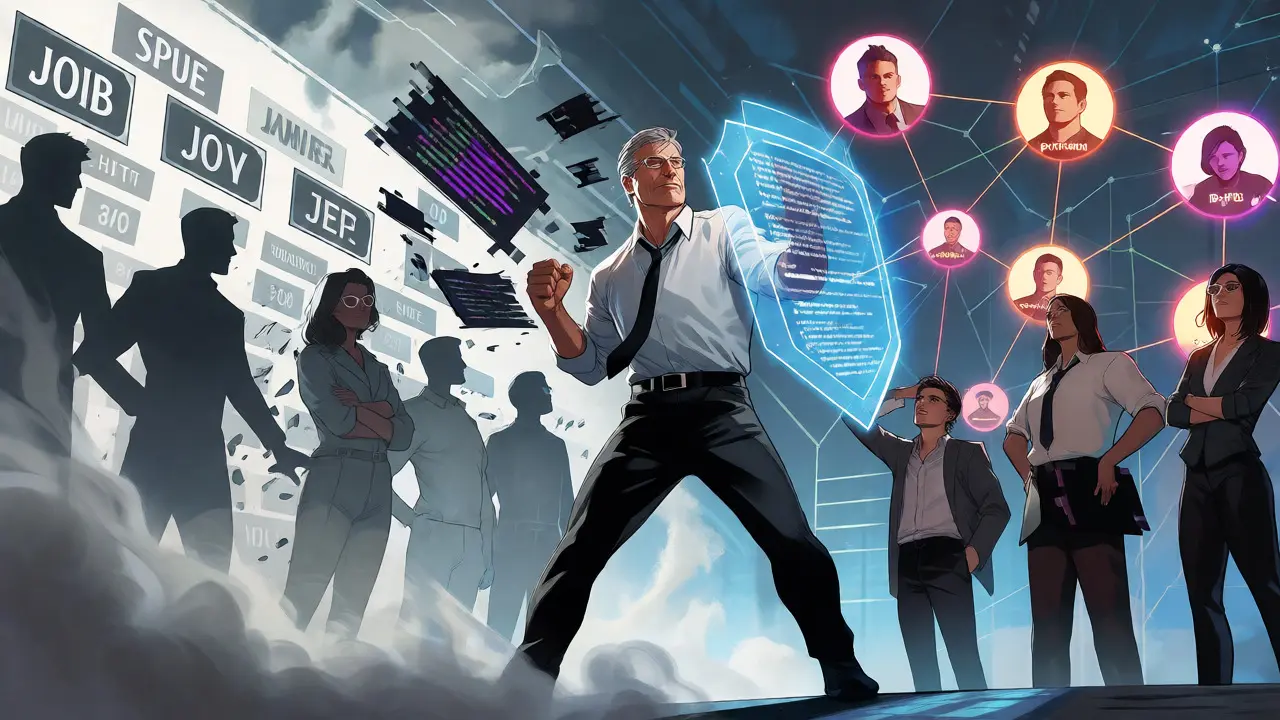
Online courses alone don’t create capability. You need hands-on application. This is where apprenticeships shine. But not the checkbox kind. Effective AI apprenticeships require active participation from senior experts. These veterans must review code, shadow junior colleagues, and teach problem-solving mindsets. They shouldn’t just supervise; they should co-work.
Why does this matter? Because AI outputs require judgment. A junior developer might accept a hallucinated API endpoint because it looks correct. A senior mentor spots the error instantly. By embedding seniors in the learning loop, you transfer tacit knowledge that books can’t teach. To make this work, tie mentoring to performance evaluations. If helping others master AI isn’t part of a senior leader’s KPI, it won’t happen. Provide dedicated time for these interactions. If you squeeze them into already-packed schedules, the program fails.
Measuring What Matters
You can’t manage what you don’t measure. Traditional metrics like "hours of training completed" are useless here. Focus on outcome-based indicators:
- Task Automation Rate: What percentage of repetitive tasks are now handled by AI?
- Cycle Time Reduction: How much faster are projects delivered compared to pre-AI benchmarks?
- Skill Gap Closure: Are identified competency gaps shrinking over quarterly reviews?
- Employee Utilization: Are freed-up hours being reinvested into strategic innovation?
Use platforms like Draup or similar talent intelligence frameworks to track these metrics. They help quantify the ROI of redesigning roles. If your upskilling program doesn’t move these needles, pivot quickly. The technology landscape shifts fast; your strategy must be agile enough to keep up.

Bridging the Technical and Non-Technical Divide
A common pitfall is viewing AI talent as exclusively technical. Data scientists and ML engineers are crucial, but they aren’t enough. Success depends on collaboration between technical builders and non-technical users-product managers, marketers, and domain experts. These groups must speak a common language.
For example, a marketing team needs to understand how to craft prompts that yield brand-consistent copy. An engineering team needs to understand business constraints to build relevant features. Cross-functional training breaks down silos. When a product manager understands the limitations of LLMs, they set realistic expectations. When engineers understand user pain points, they build better tools. This holistic view expands the pool of employees eligible for AI initiatives, turning the entire organization into an AI-ready workforce.
Frequently Asked Questions
Is it cheaper to upskill employees than to hire new AI talent?
Generally, yes. External hiring for specialized AI roles commands a significant wage premium due to scarcity. Upskilling leverages existing salary structures and reduces recruitment fees. More importantly, internal talent brings institutional knowledge that accelerates productivity, whereas new hires require a lengthy onboarding period to reach full effectiveness.
How does Generative AI change recruitment strategies?
It shifts focus from volume hiring of junior roles to strategic hiring of senior mentors and specialists. AI tools automate sourcing and screening, allowing recruiters to spend more time assessing soft skills and cultural fit. Additionally, companies prioritize candidates with demonstrated adaptability and problem-solving abilities over those with static technical certifications.
What is the biggest barrier to realizing AI ROI in talent strategy?
The primary barrier is treating AI as a technology deployment rather than a workforce transformation. Organizations often fail to align HR, engineering, and business leaders on strategic goals. Without clear skill mapping and continuous measurement of task automation rates, investments in tools and training rarely translate into measurable business outcomes.
Do I need data scientists to implement a skills-based talent strategy?
Not necessarily. Modern talent intelligence platforms use AI to infer skills from existing data sources like HR records, project management tools, and professional networks. These tools allow HR teams to visualize skill gaps without deep data science expertise. However, having analytical support helps in interpreting complex trends and refining the strategy over time.
How do apprenticeships improve AI adoption success?
Apprenticeships bridge the gap between theoretical knowledge and practical application. Senior experts provide critical feedback on AI outputs, teaching juniors how to judge quality and relevance. This mentorship transfers tacit organizational knowledge and ensures that AI usage aligns with business standards, reducing errors and accelerating competence.