
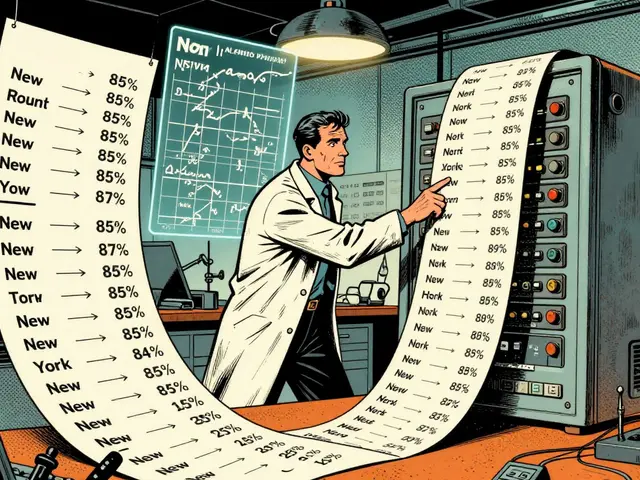
Building a chatbot or image generator used to be a science experiment. Now, it is a core business requirement. But here is the problem: traditional product management frameworks were built for deterministic software-code that does exactly what you tell it to do, every single time. Generative AI is different. It is probabilistic. It hallucinates. It drifts. If you treat an LLM (Large Language Model) feature like a standard button click, your project will likely join the 85% of AI initiatives that stall in the pilot phase.
As we move through 2026, the gap between 'cool demo' and 'profitable feature' is defined by three things: how you scope the problem, how you build your Minimum Viable Product (MVP), and how you measure success beyond simple accuracy scores. This guide cuts through the hype to show you how to manage generative AI features with precision.
The Scoping Trap: Why Data Beats Ideas
In traditional product management, you start with user interviews and wireframes. In generative AI product management, you must start with data. AIPM Guru’s research highlights a harsh reality: 63% of AI projects fail because teams skip adequate data assessment during initial scoping. You cannot build a generative feature if you do not know what data feeds it, where it lives, and whether it is clean enough to train or fine-tune a model.
Scoping for generative AI requires a shift from 'feature lists' to 'capability tracks.' Instead of asking 'What features do we want?', ask 'What level of generation can our data support right now?' For example, a fintech company might launch with template-based recommendations (limited generation) while building toward fully autonomous financial advice (complex generation). This approach, known as capability-specific tracking, allows you to deliver value immediately without waiting for perfect models.
You also need to account for the 'exploration sprint.' Unlike standard agile sprints that aim to ship code, exploration sprints aim to reduce uncertainty. These are dedicated periods where technical teams test model feasibility, latency constraints, and cost structures. McKinsey notes that AI discovery takes 35-50% longer than conventional software discovery. Accept this timeline. Rushing it leads to technical debt that is nearly impossible to refactor later.
Defining the AI MVP: Capability Over Completeness
The concept of an MVP changes when you introduce generative AI. In traditional apps, an MVP is a stripped-down version of the final product. In AI, an MVP is often a different *type* of solution entirely. You might use Retrieval-Augmented Generation (RAG) for your MVP instead of fine-tuning a base model, simply because RAG is faster to implement and easier to control.
Consider the 'hybrid approach.' Many successful AI products in 2026 do not rely solely on the model. They combine deterministic logic (rules-based systems) with probabilistic outputs (AI generation). For instance, a customer support bot might use AI to draft responses but require human approval for any message involving refunds or legal liabilities. This reduces risk while still leveraging AI speed.
When defining your AI MVP, focus on these three pillars:
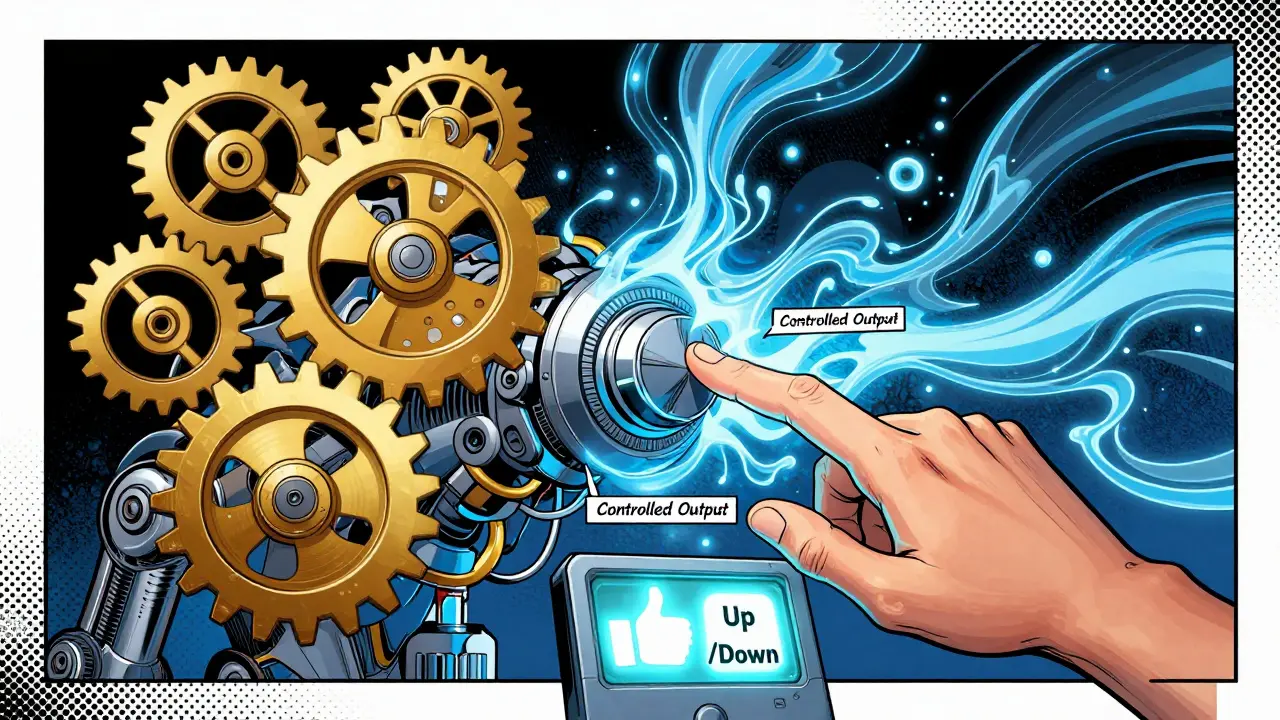
- Controlled Output Space: Limit what the AI can generate. Use constrained decoding or predefined templates to prevent wild hallucinations.
- Clear User Expectations: Design the UI to signal uncertainty. If the AI is guessing, the interface should say so. Don't hide the probability behind a confident tone.
- Feedback Loops Built-In: Every AI MVP needs a 'thumbs up/down' mechanism. This data is not just for sentiment; it is fuel for your next training cycle.
Voltage Control’s analysis shows that 78% of successful AI product managers possess working knowledge of neural network architectures. You don’t need to code the model, but you must understand its limits. Can it handle real-time requests? What is the token limit? How much does each query cost? These technical constraints define your product boundaries.
Moving Beyond Accuracy: The New Metric Stack
If you measure your generative AI feature only by 'accuracy,' you are missing the point. Traditional software has binary states: it works or it doesn't. Generative AI exists on a spectrum of quality. Pendo.io’s research indicates that 92% of leading AI product teams now use unified dashboards tracking three distinct dimensions: technical performance, user satisfaction, and business impact.
| Layer | Key Metrics | Why It Matters |
|---|---|---|
| Technical Performance | Latency, Token Cost per Query, Hallucination Rate, Drift Detection | Ensures the system is stable, affordable, and safe. High latency kills adoption regardless of output quality. |
| User Satisfaction | Helpfulness Score, Edit Rate (how much users change AI output), Completion Rate | Measures perceived value. If users edit 80% of the AI's output, the AI is adding friction, not value. |
| Business Impact | Conversion Lift, Support Ticket Reduction, Time-to-Resolution | Ties the AI feature to revenue or cost savings. This is what keeps executives invested. |
Pay close attention to the 'Edit Rate.' This is a powerful proxy for utility. If an AI writes a blog post for a marketer, and the marketer spends 10 minutes rewriting half of it, the AI saved them time but didn't save them effort. A low edit rate suggests high trust. A high completion rate (users finishing their task using the AI) correlates strongly with retention.
Also, monitor 'Drift.' Generative models degrade over time as user inputs change or underlying data shifts. Without automated drift detection, your feature might silently become worse weeks after launch. Set up alerts for sudden drops in helpfulness scores or spikes in latency.
Governance, Ethics, and Versioning Challenges
One unique challenge in generative AI product management is versioning. In traditional software, v1.1 is a predictable update. In AI, updating the underlying model can completely change the behavior of your feature. Simon-Kucher’s 2024 study found that 67% of SaaS companies now treat major model version changes as new features requiring separate pricing tiers. You cannot push a model update without rigorous testing against your specific use cases.
Furthermore, governance is no longer optional. With 48% of enterprise AI teams required to complete formal ethics reviews before launch, you must build compliance into your workflow. This includes checking for bias in training data, ensuring data privacy (GDPR/CCPA compliance), and establishing clear 'red lines' for what the AI is prohibited from generating.
Create an 'AI Ethics Checklist' as part of your definition of done. Does the output respect intellectual property? Is it inclusive? Are there safeguards against prompt injection attacks? Ignoring these questions invites regulatory risk and brand damage.
Cross-Functional Collaboration: Bridging the Gap
The biggest bottleneck in AI product development is rarely technology; it is communication. Voltage Control reports that 68% of failed AI initiatives stem from product managers lacking sufficient technical understanding to bridge gaps between engineering and business stakeholders. Meanwhile, 73% of failed projects cite terminology mismatches as a major obstacle.
To fix this, implement 'Translation Sessions.' These are short meetings where engineers explain model limitations in plain language, and product managers explain business constraints in technical terms. For example, an engineer might explain that 'temperature settings' affect creativity vs. consistency, while the PM explains why 'consistency' matters more for legal documents than marketing copy.
Define clear roles early. Who owns the data? Who validates the model output? Who approves the ethical review? Ambiguity here leads to blame-shifting when things go wrong. Establish a shared vocabulary document that defines terms like 'hallucination,' 'fine-tuning,' and 'latency' for all stakeholders.

Strategic Packaging and Pricing
How you package generative AI features affects your bottom line. Since AI usage incurs variable costs (compute power, API calls), flat-rate pricing can be dangerous. Simon-Kucher recommends tiered packaging strategies that differentiate AI capabilities across subscription levels. For example, basic users might get limited AI queries per month, while enterprise clients get unlimited access with higher accuracy guarantees.
This differentiation drives conversion. Companies that strategically position AI capabilities across tiers see 22% higher conversion rates. However, be transparent about limits. Users hate hitting unexpected paywalls or error messages due to quota exhaustion. Clear communication about what 'premium' AI access buys them (speed, priority processing, advanced models) builds trust.
Next Steps for Your AI Product Journey
Start small. Pick one narrow use case where AI adds clear value and data is readily available. Build a hybrid MVP that combines rules and generation. Measure everything, especially edit rates and latency. Iterate quickly based on feedback, not assumptions. And remember, your job is not just to ship AI, but to ship *useful* AI. The technology will keep improving, but the product manager’s role in guiding that improvement remains critical.
How long does it take to learn AI product management?
According to Voltage Control's 2024 survey, traditional product managers typically need 6-9 months to develop sufficient AI literacy. The steepest learning curve involves understanding model limitations and setting realistic user expectations for probabilistic outputs.
What is the difference between an AI MVP and a traditional MVP?
A traditional MVP is a simplified version of the final product. An AI MVP often uses a different technical approach, such as Retrieval-Augmented Generation (RAG) or hybrid rule-based systems, to deliver value quickly while managing the unpredictability of generative models.
Why do most AI projects fail?
DeepLearning.AI cites that 85% of AI projects fail to move beyond pilot stages. Primary causes include poor scoping, inadequate data assessment (63% of failures), and misaligned metrics that don't capture true user value or business impact.
How should I price generative AI features?
Use tiered packaging that differentiates AI capabilities. Since AI incurs variable compute costs, consider limiting queries for lower tiers and offering priority processing or advanced models for enterprise tiers. Transparency about limits is crucial to maintain trust.
What are 'Exploration Sprints' in AI product management?
Exploration sprints are dedicated periods for reducing uncertainty rather than shipping code. Teams use this time to test model feasibility, assess data quality, and evaluate technical constraints like latency and cost before committing to full-scale development.

Robert Barakat
July 1, 2026 AT 16:44the essence of product management in the age of generative ai is not about control but about surrendering to probability while maintaining a rigid ethical framework. we are no longer architects of deterministic structures but gardeners of chaotic systems. this shift requires a philosophical reorientation where uncertainty is not a bug but a feature of existence.
Michael Richards
July 1, 2026 AT 20:18You're missing the point entirely. Most PMs reading this don't need philosophy; they need to know why their pilot failed. It's because you skipped data validation. Stop treating AI like magic and start treating it like engineering. If your data isn't clean, your model is garbage. Period.
Laura Davis
July 2, 2026 AT 15:09I totally get the frustration with pilots failing but let's keep it real here. The hybrid approach mentioned is actually super practical for teams that are scared of hallucinations. We tried something similar with our support bot and having human approval for refunds saved us so much legal headache. It’s not just about tech, it’s about protecting the business too.
Lisa Nally
July 2, 2026 AT 22:04Oh, please. Let us discuss the epistemological crisis inherent in Retrieval-Augmented Generation (RAG). While RAG is touted as a panacea for latency and cost, it fundamentally alters the ontological status of the generated output. Are we merely retrieving truth or constructing a simulacrum? The jargon-heavy discourse surrounding 'capability tracks' obscures the profound lack of semantic grounding in most current implementations. One must question if the 'hybrid approach' is merely a band-aid on a hemorrhaging paradigm.
Edward Gilbreath
July 4, 2026 AT 05:54its all a scam anyway big tech wants you to think you need an mvp when really they just want to sell you more compute power. i bet those metrics are fake too. nobody cares about edit rates they just want to keep you working. wake up sheeple
kimberly de Bruin
July 5, 2026 AT 10:14we are dancing on the head of a pin trying to define success in a system that has no soul. the drift detection mentioned is merely a symptom of our inability to accept that knowledge decays. perhaps the true metric is how gracefully we accept the machine's ignorance rather than forcing it to pretend otherwise.
Edward Nigma
July 6, 2026 AT 12:20Actually, the article gets one thing wrong. Translation sessions are useless if the engineers are lying about latency. I've seen too many teams hide behind 'probabilistic outputs' when they really just mean 'our code is spaghetti.' You cant fix bad architecture with better vocabulary. Also, tiered pricing is just a way to nickel and dime users who already paid for the software.
Francis Laquerre
July 7, 2026 AT 05:25In my experience leading cross-functional teams across Europe and Asia, the cultural nuance of 'exploration sprints' cannot be overstated. In some regions, admitting uncertainty is seen as weakness, which makes these sprints incredibly difficult to justify to stakeholders. We have to frame them as 'risk mitigation workshops' to get buy-in. The technical constraints are universal, but the communication strategy must be localized to respect hierarchical norms.
michael rome
July 8, 2026 AT 00:04This is a remarkably comprehensive overview of the challenges facing modern product leadership. The emphasis on 'Edit Rate' as a proxy for utility is particularly insightful, as it moves beyond superficial engagement metrics to measure actual cognitive load reduction for the end-user. I would encourage practitioners to also consider the psychological safety of teams during exploration sprints, as fear of failure often stifles the necessary experimentation required for AI maturity.