
You just approved the budget for your company's first big Generative AI project. The software licenses are paid, the cloud infrastructure is set up, and the developers have deployed the model. You think you're done. But here is the uncomfortable truth that keeps CTOs awake at night: Gartner reported in 2023 that 85% of AI projects fail to deliver expected business value. And it’s rarely because the code was buggy or the hardware was slow. It fails because people didn't change how they work.
This isn't a tech problem; it's a human problem. When we talk about the cost of Generative AI, we often focus on GPU clusters and API tokens. We ignore the elephant in the room: Change Management. If you skip this step, you aren't saving money-you're deferring a much larger bill. SmartDev’s analysis of 157 small-to-medium enterprise (SME) implementations shows that ignoring the "soft" side of deployment leads to an average remediation cost of $18,000 per stalled initiative. Let’s break down what it actually costs to get your team from "what is this?" to "I can't live without this."
The Real Price Tag of Human Adaptation
Let’s look at the numbers. For most SMEs with initial budgets between $50,000 and $100,000, Staff Training and change management consume $8,000 to $20,000 in the first year alone. That sounds like a lot until you realize it represents only 15-25% of the total spend. Yet, many executives cut this line item first when budgets tighten. Why? Because it feels intangible. You can’t touch a spreadsheet cell that says "user buy-in."
But consider the alternative. Without structured Process Redesign, organizations face hidden costs. A logistics SME documented by SmartDev saw their maintenance and scaling spend jump from $45,000 in year two to $74,000 in year three. Why? Their initial rollout ignored workflow redesign. Staff tried to force the new AI tools into old habits, creating friction, errors, and eventually, resistance. The cost escalation was 65%. Compare that to companies that invest upfront: USM Systems’ 2025 analysis of 200 enterprise implementations found that those with formal change programs achieved a 73% user adoption rate, compared to just 42% for those who winged it.
Breaking Down the Cost Structure: Three Phases
To budget correctly, you need to stop viewing training as a one-time workshop. It’s a lifecycle. Industry best practices, such as those outlined by Cutter Associates, divide these costs into three distinct phases. Each has its own price tag and purpose.
- Initial Implementation ($8,000-$20,000): This covers technical training on AI interfaces, mapping out new workflows, and launching user adoption campaigns. This is where you pay for consultants or internal trainers to sit with teams and show them exactly how the AI fits into their daily tasks.
- Ongoing Optimization ($3,000-$8,000 per key member/year): AI capabilities evolve fast. What worked in January might be obsolete by June. Ongoing costs include quarterly refresher training and incremental adjustments to workflows as the model gets better or new features drop.
- Scaling Phase ($15,000-$30,000 per new unit): Once the pilot works, you expand. Scaling to a new department isn't just copying the file; it requires new training materials, new stakeholder alignment, and new integration tests. This phase often exceeds the cost of the initial development if not planned for.
SmartDev’s five-year breakdown reveals a shocking statistic: 60% of total AI implementation costs arise from maintenance, training, and scaling-not the initial build. If your budget only covers the build, you’re underfunded by more than half before you even start.
| Organization Type | Initial Change Mgmt Cost | Annual Operating Cost | Primary Challenge |
|---|---|---|---|
| Startups (10-50 employees) | $5,000 - $15,000 | $20,000 - $100,000 | Lack of dedicated HR resources; informal processes. |
| Mid-Size (100-1,000 employees) | $15,000 - $35,000 | $200,000 - $800,000 | Siloed departments resisting cross-functional changes. |
| Enterprise (1,000+ employees) | $50,000 - $150,000 | > $1 Million | Bureaucracy slowing down iterative training updates. |
Why "Big Bang" Rollouts Burn Cash
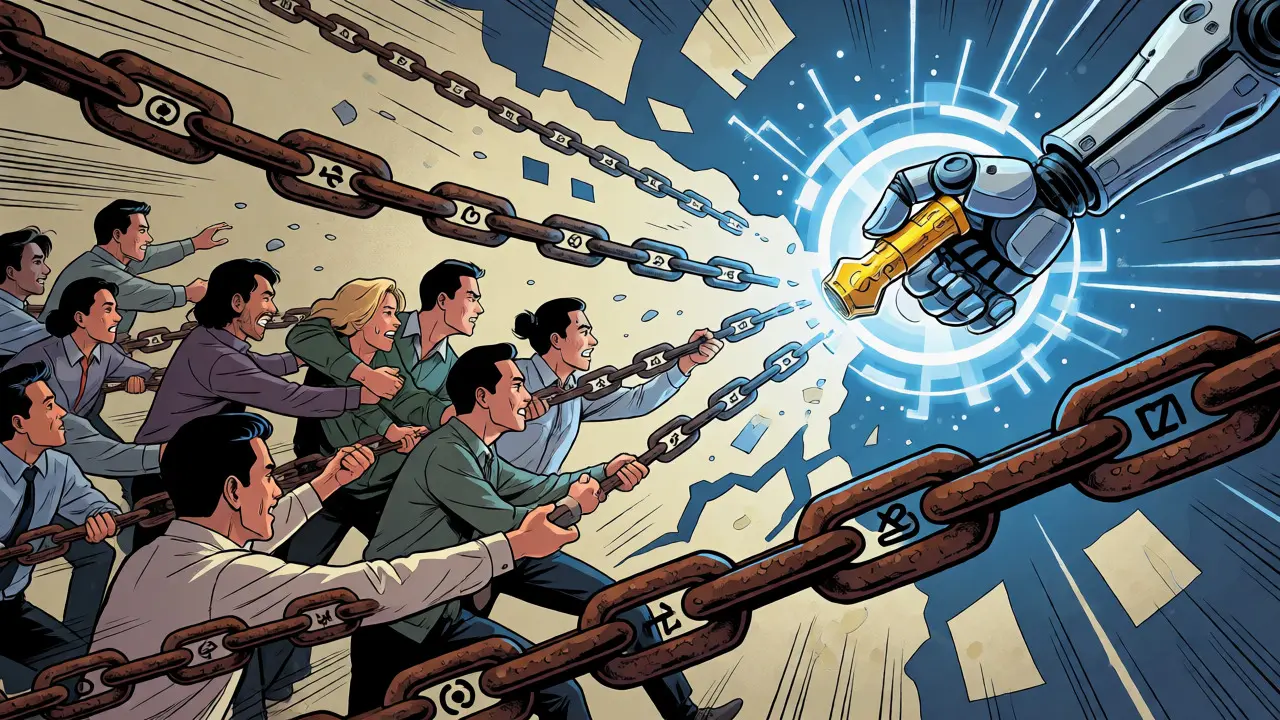
There is a temptation to flip the switch. Launch the AI tool for everyone, Monday morning, all hands on deck. This is the "big bang" approach. It looks efficient on paper but is expensive in practice. GO-Globe’s 2025 benchmarking study shows that organizations using Phased Implementation strategies reduce change management costs by 35-45% compared to big bang rollouts.
Why does phasing save money? Because it allows you to catch resistance early. In a phased rollout, you identify the "power users"-the skeptics who hold influence over their peers-and train them first. Cutter Associates data indicates that 68% of implementations face resistance from legacy system power users. If you ignore them, they will actively sabotage adoption. By involving them in the design process from day one, you turn detractors into champions. This saves the massive cost of retraining entire departments later because the initial rollout failed due to cultural pushback.
Furthermore, offshore development partners can further reduce these costs. SmartDev notes that leveraging specialized partners for training and process redesign can yield 40-60% cost reductions. These firms bring pre-built frameworks and experienced change agents who don't need to learn your industry from scratch.
The Hidden Costs of Poor Data Governance
You might ask, "What does data governance have to do with training?" Everything. Nguyen Le, COO at SmartDev, emphasizes that "a robust cloud and compliance setup is critical, as even minor gaps lead to data breaches or noncompliance penalties."
If your staff doesn't understand why certain data inputs matter, they will feed garbage into the system. This is a training issue disguised as a tech issue. Proper Data Governance training ensures users know what data is safe to share and how to structure prompts effectively. Without this, you risk security incidents. One healthcare provider abandoned a $250,000 AI implementation after eight months purely due to staff resistance stemming from inadequate planning. That’s a 100% loss. They didn't lose money on bad code; they lost it because they couldn't manage the humans operating the code.
Regulatory pressure is adding fuel to this fire. With the EU AI Act requiring documented change management processes for high-risk systems, compliance costs are rising by 10-15%. Ignoring the documentation aspect of change management now means paying for audits and legal reviews later.
Tools and Frameworks: What Do You Actually Buy?
So, where does the money go? It’s not just salaries. You need infrastructure for change itself. Platforms like Prosci ADKAR or Prosci 360 help track readiness and adoption. These tools cost $5,000 to $25,000 annually, depending on your size. They integrate with HR systems to track who has completed training and who hasn't.
You also need personnel. For every 100 employees, you typically need 0.5 to 2 full-time equivalent (FTE) change management specialists during the initial rollout. These aren't just IT support tickets; they are coaches. They sit with marketing, finance, and operations teams, translating AI capabilities into job-specific benefits. Integration with workflow tools like ServiceNow or Jira adds another $2,000 to $10,000 per system to ensure tracking is seamless.

ROI: The Payoff for Doing It Right
Is it worth it? Absolutely. Organizations that allocate 25-30% of their total AI budget to change management see a 3.2x higher ROI than those sticking to the industry average of 15-20%. This comes from faster time-to-value. When users adopt quickly, productivity gains hit the bottom line sooner.
USM Systems reports that businesses adopting AI-native workflows with structured change programs see 20-60% reductions in operational spending within the first year. Conversely, those without it face the "valley of despair"-that period after launch where usage drops, complaints rise, and executives question the investment. McKinsey estimates generative AI could add $4.4 trillion to the global economy, but that potential remains locked away without effective human adaptation.
The market recognizes this shift. The global AI change management market is projected to grow from $4.2 billion in 2025 to $7.8 billion by 2027. Fortune 500 companies are leading the charge, with 63% now having dedicated AI change management teams, up from just 29% in 2023. If you’re still treating training as an afterthought, you’re already behind the curve.
Actionable Steps to Control Your Costs
Don't let your AI project join the failure statistics. Here is how to keep your change management costs predictable and effective:
- Conduct a Readiness Assessment ($2,000-$8,000): Before buying any tools, survey your staff. Who is ready? Who is scared? Identify the influencers and the blockers.
- Develop Role-Specific Materials ($3,000-$10,000): Generic "AI 101" slides don't work. Sales needs different prompts than Legal. Tailor the training.
- Create Workflow Blueprints ($5,000-$15,000): Map out exactly how the AI changes the process. Don't just plug it in; redesign the flow. This prevents the "forcing square pegs in round holes" scenario.
- Plan for Continuous Retraining: Budget for quarterly refreshers. AI moves too fast for annual training cycles.
- Measure Adoption, Not Just Usage: Track how well people are integrating the tool into their decision-making, not just how many times they logged in.
By shifting your mindset from "deploying software" to "managing transformation," you protect your investment. The technology is ready. The question is whether your organization is.
How much should I budget for change management relative to the total AI project cost?
Industry leaders recommend allocating 25-30% of your total AI budget to change management activities. While the average is lower (15-20%), higher allocation correlates with a 3.2x increase in ROI due to faster adoption and reduced remediation costs.
What are the biggest risks of skipping process redesign?
Skipping process redesign often leads to a 65% cost escalation in years two and three. Users try to fit AI into outdated workflows, causing friction, errors, and low adoption rates (often below 42%). This frequently results in expensive retraining or complete project abandonment.
Do startups need dedicated change management specialists?
Not necessarily dedicated FTEs initially, but they need structured efforts. Startups face lower absolute costs ($5k-$15k) but higher vulnerability to culture clashes. Leveraging external partners or fractional experts can provide the necessary expertise without the overhead of a full-time hire.
How long does it take for staff to fully adopt generative AI tools?
Typically, organizations require 3-6 months for full staff adoption. Technical teams may need 40-80 hours of training, while business users generally require 20-40 hours. However, ongoing optimization is required indefinitely as models and workflows evolve.
What role does data governance play in change management costs?
Data governance is critical to preventing security breaches and compliance penalties. Training staff on data handling reduces the risk of costly incidents. Regulatory requirements, such as the EU AI Act, can add 10-15% to compliance-related change management costs if not properly integrated into training programs.