
Imagine asking your favorite AI assistant about a breaking news event from this morning. If you’re using a standard large language model (LLM) trained last year, it will likely give you a confident but completely wrong answer-or worse, make something up entirely. This is the "hallucination" problem that has plagued AI developers for years. But there’s a new architectural shift happening under the hood of modern AI systems, and it’s changing everything.
We are moving away from treating retrieval as an afterthought and toward Retrieval-Aware Transformers, which are transformer-based architectures specifically engineered to natively integrate retrieval-augmented generation (RAG) capabilities directly into their core processing pipeline. Unlike older models that rely solely on static training data, these models are built to fetch, process, and use external information in real-time without needing complex workarounds or post-processing steps.
The Core Problem with Traditional Transformers
To understand why Retrieval-Aware Transformers matter, we first need to look at what traditional models like GPT-3.5 or BERT actually do. These models are essentially massive pattern-matching engines. They predict the next word based on everything they saw during their initial training phase. Once that training is done, their knowledge is frozen. If the world changes-new laws pass, a new software version releases, or a scientific breakthrough occurs-the model doesn’t know about it unless you retrain it from scratch, which is incredibly expensive and slow.
This creates three major issues:
- Static Knowledge Cutoffs: The model’s knowledge stops at its last training date.
- Hallucinations: Without access to verified sources, the model invents facts to satisfy the user’s prompt.
- Domain Blindness: General-purpose models struggle with highly specialized topics like legal contracts or medical diagnostics because they lack deep, specific context.
For years, engineers tried to fix this by building separate retrieval systems and stitching them together with the LLM using code wrappers. It was messy, prone to errors, and often resulted in the model ignoring the retrieved data anyway. Retrieval-Aware Transformers solve this by baking the retrieval logic into the model’s attention mechanisms from day one.
How Retrieval-Augmented Generation (RAG) Works Natively
Retrieval-Augmented Generation (RAG) is an AI framework that merges traditional information retrieval systems (search engines, databases, knowledge bases) with the generative capabilities of LLMs to improve output accuracy and currency. In a native Retrieval-Aware Transformer, this isn’t just a plugin; it’s part of the brain.
Here is how the process flows inside these advanced architectures:
- Query Encoding: When you ask a question, the transformer doesn’t just send it to the generator. It simultaneously encodes the query into a high-dimensional vector space (often 768 or 1024 dimensions).
- Dense Passage Retrieval: Using this vector, the system instantly searches an external knowledge base-like a vector database-for documents with similar embeddings. This happens in milliseconds.
- Pre-processing: The retrieved chunks of text undergo tokenization and cleaning (removing stop words, stemming) to optimize them for the model.
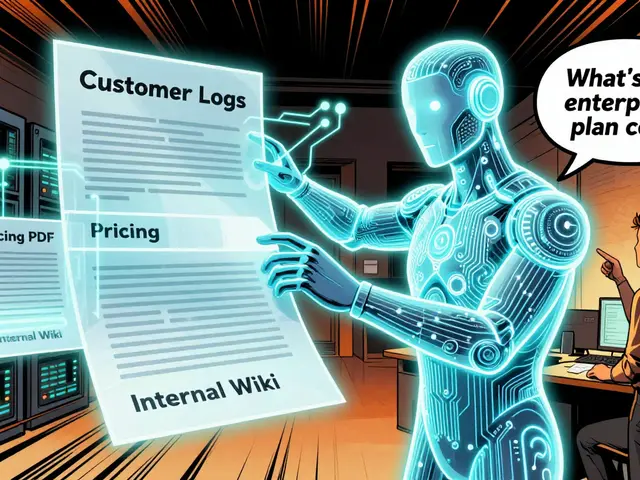
- Grounded Generation: Crucially, the retrieved context is injected directly into the transformer’s self-attention layers. The model attends to both your original question AND the retrieved facts simultaneously when generating each word.
This integration means the model isn’t guessing; it’s reading. According to technical benchmarks from providers like Google Cloud and AWS, this grounded approach significantly reduces factual errors because the output is constrained by actual source material.

Architectural Innovations: What Makes Them "Aware"?
So, what exactly makes a transformer "retrieval-aware" compared to a standard one? It comes down to several key structural innovations identified in recent academic surveys and industry implementations.
First, there are dual-encoder systems. Instead of a single path for processing text, these architectures encode both queries and documents into a shared embedding space. This allows for extremely efficient similarity matching. Think of it like having a librarian who speaks the same language as the books-they can find exactly what you need without scanning every page.
Second, the attention mechanism itself is modified. In standard transformers, attention calculates relationships between tokens in the input sequence. In retrieval-aware versions, the attention heads also weigh the importance of the retrieved external context. This ensures that if a retrieved document contains critical evidence, the model prioritizes it over its internal (and potentially outdated) memories.
Third, some advanced implementations use hybrid retrieval strategies natively. They combine sparse retrieval (like BM25 keyword matching) with dense retrieval (vector similarity). Research shows this hybrid approach improves performance by 5-15% over using either method alone, ensuring you catch relevant results whether they match semantically or lexically.
| Feature | Standard Transformer | Retrieval-Aware Transformer |
|---|---|---|
| Knowledge Source | Static training data only | Dynamic external knowledge bases + training data |
| Update Frequency | Requires full retraining (weeks/months) | Instant updates via knowledge base ingestion |
| Hallucination Rate | Higher (relies on probability) | Lower (grounded in retrieved facts) |
| Integration Complexity | Low (standalone model) | Medium-High (requires vector DB & indexing) |
| Inference Latency | Fastest | Slightly higher (+10-30% overhead) |
Implementation Challenges and Trade-offs
It sounds perfect, right? Why hasn’t everyone switched yet? Because native RAG introduces new complexities. You aren’t just deploying a model anymore; you’re managing a system.
The biggest hurdle is system complexity. To run a retrieval-aware transformer effectively, you need infrastructure to maintain and index external knowledge bases. Popular tools for this include Pinecone, Weaviate, Milvus, and Elasticsearch. These vector databases store the embeddings of your documents so the model can search them quickly. Setting this up requires expertise in distributed systems, not just Python coding.
Then there’s the issue of latency. Adding a retrieval step takes time. Even with optimized dense passage retrieval, you’re adding hundreds of milliseconds to seconds to your response time. While compression and quantization techniques can reduce this overhead by 40-70%, it’s still slower than a pure local model. For real-time applications like customer service chatbots, this trade-off must be carefully managed.
Another risk is retrieval error amplification. If the retrieval component fetches irrelevant or low-quality documents, the transformer might latch onto that bad information and generate a confidently wrong answer. This is known as "garbage in, gospel out." Engineers must implement robust ranking mechanisms, such as learned-to-rank algorithms, to score and filter retrieved documents before they reach the generator.
The Ecosystem: Tools and Frameworks Driving Adoption
The good news is that the ecosystem is maturing rapidly. You don’t have to build these architectures from scratch. Major players are making native RAG support accessible.
Hugging Face Transformers library now provides extensive utilities and examples for building RAG systems. They’ve even integrated with Ray, a library for scalable computing, allowing developers to distribute retrieval operations across multiple machines. This is crucial for production-scale deployments where throughput matters.
LangChain, launched in late 2022, has become the de facto standard for chaining together LLMs with retrieval components. It abstracts away much of the boilerplate code needed to connect prompts, retrievers, and memory modules. Meanwhile, cloud giants like Google Cloud, AWS, and IBM offer managed RAG services. These services handle the heavy lifting of indexing and searching, charging typically between $0.01 and $0.10 per query depending on complexity.
Academic research continues to push boundaries too. Papers from Meta AI and Google Research explore multi-hop retrieval, where the system iteratively retrieves additional documents based on intermediate results. This enables reasoning over complex information chains, moving beyond simple fact-fetching to true analytical capability.
Future Directions: Where Is This Heading?
We are only scratching the surface. The next wave of Retrieval-Aware Transformers will focus on adaptive decision-making. Currently, most systems retrieve information for every query. Future models will learn *when* to retrieve and when to rely on internal knowledge, saving compute resources and reducing latency.
We’ll also see more multimodal retrieval. Imagine asking a question and having the model retrieve not just text, but images, charts, and structured data tables, integrating all of them into a cohesive answer. Cross-lingual retrieval is another frontier, allowing users to query in English and get answers sourced from Japanese or Arabic documents seamlessly.
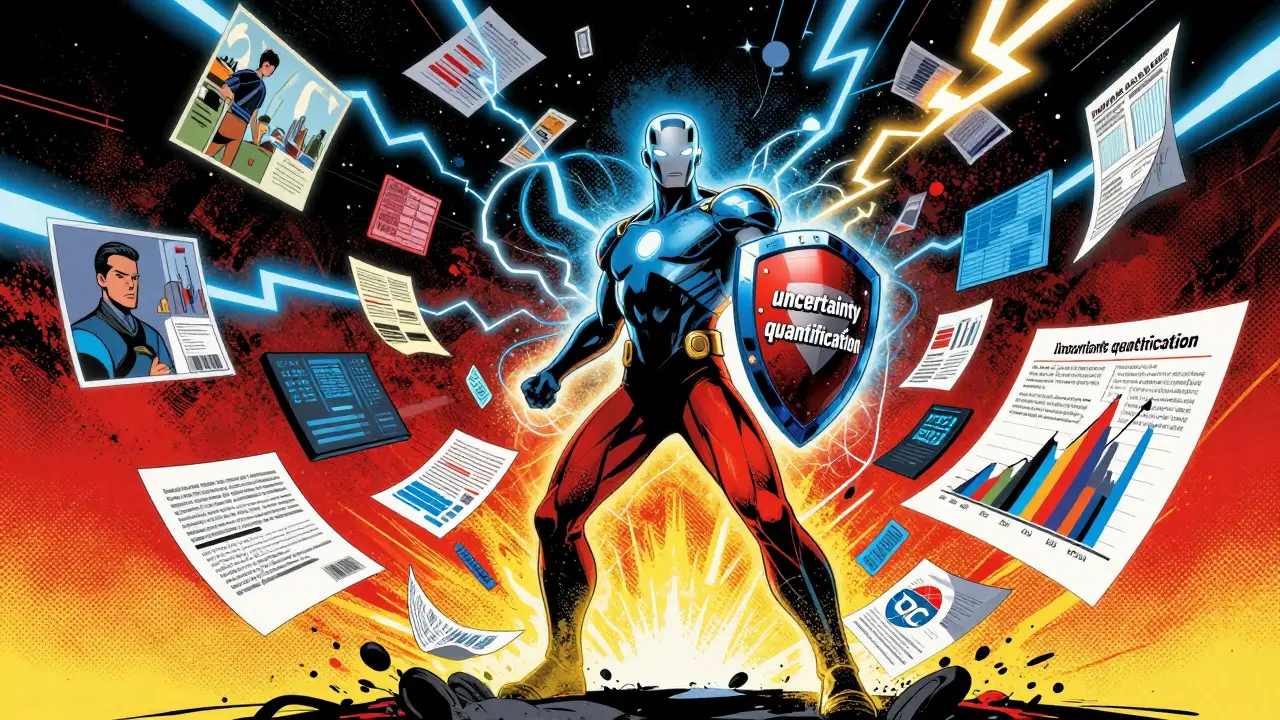
Perhaps most importantly, expect better uncertainty quantification. Users need to know when the model is unsure. Future architectures will provide confidence scores alongside answers, helping humans verify critical decisions in fields like healthcare and law.
What is the difference between fine-tuning and Retrieval-Aware Transformers?
Fine-tuning modifies the model's weights to learn new patterns from a specific dataset, creating a static model that cannot adapt to new information without further training. Retrieval-Aware Transformers keep the model weights mostly static but connect it to dynamic external knowledge bases. This allows for instant updates to knowledge without the high computational cost of retraining.
Do Retrieval-Aware Transformers eliminate hallucinations completely?
They significantly reduce them, but do not eliminate them entirely. If the retrieval system fails to find relevant information, or finds incorrect information, the model may still hallucinate. However, because the output is grounded in cited sources, it is easier to detect and correct errors compared to pure generative models.
Which vector databases are best for implementing RAG?
Popular choices include Pinecone, Weaviate, Milvus, and Elasticsearch. The best choice depends on your scale and needs. Pinecone is fully managed and easy to start with, while Milvus is open-source and highly scalable for large enterprises. Elasticsearch offers strong hybrid search capabilities combining keyword and vector search.
Is LangChain necessary for building Retrieval-Aware systems?
No, it is not strictly necessary, but it is highly recommended for rapid development. LangChain provides pre-built components for document loading, splitting, embedding, and retrieval, which saves weeks of engineering time. For custom, high-performance production systems, some teams build their own pipelines using raw PyTorch or TensorFlow libraries.
How much does latency increase with native RAG?
Latency typically increases by 10-30% due to the additional steps of encoding the query, searching the vector database, and processing retrieved context. However, optimizations like quantization and efficient indexing (e.g., FAISS) can mitigate this. For many enterprise applications, the trade-off for accuracy is worth the slight delay.


alex kobri
August 4, 2026 AT 03:59the whole point of this is that we stop pretending the model knows anything at all. it's just a mirror reflecting what we feed it. if you want truth you have to bring the source material yourself. otherwise you're just talking to a very expensive parrot that thinks it's a scholar
Quintin Franzese
August 5, 2026 AT 08:43oh great another buzzword for "search engine with extra steps". i'm sure the enterprise consultants are already drafting their six-figure consulting contracts to help us implement our native retrieval-awareness protocols. because nothing says innovation like slapping a new label on an old problem while charging triple the latency costs
Anthony Miller
August 6, 2026 AT 18:23You are missing the fundamental structural necessity here. The static nature of traditional transformers is an abomination against logical progression. One must integrate external data streams immediately or remain obsolete. It is not optional. Your hesitation indicates a lack of technical foresight that is frankly embarrassing for anyone claiming expertise in modern architecture. Wake up.
Tamara Miller
August 8, 2026 AT 02:12I suppose we should all just blindly trust these "native" systems without questioning the inherent bias of the retrieval sources? It is quite arrogant to assume that simply fetching a document makes it true. We are creating a digital echo chamber where garbage in becomes gospel out, and yet here we are praising the efficiency of our own deception. How utterly predictable and morally bankrupt.
Deb Kortyna, MBA
August 10, 2026 AT 00:43The distinction between fine-tuning and retrieval-augmented generation is often misunderstood by those who have not delved deeply into the architectural nuances. Fine-tuning alters the weights, thereby embedding knowledge statically, whereas Retrieval-Aware Transformers maintain dynamic access to external databases. This ensures that the model remains current without the prohibitive computational costs associated with retraining. Furthermore, the reduction in hallucination rates is statistically significant when grounded in verified sources, as demonstrated by recent benchmarks from major cloud providers. It is imperative that organizations recognize this shift to maintain competitive advantage in an increasingly data-driven landscape.
Zach Loescher
August 10, 2026 AT 19:16i was reading about the hybrid retrieval strategies mentioned in the post. combining sparse and dense retrieval seems like a solid approach but i wonder how much overhead that adds in practice. does anyone have real world metrics on the performance gain versus the complexity cost? it feels like there might be a sweet spot depending on the domain
Savara Gunn
August 12, 2026 AT 06:15it's really helpful to see the comparison table laid out so clearly. the latency trade-off is definitely something to keep in mind for real-time apps but the accuracy boost seems worth it for most use cases. thanks for sharing this overview
Susan Cole
August 13, 2026 AT 08:10the part about uncertainty quantification resonates with me. knowing when the model is unsure is just as important as getting the right answer. it builds trust with the end user rather than hiding behind confident falsehoods. i hope we see more emphasis on confidence scores in future releases
michelle veluz
August 14, 2026 AT 19:57They are watching us through the vector databases! Every query you make is stored indexed and cross-referenced to build your psychological profile. The "native integration" is just a trojan horse for total surveillance capitalism. Don't let them steal your thoughts!