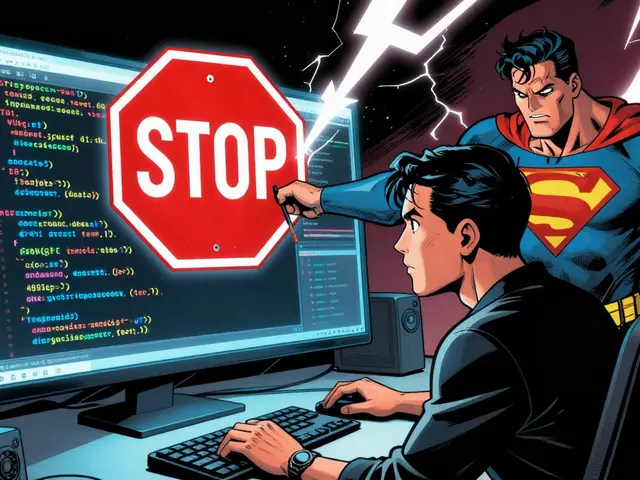
You type a prompt into your IDE. The AI spits out a function. You hit commit. It merges. Done. This is the dream of vibe coding-an AI-driven development approach where developers build applications through natural language conversations rather than manual syntax entry. But if you’re running this in a regulated environment, or even just a team larger than three people, that "done" feels dangerously quiet.
Where’s the oversight? Who checked for security flaws? Did anyone actually read the code before it went to production? Traditional software engineering relies on Separation of Duties (SoD), a control framework requiring multiple actors to complete critical tasks to prevent error and fraud. In classic DevOps, the person who writes the code isn’t the person who approves its deployment. With vibe coding, those lines blur because the AI acts as both writer and reviewer, and the developer often skips the latter entirely.
This article breaks down how to keep SoD principles alive when your primary developer is an algorithm. We’ll look at why standard pipelines break, what specific risks emerge, and how to structure your workflow so you don’t trade speed for chaos.
Why Traditional SoD Breaks in AI Workflows
In a standard GitLab or GitHub pipeline, SoD is enforced by role-based access controls. A developer creates a Merge Request (MR). A peer reviews it. A compliance officer might approve it if it touches sensitive data. Finally, a CI/CD system deploys it. Each step requires a different human identity. This friction is intentional. It catches mistakes and prevents one rogue actor from pushing bad code.
Vibe coding disrupts this chain. If you use tools like ServiceNow’s Build Agent or GitHub Copilot Workspace, the AI generates the entire component. You might not even open the file to check the syntax. You accept the suggestion because it "looks right." Now, who reviewed the code? Technically, no one. The AI wrote it; the AI suggested it; you accepted it. You are now the sole author, reviewer, and approver. That violates the core tenet of SoD: no single individual should have end-to-end control over a critical transaction.
| Stage | Traditional DevOps Role | Vibe Coding Reality | SoD Risk Level |
|---|---|---|---|
| Code Generation | Developer writes logic manually | AI generates full function/component | Low (if reviewed) |
| Initial Review | Peer Developer checks logic/style | Self-acceptance by Prompt Engineer | High (No independent check) |
| Security Scan | Automated SAST/DAST tools run | Often skipped or ignored due to volume | Critical (Blind spots) |
| Approval/Merge | Tech Lead or Compliance Officer | Auto-merge on green tests | Medium (Context missing) |
| Deployment | Release Manager / Pipeline Bot | Pipeline Bot (triggered by dev) | Low (Standard) |
The Three Pillars of AI-Era Separation of Duties
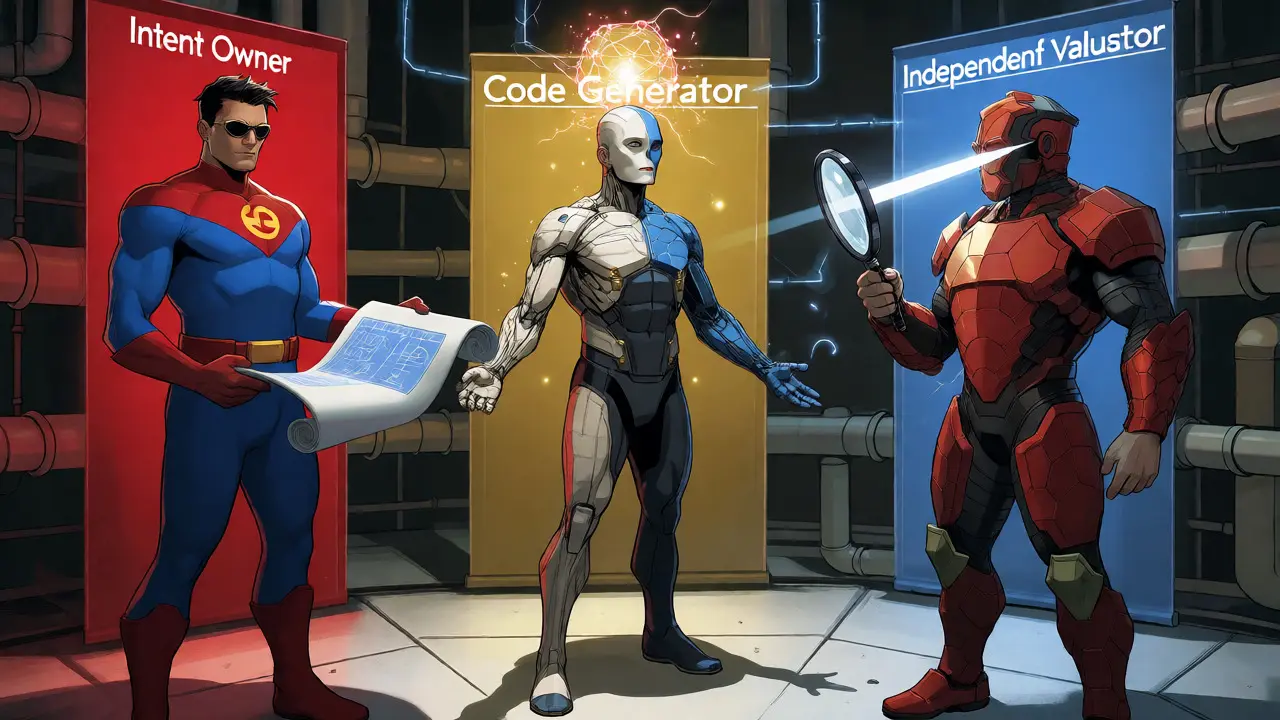
To fix this, you can’t just ban AI. You need to redefine who does what. Think of SoD in vibe coding not as separating humans from humans, but separating intent, generation, and validation.
1. The Intent Owner (The Product/Dev Lead)
This person defines what needs to be built. They write the high-level prompt or user story. Crucially, they do not necessarily write the final code. Their job is to ensure the business requirement is clear. If the AI hallucinates a feature that wasn’t asked for, the Intent Owner catches it. This separates the "why" from the "how."
2. The Code Generator (The AI + Prompt Engineer)
This role involves interacting with the LLM. Whether it’s a junior dev using Copilot or a senior architect using Cursor, this person drives the generation. However, under strict SoD, this person cannot also be the primary security validator. Why? Because confirmation bias is real. If I ask an AI to write a secure login function, and it gives me something that looks secure, I’m inclined to believe it because I want to move fast. I need someone else to poke holes in it.
3. The Independent Validator (Human or Automated Gatekeeper)
This is the most critical shift. In traditional setups, this was a peer review. In vibe coding, this must often be automated first, then human-second. The validator checks for:
- Security Patterns: Does the AI introduce SQL injection vulnerabilities?
- License Compliance: Did the AI copy-paste GPL-licensed code into our proprietary app?
- Logic Consistency: Does the code actually solve the problem stated by the Intent Owner?
Implementing Technical Controls for SoD
You can’t rely on policy alone. Humans will bypass rules when deadlines loom. You need technical enforcement in your pipeline. Here’s how to configure your stack for SoD in an AI-heavy environment.
Enforce Two-Person Rule via Branch Protection
In GitLab or GitHub, configure branch protection rules to require at least one approval from a user different from the committer. Even if the AI wrote the code, the human who committed it must get a second human sign-off. This seems obvious, but many teams disable this for "rapid prototyping" branches that eventually merge to main. Don’t let them.
Integrate AI-Specific Security Scanners
Standard SAST (Static Application Security Testing) tools are great, but they aren’t tuned for AI quirks. Use tools that specifically scan for "hallucinated dependencies" or known insecure patterns common in LLM outputs. For example, some scanners check if the AI used deprecated libraries that were popular in training data but obsolete now. This adds an automated layer of separation between the generator and the deployer.
Audit Logs Must Capture Prompts
Traditional audit logs track code changes. For vibe coding, you need to log the prompt that generated the change. Why? If a bug appears six months later, you need to know if it was a misunderstanding of requirements (Intent failure) or a bad generation (Generator failure). Platforms like ServiceNow and specialized AI observability tools allow you to store these interactions. Without this, you can’t assign accountability.

Common Pitfalls and How to Avoid Them
Teams trying to implement SoD in vibe coding often fall into three traps.
The "Rubber Stamp" Approval. Developers start approving each other’s AI-generated code without reading it. They see a green checkmark and click "Merge." To combat this, require reviewers to add a comment explaining why they approved. If they can’t explain the logic, they shouldn’t approve it. This forces engagement.
The Shadow IT Problem. Developers use personal ChatGPT accounts to generate snippets, paste them into their IDE, and commit. These snippets bypass all company security scanning until after the fact. Mandate the use of enterprise-grade AI coding assistants (like GitHub Copilot Business or Amazon Q) that integrate directly into the IDE and respect corporate privacy policies. Block raw clipboard pastes from untrusted sources via DLP (Data Loss Prevention) tools if necessary.
Ignoring License Risks. AI models train on public code. Sometimes, they reproduce substantial chunks of licensed code verbatim. If your legal team doesn’t have a process to flag this, you’re exposing the company to copyright lawsuits. Your SoD framework must include a legal/compliance checkpoint for any new dependency introduced by AI, especially if it’s obscure.
Building a Governance Framework for 2026
As we move deeper into 2026, the definition of "developer" is expanding. Your governance model needs to reflect that. Start small. Pick one critical service. Implement the three-pillar model: Intent, Generate, Validate. Measure the defect rate before and after. You’ll likely find that while velocity dips slightly, the number of rollback incidents drops significantly.
Remember, separation of duties isn’t about slowing people down. It’s about ensuring that when things go wrong, you know exactly where the failure occurred. Was it the prompt? The model? The reviewer? Without SoD, everything is just "the AI did it," which is never a satisfying answer during a post-mortem.
Does vibe coding eliminate the need for code reviews?
No. While AI reduces the time spent writing boilerplate, it increases the risk of subtle logical errors or security vulnerabilities. Code reviews remain essential for verifying that the generated code aligns with business intent and architectural standards. In fact, reviews may become more focused on logic and security rather than syntax.
How do I enforce separation of duties if the AI writes the code?
You separate the roles of "Prompt Author," "Code Committer," and "Approver." Ensure that the person committing the code cannot approve their own merge request. Additionally, use automated security gates that act as an independent validator, checking for issues the human reviewer might miss.
What are the biggest security risks in vibe coding pipelines?
The top risks include: 1) Introduction of vulnerable dependencies (hallucinated or outdated packages), 2) License contamination (copying GPL code into proprietary apps), 3) Lack of audit trails for prompts, making debugging difficult, and 4) Confirmation bias, where developers trust AI output too implicitly.
Can automated testing replace human review in vibe coding?
Automated testing is crucial but insufficient on its own. AI often generates tests that pass trivially or fail to cover edge cases. Human review is still needed to validate test coverage adequacy and ensure the code solves the actual business problem, not just the syntactic problem.
Should I restrict AI usage to certain teams?
Initially, yes. Pilot vibe coding in low-risk projects with strong SoD controls. Once you’ve established a governance framework that works, expand to critical systems. Restricting usage helps manage the learning curve and ensures that early failures don’t impact customer-facing products.