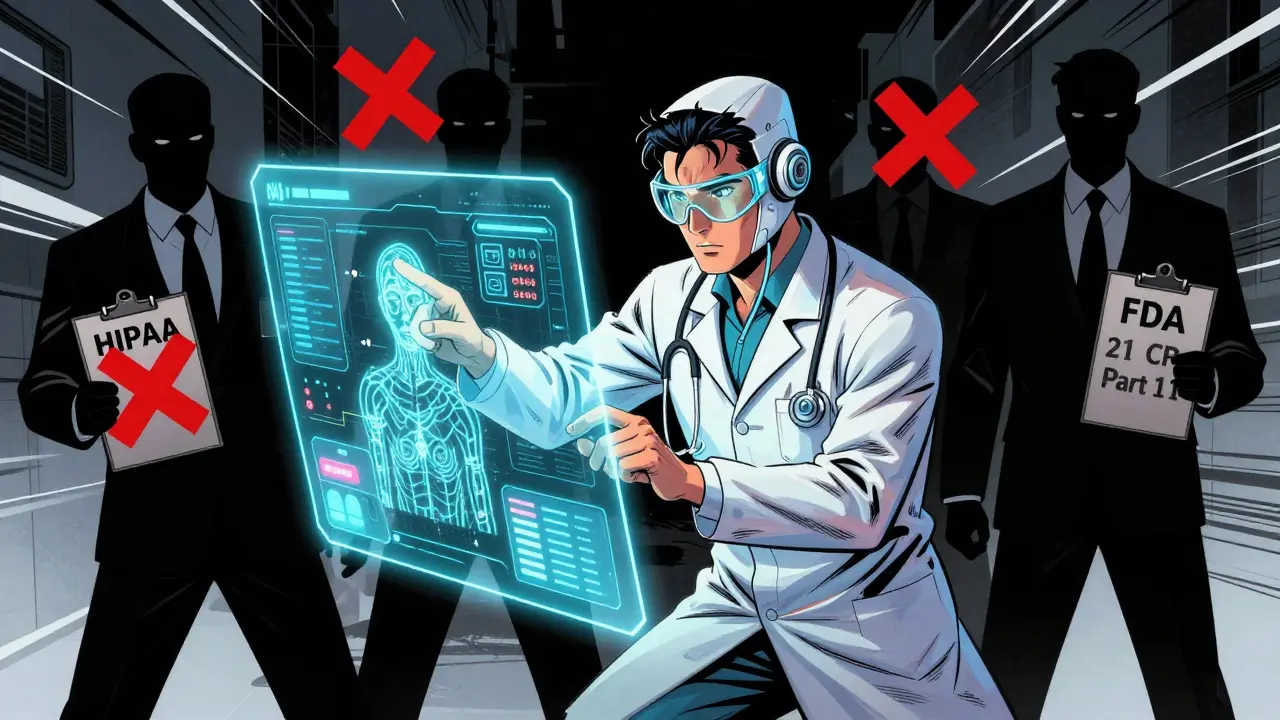
Imagine building software by simply talking to an AI. You say, "Make a dashboard that shows patient medication alerts," and within seconds, it writes the code, tests it, and deploys a working version. This isn’t science fiction-it’s vibe coding, a method that’s taken startup teams and SaaS companies by storm since 2024. But if you work in healthcare or finance, you’ve probably heard whispers about it… and then been told to forget it. Why? Because in regulated industries, speed isn’t the goal-compliance is.
What Is Vibe Coding, Really?
Vibe coding isn’t just using AI to autocomplete lines of code. It’s a full shift in how software gets made. Instead of writing detailed specs, designing architecture diagrams, and going through weeks of reviews, developers now describe what they want in plain language-like chatting with a teammate. The AI generates the code, runs tests, and even writes documentation. It’s fast. It’s flexible. And it works great… until it hits a regulator. In unregulated spaces-like a consumer app or a marketing website-this approach cuts development time by 40-60%. Companies like Notion and Shopify have integrated vibe coding into their daily workflows. Engineers report spending less time fixing bugs and more time solving real problems. But in healthcare and finance? The same tools that boost productivity elsewhere become liabilities.The Regulatory Paradox
Regulated industries don’t just want software that works. They need software that can be proven to work. Every line of code must trace back to a requirement. Every change must be documented. Every decision must be auditable. That’s not optional-it’s the law. In healthcare, systems handling patient data must comply with HIPAA, FDA 21 CFR Part 11, and ISO/IEC 62304. These rules demand traceability: if a bug causes a misdiagnosis, regulators need to know exactly how that code got written, who reviewed it, and why it wasn’t caught. Vibe coding, by design, doesn’t provide that. AI-generated code often lacks context. Who wrote the prompt? What assumptions were made? Was the output validated against clinical guidelines? Without answers, auditors shut it down. Finance faces the same problem. SOX requires strict controls over financial reporting systems. PCI-DSS demands logging for every data access. GDPR forces transparency in automated decisions. When AI generates code that updates a payment processor or recalculates loan interest, regulators ask: "Who approved this? What test covered this edge case? Where’s the signed-off change request?" The answer is usually: "The AI did it. We didn’t document why." This isn’t a technical flaw-it’s a philosophical clash. Vibe coding thrives on iteration. Regulations demand stability. One moves fast and breaks things. The other insists nothing breaks, ever.Where It Actually Works (And Where It Doesn’t)
Some teams in regulated sectors are finding narrow ways to use vibe coding without breaking rules. But they’re careful. In healthcare, the only safe use is for prototypes. A team might use vibe coding to build a mockup of a new patient portal interface using fake data. They show it to clinicians, get feedback, then throw it away. Only after requirements are locked down do human engineers build the real version-using traditional methods, with full documentation, peer reviews, and validation protocols. Similarly, in finance, vibe coding works for internal tools: CSV parsers, report generators, data transformers. These don’t touch customer money or personal data. They’re not subject to audit. But when the same tool starts handling real transactions? It’s blocked. The rule is simple: vibe coding is allowed where the risk is zero. Once there’s any chance of harm-patient safety, financial loss, regulatory fine-it’s off-limits.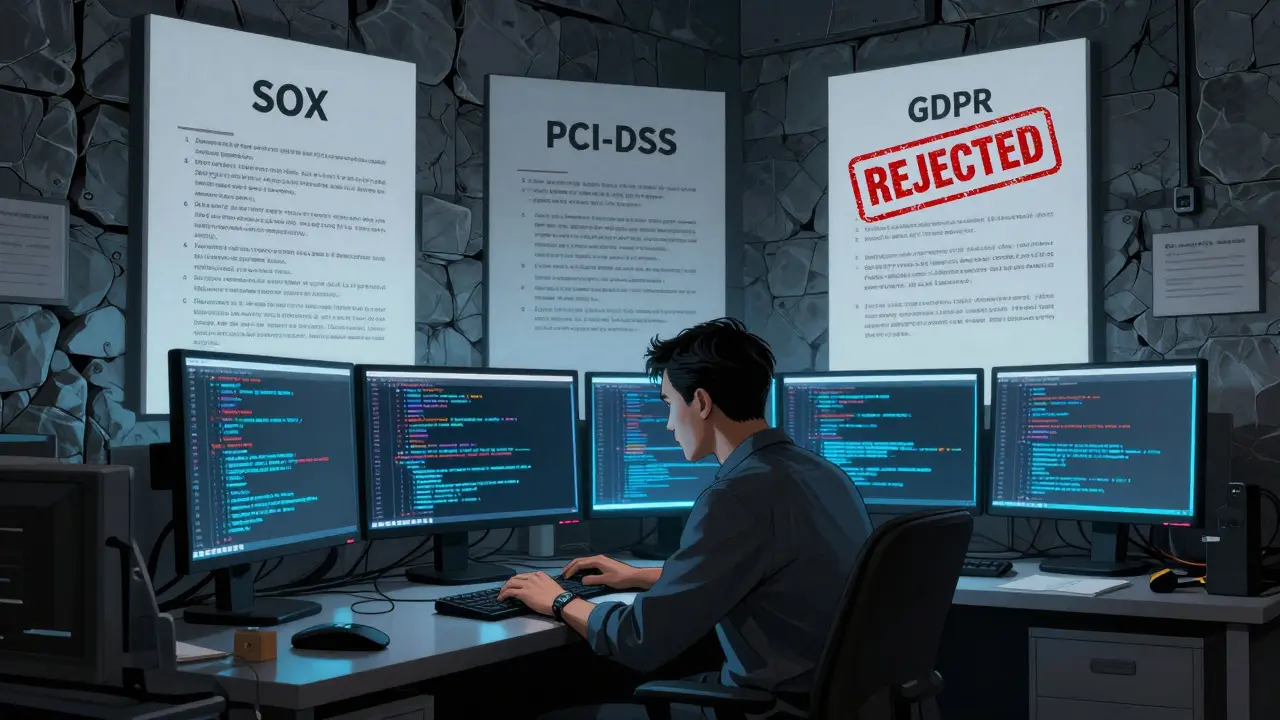
The Hidden Costs of Avoiding Vibe Coding
It’s easy to say, "We’re just being careful." But the cost of avoiding vibe coding is real. Engineers in healthcare and finance are leaving. Why? Because they’re stuck writing code the way it was done in 2010. While their peers in tech startups ship new features every day, they’re waiting months for approvals just to change a button color. Top talent is migrating to companies that embrace modern tools-even if those companies aren’t in regulated spaces. Meanwhile, competitors outside the sector are pulling ahead. A fintech startup using vibe coding can build a fraud detection tool in two weeks. A bank using traditional methods takes six months. By the time the bank launches, the startup has already iterated three times, fixed flaws, and captured market share. The gap isn’t just about speed. It’s about innovation. Regulated sectors are falling behind not because they lack resources-but because their processes are designed for safety, not agility.What’s Being Done to Fix This?
Some regulators are starting to wake up. The FDA’s PreCert program is the most promising step forward. Instead of reviewing every software update, it evaluates the organization itself. If a company has a strong track record of quality and safety, it can deploy new features faster-even if they’re built with AI. Think of it like a pilot’s license. Once you’ve proven you’re competent, you don’t need to re-learn how to fly for every new route. Similarly, if a healthcare provider has shown they can safely manage software risk, regulators might let them use vibe coding for updates-under continuous monitoring. Regulatory sandboxes are another innovation. In these controlled environments, companies test vibe-coded tools under regulator supervision. The regulator watches, learns, and adjusts rules as they go. The European Medicines Agency and Australia’s TGA are running similar pilots. But these are exceptions. Most organizations still operate under old rules. And until those rules change, vibe coding stays locked out of production.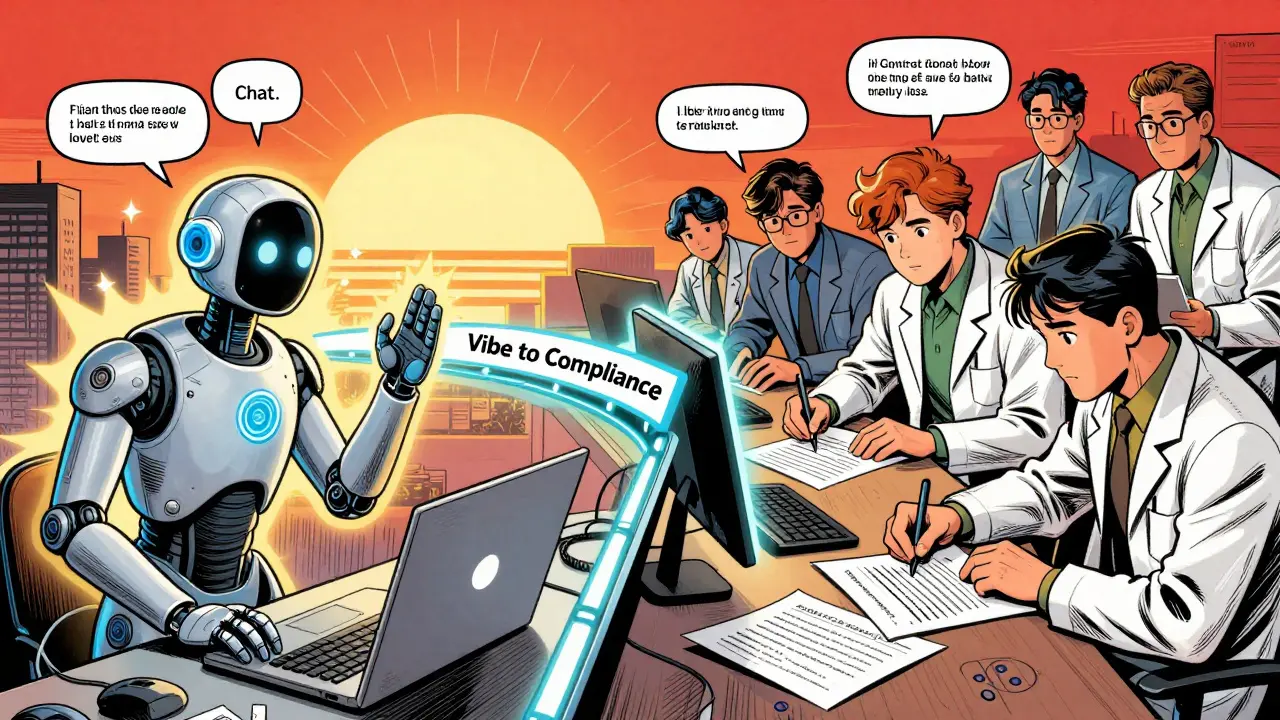
The Only Practical Path Forward
The future isn’t about choosing between vibe coding and compliance. It’s about blending them. Leading organizations are adopting a hybrid model. Here’s how it works:- Use vibe coding only for prototyping and internal tools.
- Human engineers take the AI-generated prototype and rebuild it from scratch using traditional methods.
- Document every decision, every test, every review.
- Deploy only the human-reviewed version.
- Clear boundaries: Define exactly where vibe coding is allowed-and where it’s banned.
- AI governance teams: Include compliance officers, engineers, and legal staff in every decision about AI tool use.
- Tooling for audits: Use automated scanners to generate documentation, check for security flaws, and track dependencies-even for AI-generated code.
What’s Next?
By 2028, vibe coding will likely be standard in prototyping across all regulated sectors. But full integration into production systems? That’s a 2030s problem. The real question isn’t whether regulators will adapt. It’s whether the industries themselves will push for change. Right now, compliance teams are the gatekeepers. But if engineers keep leaving, and competitors keep winning, pressure will build. The next wave of innovation won’t come from the boardroom-it’ll come from the engineers who are tired of being stuck in the past. Until then, vibe coding remains a tool for the edges-not the core. And in regulated sectors, the edges are where innovation starts… and where it often ends.Can vibe coding be used in production systems in healthcare?
As of 2026, vibe coding is not permitted in production systems in healthcare. Regulatory standards like HIPAA and FDA 21 CFR Part 11 require full traceability, documented review, and validated testing-none of which AI-generated code can reliably provide. Production systems must be built using traditional development methods with human oversight, formal documentation, and compliance audits. Vibe coding is only allowed for prototyping and internal tools that don’t handle patient data or clinical decisions.
Why is finance slower than tech startups to adopt vibe coding?
Finance faces stricter compliance rules than most tech startups. Regulations like SOX, PCI-DSS, and GDPR demand auditable trails for every code change. Startups prioritize speed and iteration; finance prioritizes risk control. A single unreviewed line of AI-generated code in a payment system could trigger regulatory fines, lawsuits, or loss of customer trust. Without standardized frameworks for validating AI output, most financial institutions avoid vibe coding in anything critical-even if it’s faster.
Are there any tools that help vibe coding comply with regulations?
Yes, but they’re not foolproof. Tools like Snyk and FOSSA can scan AI-generated code for security flaws, license violations, and dependency risks. Static analysis (SAST) and dynamic testing (DAST) tools help catch bugs. However, none of these generate the required audit trails-like who wrote the prompt, what requirements it fulfilled, or who approved the output. Organizations must manually document these steps, which adds overhead. No tool currently automates full regulatory compliance for vibe-coded code.
What’s the biggest barrier to vibe coding adoption in regulated sectors?
The biggest barrier isn’t technical-it’s cultural. Compliance teams, legal departments, and senior engineers were trained in waterfall development, where every step is documented and approved. Vibe coding’s conversational, iterative style feels chaotic and risky to them. Without training, clear policies, and leadership support, even the most promising pilot programs fail. The real challenge is changing mindsets, not fixing code.
Will regulators ever allow vibe coding in production?
Eventually, yes-but not soon. The FDA’s PreCert program and regulatory sandboxes are early signs of change. These models shift focus from reviewing individual products to evaluating organizational quality. If a company proves it has strong governance, it may be allowed to use vibe coding for updates. But this requires years of consistent safety records. Most regulated sectors won’t see widespread production adoption before 2030. The transition will be slow, cautious, and segmented.


Natasha Madison
March 10, 2026 AT 13:22Sheila Alston
March 11, 2026 AT 20:30sampa Karjee
March 13, 2026 AT 10:21Patrick Sieber
March 14, 2026 AT 04:24Kieran Danagher
March 15, 2026 AT 19:29Sheetal Srivastava
March 16, 2026 AT 02:33