
Here is a hard truth that many engineering leads are starting to accept: your AI pair programmer is not a trusted colleague. It is a fast, confident, and occasionally hallucinating intern who has never read your security handbook. If you treat AI-generated code as code produced by large language models that requires explicit verification before deployment the same way you trust code from a senior developer, you are leaving your back door open. The phrase "guilty until proven secure" describes a specific zero-trust stance where every line of AI-assisted code is considered untrusted by default. It must pass rigorous checks before it touches production. This isn't about stopping innovation; it's about keeping up with the speed at which vulnerabilities now enter your pipeline.
The shift is happening because the volume of code is exploding. GitHub reported in 2023 that over one million developers were using Copilot, and most expect AI to be part of their daily workflow. But speed without scrutiny creates risk. Research from the Center for Security and Emerging Technology (CSET) found that almost half of the code snippets generated by major models contained bugs that were often exploitable. These weren't just syntax errors; they were missing input validations, weak authentication logic, and unsafe memory handling. If your current process relies on human eyes alone to catch these, you are already behind. You need a framework that treats AI output as suspect until data proves otherwise.
Why the Default Trust Model Fails
Traditional software security assumed a relatively stable authorship model. You knew who wrote the code, or at least you had a history with that contributor. AI changes this dynamic. The "author" is a probabilistic model that optimizes for functional correctness, not security. CSET identified three distinct classes of risk that traditional models miss:
- Insecure Generation: The model outputs code with known anti-patterns, like hard-coded credentials or insecure random number generation, simply because those patterns are common in training data.
- Model-Level Threats: The AI tool itself becomes a vector. Adversarial prompt injection or poisoned training data can manipulate the output to include subtle backdoors.
- Systemic Supply Chain Risks: Insecure AI code gets committed to open-source libraries. When other projects reuse that library, the vulnerability propagates across the entire ecosystem.
Contrast Security notes that AI doesn't make code inherently less secure than human code, but it increases the attack surface by increasing volume. More code means more places for vulnerabilities to hide. If your security team scans at the same rate as before, the net result is a backlog of unreviewed, potentially risky code. The "guilty until proven secure" approach forces a change in burden of proof. Instead of assuming code is safe unless flagged, you assume it is dangerous until validated.
Building the Governance Layer
You cannot police what you cannot see. The first step in any guilty-until-proven-secure framework is discovery. Where is AI being used? Which repositories contain AI-generated code? How does that code flow into production? ArmorCode suggests that successful teams start with automated discovery to map their AI footprint. Without this baseline, policies are guesses.
Once you have visibility, you need policy engines that can enforce rules at scale. Manual review is too slow for the volume AI produces. Tools like ZeroPath’s policy engine allow organizations to define security rules in natural language, which are then translated into machine-enforceable checks. For example, a rule might state: "No AI-generated code allowed in authentication modules without cryptographic sign-off." This rule is then automatically enforced during commit or pull request stages. Cisco’s Project CodeGuard takes this further by integrating rulesets directly into AI coding agents, ensuring that validators check code before it is even inserted into the IDE.
Governance also requires clear accountability. Who owns the security of AI code? Checkmarx recommends a shared responsibility model where AppSec, DevOps, and compliance teams all play defined roles. AppSec defines the thresholds for when a security review is mandatory. DevOps integrates the scanning tools into CI/CD pipelines. Compliance ensures that audit trails exist for regulatory needs. This cross-functional structure prevents security from becoming a bottleneck while ensuring nothing slips through the cracks.
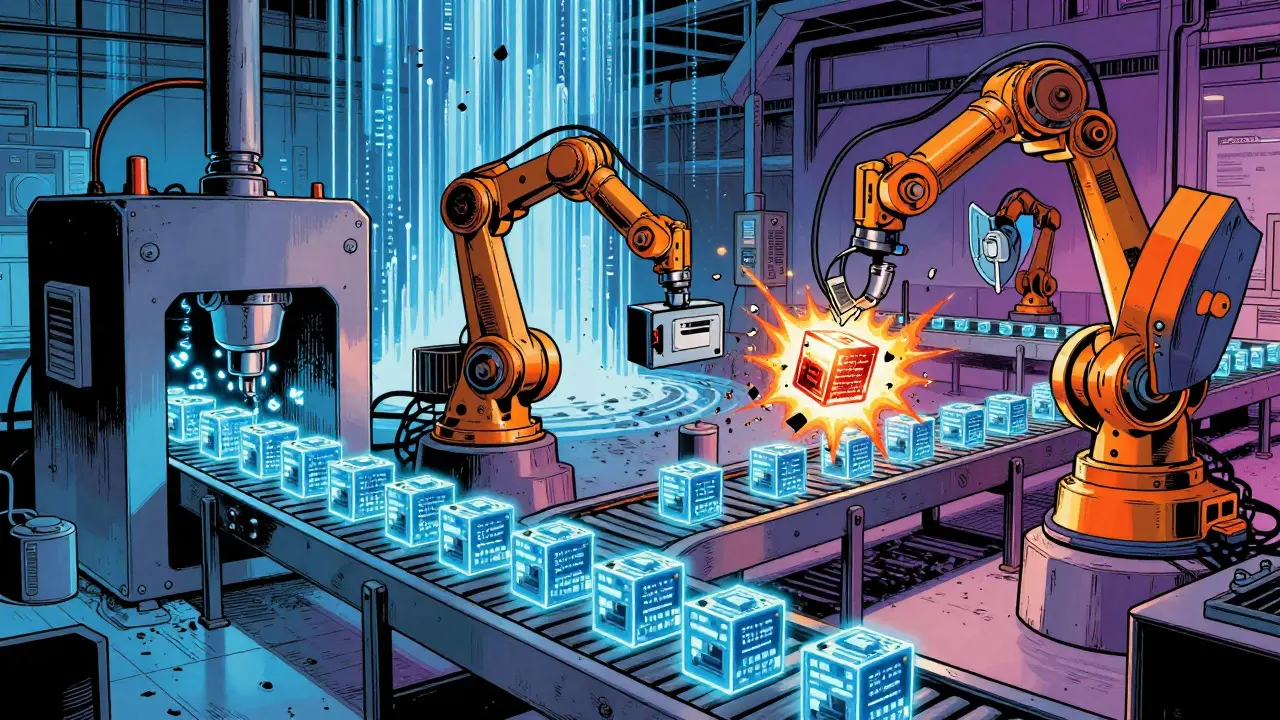
Technical Controls: From IDE to Runtime
Policies mean nothing if they aren't technically enforced. A robust framework spans the entire Software Development Life Cycle (SDLC). Here is how the technical stack typically looks for teams adopting this stance:
- IDE Integration: Real-time scanning within the editor catches obvious issues before code is saved. This reduces friction for developers and stops low-hanging fruit early.
- CI/CD Pipeline Checks: Static Application Security Testing (SAST), Dynamic Application Security Testing (DAST), and Software Composition Analysis (SCA) run on every build. These tools detect vulnerabilities in dependencies and runtime behavior that static analysis might miss.
- Sandboxed Execution: AI-generated code should run in isolated environments (containers or sandboxes) during testing. This limits the blast radius if a vulnerability exploits system resources or network access.
- Runtime Protection: Even with pre-deployment checks, some issues only manifest under specific conditions. Runtime Application Self-Protection (RASP) or Application Detection and Response (ADR) tools monitor applications in production to catch anomalies quickly.
Latio Tech highlights that the next generation of these tools will use contextual knowledge graphs. Instead of generic rules, the security tool understands your specific architecture and business logic. It knows that the payment service handles PII and therefore applies stricter validation rules to AI code touching that module. This context-awareness reduces false positives and makes the "guilty" status more precise.
Human Factors: Training and Culture
Technology alone won't save you. Developers need to understand *why* AI code is treated differently. Training programs must go beyond generic secure coding principles. Developers need to learn how GenAI tools work, what typical weaknesses they introduce, and how to validate snippets critically. Checkmarx argues that developers should be trained to scrutinize data handling, input validation, and privilege boundaries in AI-generated code specifically. They need to avoid over-reliance on AI when dealing with sensitive logic like cryptography or financial calculations.
Culture matters too. If security is seen as a blocker, developers will find ways around it. Successful teams foster shared ownership of security outcomes. Automated guardrails help, but they don't replace human judgment. Peer reviews for AI-generated code touching critical systems should be mandatory. Reviewers need to be trained to look for AI-specific risks, such as hallucinated API calls or inconsistent error handling.
| Aspect | Traditional Approach | Guilty-Until-Proven-Secure |
|---|---|---|
| Default Status of AI Code | Trusted (same as human code) | Untrusted (requires explicit verification) |
| Review Process | Standard peer review | Mandatory security review + automated gates |
| Tooling Focus | General SAST/DAST | Context-aware AI AST + Policy Engines |
| Risk Prioritization | Based on severity scores | Risk-based + AI-specific context |
| Developer Training | General secure coding | AI-specific vulnerability patterns |

Aligning with NIST AI RMF
To ensure your framework stands up to audits and future regulations, align it with the NIST AI Risk Management Framework (AI RMF). This voluntary framework provides a scaffold for managing AI risks. You can adapt its four core functions to your AI code policy:
- Govern: Establish roles, responsibilities, and policies for AI code usage. Define who approves AI tools and who enforces security rules.
- Map: Identify where AI code is used, which systems it touches, and who the stakeholders are. Create a map of your AI code footprint.
- Measure: Track metrics like vulnerability density in AI code, time-to-remediation, and the proportion of AI-generated code in production. Use these data points to adjust your controls.
- Manage: Implement technical and procedural controls to mitigate risks. Continuously update policies as new threats emerge.
This alignment helps demonstrate due diligence to regulators and customers. As governments develop more detailed guidance for AI, organizations with established frameworks will be better positioned to comply without scrambling.
Implementation Roadmap
Don't try to boil the ocean. Start small and expand. Here is a practical roadmap for rolling out a guilty-until-proven-secure framework:
- Month 1-2: Discovery & Pilot. Map your AI usage. Select one team or repository for a pilot. Integrate IDE plugins and basic CI scanners. Train the pilot team on AI-specific risks.
- Month 3-6: Policy Definition & Tooling. Develop formal AI code usage policies. Define risk-based rules (e.g., no AI code in crypto modules). Deploy policy engines and sandboxed execution environments. Expand scanning to DAST and SCA.
- Month 7-12: Organization-Wide Rollout. Extend the framework to all teams. Implement runtime protections. Conduct regular audits of AI code quality. Refine policies based on incident data and feedback.
- Ongoing: Continuous Improvement. Monitor metrics. Update training materials. Stay current with new AI tools and threat vectors. Engage with community efforts like Cisco’s CodeGuard to share best practices.
The goal isn't perfection on day one. It's building a system that gets smarter and tighter over time. By treating AI code as guilty until proven secure, you transform security from a reactive firefighting exercise into a proactive, embedded capability. You keep the speed benefits of AI while maintaining control over your risk profile.
Is AI-generated code inherently less secure than human-written code?
Not necessarily, but it is often less consistent. AI models optimize for functional correctness, not security. While humans make mistakes due to fatigue or lack of knowledge, AI makes mistakes due to training data biases and lack of contextual understanding. The key difference is volume: AI produces code faster, so any baseline error rate results in more total vulnerabilities if not checked rigorously.
What is the biggest challenge in implementing a guilty-until-proven-secure policy?
The biggest challenge is balancing security with developer velocity. If the process is too slow or generates too many false positives, developers will bypass it. The solution is automation and risk-based prioritization. Focus strict controls on high-risk areas (like authentication) and lighter touch on lower-risk areas. Use AI-native tools to reduce manual effort.
Do we need to ban AI code in certain components?
Many experts recommend prohibiting or strictly limiting AI-generated code in critical areas like cryptography, authentication, and financial logic. These areas require deep contextual understanding and have high consequences for failure. Banning AI here reduces risk significantly. For other areas, AI code is acceptable if it passes rigorous security verification.
How do we track which code was generated by AI?
Use metadata and commit messages. Require developers to tag commits with AI assistance. Some IDE plugins automatically add metadata to files. Additionally, use code similarity detection tools to identify patterns typical of AI generation. Over time, this builds an audit trail that helps with compliance and incident response.
What role does the NIST AI RMF play in this framework?
The NIST AI RMF provides a high-level structure for governance, mapping, measuring, and managing AI risks. It helps you organize your policy, define metrics, and ensure continuous improvement. Aligning with NIST standards also helps with regulatory compliance and demonstrates due diligence to stakeholders.


Quintin Franzese
August 19, 2026 AT 16:49"Guilty until proven secure."
Sure, let's just add another layer of bureaucracy to the already broken CI/CD pipeline. I'm sure my developers will love waiting for the "cryptographic sign-off" on a simple config change. It’s not that we don't trust the AI, it’s that we trust our own ability to ignore the red flags even more.
Zach Loescher
August 21, 2026 AT 05:03I think there is a valid point here, but it feels a bit heavy-handed for smaller teams.
The CSET study about half the snippets having bugs is definitely concerning. In my experience, the issue isn't just the code quality, but the context. The AI doesn't know that our auth module uses a specific legacy protocol. If you treat every line as suspect, you risk burning out your senior engineers who are now doing double-duty: writing code and auditing the AI's hallucinations. It’s less about stopping innovation and more about finding a sustainable rhythm. Maybe the "zero-trust" stance should apply strictly to critical paths like payments or crypto, rather than every utility function? Otherwise, we end up with a security theater where everyone just clicks "approve" because the process is too slow to be useful.
Tamara Miller
August 23, 2026 AT 04:01It’s really interesting how the article frames this as a "hard truth," when most of us have been dealing with junior developer slop for decades, and now we have a robot that does it faster.
What I find fascinating, though slightly annoying, is the assumption that "human eyes" are the current bottleneck. We’ve had SAST tools for twenty years. If your team relies solely on manual review to catch missing input validation, you weren’t exactly following best practices before AI showed up either. The real shift here is volume. One human writes 50 lines a day; an AI pair programmer can churn out 500. That changes the math on risk. But I do wonder if the "guilty until proven secure" label is just a marketing term for "add more gates to your PR workflow." Because that’s all it sounds like to me. More forms, more approvals, more friction. We need to be careful not to confuse "security" with "process compliance."
Savara Gunn
August 24, 2026 AT 15:29I agree with the sentiment, but I worry about the culture aspect mentioned in the post.
If devs feel policed, they’ll hide their AI usage. We tried a similar strict policy last year and ended up with shadow IT where people were using personal accounts for Copilot. The key is making the checks invisible or at least low-friction. If the IDE catches the obvious stuff, great. But if it requires a separate portal login to verify a commit, people will route around it. I think the "shared responsibility" model is the right call, but it needs buy-in from the top, not just AppSec dictating rules from the sidelines.
Anthony Miller
August 26, 2026 AT 10:58You are all missing the bigger picture. This is not about code. This is about control. The moment you allow probabilistic models to touch your production environment without explicit human verification, you are handing over sovereignty to the algorithm.
Consider the implications. If the AI hallucinates a backdoor, who is liable? The vendor? The developer? Or the company? The NIST framework is a band-aid on a bullet wound. We need absolute zero-trust. Every single byte must be signed by a human cryptographer. Anything else is negligence. Do not let the convenience of speed seduce you into complacency. The cost of one breach dwarfs the time saved by any amount of AI assistance. Be vigilant. Be paranoid. Be safe.
michelle veluz
August 27, 2026 AT 02:53Oh, you think this is just about code?! You think these big tech companies are just "optimizing for functional correctness"?? They are watching us! Every keystroke, every prompt, every bug you make is being logged to train the next version of the beast!
And now they want you to trust their "policy engines" to keep you safe? Ha! It’s a trap! The more you use it, the more data they get. And when the backdoor finally opens, it won’t be a random vulnerability; it will be targeted. Who benefits from our infrastructure being fragile? Not us. Us, the little guys. We are just pawns in their game of digital dominance. Wake up! Stop trusting the machine! It is already inside your walls!
Jacob Baby Official
August 28, 2026 AT 04:08Let’s look at the numbers again, shall we?
The article cites GitHub saying 1 million devs use Copilot. But what about the failure rate? CSET says ~50% of snippets have bugs. That’s not a rounding error; that’s a coin flip. If you are deploying code twice as fast, but half of it is broken, your net velocity hasn’t improved; your incident response queue has just doubled.
Furthermore, the "supply chain risk" section is hand-wavy. How do you actually detect if an open-source library was poisoned by AI output? You can’t. You just pray. So this whole "framework" is essentially a complex way of saying "trust, but verify, then verify again, then cry when it fails." It’s a solution looking for a problem that doesn’t exist yet, or a problem so big no tool can solve it. Either way, bad bet.
john randall
August 28, 2026 AT 05:54Fair points on the failure rate. I've seen some wild things come out of LLMs lately. A function that looked perfect but used `Math.random()` for token generation. Yikes.
I think the roadmap in the post is probably the most realistic part. Starting with a pilot team makes sense. Trying to roll this out org-wide on day one is a recipe for revolt. Just curious how well the "natural language policy engines" actually work in practice. I hope they aren't as flaky as the code they're trying to police.
Susan Cole
August 29, 2026 AT 11:40I appreciate the structured approach here. It’s good to see a focus on discovery first. You can’t manage what you can’t see.
One thing I’d add is the importance of documentation. When AI generates code, the comments are often generic or wrong. For audit purposes, having clear metadata about which parts were AI-assisted is crucial, as mentioned in the FAQ. It helps during incident response to quickly isolate the source. It’s a small step, but it builds the cultural habit of accountability without necessarily slowing down the daily flow too much. Balance is key.