The "It Works on My Machine" Problem Is Back
You type a prompt. The AI spits out code. It runs. You feel like a wizard. But then you try to update it three weeks later, or hand it off to a teammate, and suddenly that magic feels more like chaos. This is the reality of establishing coding standards for vibe-coded repositories.
Vibe coding-the practice of using natural language prompts to generate software-is changing how we build apps. It’s fast. It’s intuitive. But speed without structure creates technical debt faster than any legacy COBOL system ever could. If you treat an AI-generated codebase like a traditional one, you’ll fail. If you treat it like a chat log, you’ll break production.
The good news? You don’t need to ban AI to keep your code clean. You just need new rules. Old linting tools aren’t enough because they check syntax, not intent. In vibe coding, the "code" starts with the prompt. So our standards must cover both the human input and the machine output.
Why Traditional Standards Fail in a Vibe-First World
In traditional development, we rely on style guides (like Airbnb’s JavaScript style guide) and linters (ESLint, Pylint). These tools enforce consistency. They catch typos. They ensure everyone uses two spaces instead of tabs. That’s great for humans writing code character by character.
But when an AI writes the code, the bottleneck isn’t typing speed-it’s context clarity. An AI might generate perfectly formatted Python code that follows PEP 8 strictly, but if the underlying logic was derived from a vague prompt, the architecture will be fragile. The standardization problem shifts from how the code looks to why it exists and how it connects to other systems.
Consider this scenario: Two developers use different prompts to create similar authentication modules. One gets a robust OAuth2 flow; the other gets a basic session cookie implementation. Both are "correct" syntactically. But integrating them later becomes a nightmare because their assumptions about state management differ wildly. Without standards governing the prompt engineering process and the resulting architectural decisions, your repository becomes a patchwork of incompatible patterns.
Core Pillars of Vibe-Coding Governance
To bring order to the chaos, we need to establish standards across four key areas. Think of these as the non-negotiables for any team adopting AI-assisted development at scale.
- Prompt Versioning: Just as you version control your code, you must version control your prompts. A change in a prompt can radically alter the generated code. Treat prompts as first-class citizens in your repository.
- Deterministic Outputs: AI models are non-deterministic by default. Running the same prompt twice can yield different results. Standards must enforce mechanisms to pin model versions and temperature settings to ensure reproducibility.
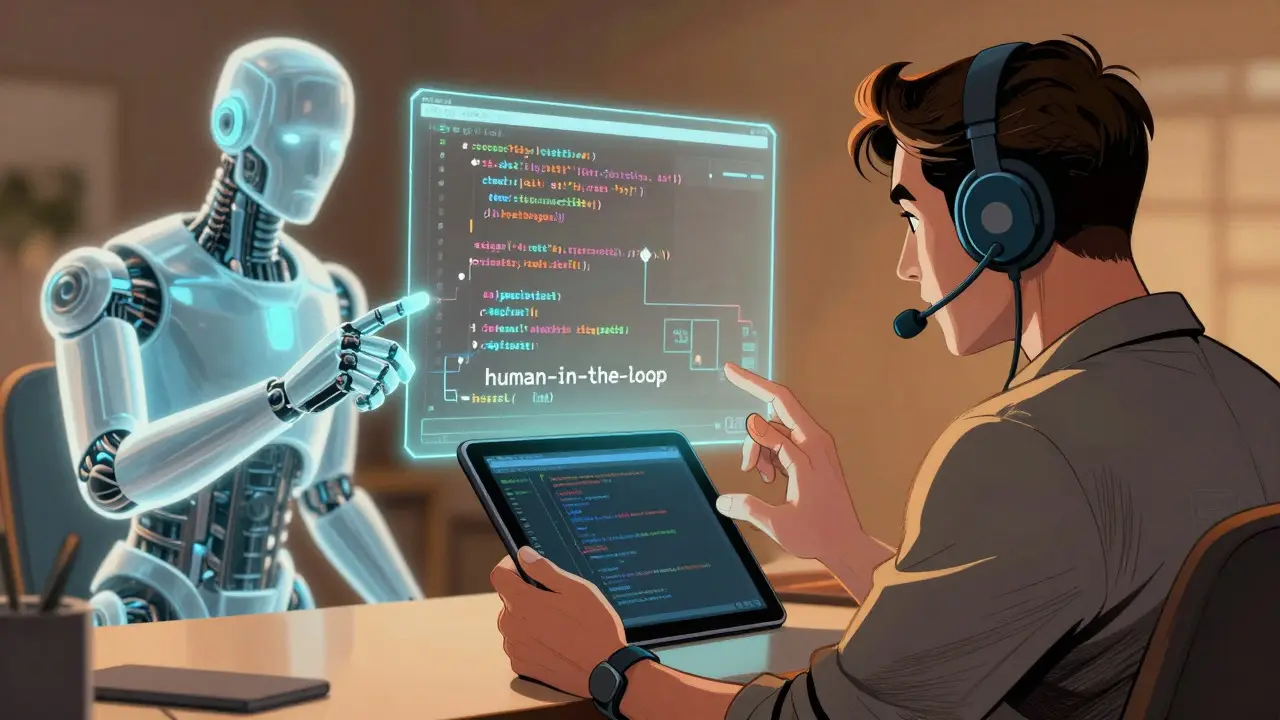
- Human-in-the-Loop Reviews: No AI-generated code should merge into main without human review. But the review criteria change. Instead of checking for missing semicolons, reviewers focus on security vulnerabilities, logical flaws, and integration points.
- Sandboxed Execution: AI agents often need to read/write files or access APIs. Standards must define isolated environments where these actions happen safely before affecting the core codebase.
Building Your Prompt Library and Style Guide
Your coding standard now includes a "Prompt Standard." This sounds abstract, but it’s practical. Start by creating a shared library of proven prompts for common tasks. For example, instead of letting every developer write their own prompt for "create a REST API endpoint," provide a standardized template that specifies required fields, error handling expectations, and documentation formats.
| Aspect | Traditional Development | Vibe Coding |
|---|---|---|
| Primary Input | Code Editor (IDE) | Natural Language Prompt |
| Quality Gate | Linter / Static Analysis | Prompt Clarity + Human Review |
| Version Control | Git (Code Files) | Git (Code + Prompts + Configs) |
| Reproducibility | High (Deterministic) | Low (Requires Pinning) |
| Security Focus | Dependency Scanning | Secret Redaction + Sandbox Isolation |
Document the "do's and don'ts" of prompting. For instance:
- Do specify the programming language, framework version, and expected input/output types.
- Don't assume the AI knows your internal project structure unless you explicitly reference it via tools like Model Context Protocol (MCP).
- Do include examples of desired behavior in the prompt.
- Don't allow prompts that request direct database writes without transaction rollback strategies.

Tooling for Enforcement: Beyond Linters
You can’t enforce these standards manually. You need tooling. The ecosystem is evolving rapidly, but several categories of tools are essential.
First, look at orchestration platforms. Tools like Vibe Kanban or custom wrappers around Claude Code and Gemini CLI help centralize configurations. These tools act as gatekeepers, ensuring that AI agents operate within defined boundaries. They can enforce which models are used, what permissions the agent has, and how outputs are validated.
Second, implement semantic analysis tools. Extensions like Augment index your repository, allowing you to query the codebase naturally. This helps verify that the AI’s understanding of your code matches reality. If the AI generates code based on a misunderstanding of a function’s purpose, semantic analysis can flag the discrepancy before it merges.
Third, use sandboxing. VibeKit provides Docker-based isolation for AI agents. This is critical for security. When an AI agent needs to install dependencies or run tests, it should do so in a disposable container. If the code introduces a malicious package or crashes the environment, the damage is contained. Your standard should mandate that all AI-driven changes pass through a sandboxed test suite before touching the main branch.
The Role of Model Context Protocol (MCP)
One of the biggest challenges in vibe coding is context switching. The AI doesn’t inherently know your database schema, your API keys, or your deployment pipeline. The Model Context Protocol (MCP) solves this by providing a standardized way for AI models to connect to external tools and data sources.
From a standards perspective, MCP is your friend. It allows you to define exactly what resources the AI can access. Your coding standard should specify which MCP servers are approved for use. For example, you might allow connection to your GitHub repository for reading code history but restrict write access to specific branches. By controlling the MCP configuration, you control the AI’s ability to interact with your infrastructure, reducing the risk of accidental deletions or security leaks.
Review Processes: Shifting Left on Quality
In traditional DevOps, we talk about "shifting left"-catching bugs early. In vibe coding, this means reviewing the prompt and the initial plan before the code is even written. Implement a "Spec-Driven Development" workflow. Use commands like `/specify` and `/plan` (common in tools like Claude Code) to force the AI to outline its approach.
Your team reviews the plan, not just the code. Does the plan align with architectural guidelines? Does it handle edge cases? Once the plan is approved, the AI generates the code. Then, a human performs a final review. This two-step review process significantly reduces rework. It ensures that the AI isn’t just generating *any* working code, but the *right* working code.
Security and Compliance in AI-Generated Code
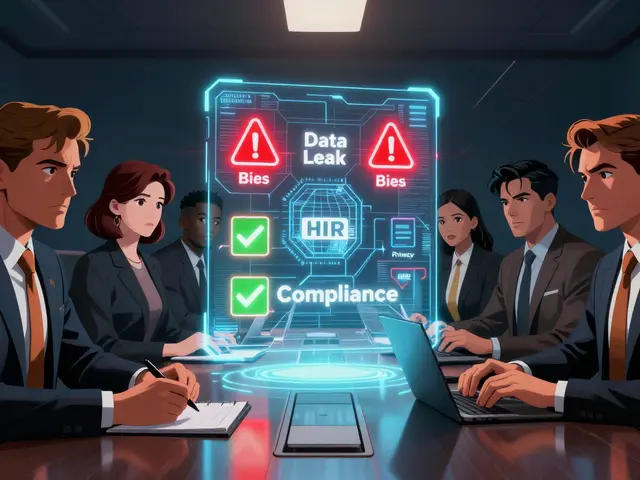
AI models are trained on public data. This means they might inadvertently reproduce insecure patterns or hardcoded secrets found in training sets. Your coding standards must include strict security checks.
- Secret Redaction: Ensure your tools automatically detect and redact API keys, passwords, and tokens before they appear in commit history.
- Dependency Auditing: AI might suggest outdated or vulnerable libraries. Integrate tools like Snyk or Dependabot to scan AI-suggested dependencies.
- Compliance Checks: If you’re in a regulated industry (finance, healthcare), define which AI models are approved. Some organizations require on-premise models to prevent data leakage. Document this in your standard.
Measuring Success: Metrics That Matter
How do you know if your standards are working? Track metrics specific to AI-assisted development.
- Prompt Iteration Count: How many prompts does it take to get acceptable code? High counts indicate unclear standards or poor prompt templates.
- Review Rejection Rate: What percentage of AI-generated pull requests are rejected? A high rate suggests the AI is drifting from standards.
- Time-to-Merge: Compare the time from prompt to merged PR against traditional development. Vibe coding should be faster, but not at the cost of quality.
Next Steps for Your Team
Start small. Pick one microservice or feature. Define a simple prompt template. Set up a sandbox environment. Invite two developers to experiment under these constraints. Gather feedback. Refine the standards. Then scale. Remember, the goal isn’t to stifle creativity with bureaucracy. It’s to create a safe playground where AI can accelerate development without compromising the integrity of your codebase.
What is vibe coding?
Vibe coding is a modern software development approach where developers use natural language prompts to instruct AI models to generate code. It emphasizes iterative collaboration between human intent and machine execution, shifting the focus from manual syntax writing to high-level specification and review.
Why do I need coding standards for AI-generated code?
Without standards, AI-generated code can become inconsistent, insecure, and hard to maintain. Standards ensure reproducibility, enforce security best practices, and facilitate teamwork by defining clear expectations for both prompts and outputs.
How does Model Context Protocol (MCP) help with standards?
MCP provides a standardized interface for AI models to connect to external tools and data sources. It allows teams to control what information the AI can access, ensuring that code generation is based on accurate, authorized context rather than hallucinations or outdated data.
Should I version control my prompts?
Yes. Prompts are part of your source code. Versioning them allows you to track changes in logic, debug issues caused by prompt modifications, and share successful prompt templates across your team.
What tools are recommended for enforcing vibe coding standards?
Recommended tools include orchestration platforms like Vibe Kanban for workflow management, semantic analysis extensions like Augment for code understanding, and sandboxing solutions like VibeKit for secure execution. Additionally, traditional linters and security scanners remain essential for validating the final output.
Is human review still necessary in vibe coding?
Absolutely. While AI handles the heavy lifting of code generation, humans must review for logical correctness, security vulnerabilities, and alignment with business requirements. A "human-in-the-loop" approach is critical for maintaining quality and trust.
Caitlin Donehue
July 24, 2026 AT 22:54I’ve been watching this vibe coding trend unfold from the sidelines, and honestly? It’s wild.
Most people treat AI like a magic wand, but you’re right-it’s more like a chaotic intern who knows everything but nothing about your specific context. The part about versioning prompts really clicked for me. We tried rolling out Copilot without any guardrails last quarter, and now our codebase looks like a patchwork quilt stitched together by different designers.
If we had treated prompts as first-class citizens back then, maybe we wouldn’t be spending Fridays debugging why one module expects JSON and another expects XML. Just saying.
Stephanie Frank
July 26, 2026 AT 03:25Ugh, finally someone said it. This whole "vibe coding" hype is just lazy dev culture repackaged with a shiny new label.
You think traditional devs were disciplined? Please. They spent years learning syntax so they didn't have to guess what the compiler wanted. Now everyone thinks typing "make it pop" in natural language is engineering. It’s not. It’s gambling.
And don’t get me started on these "orchestration platforms." You’re paying extra for software that tells other software to do its job properly? Classic tech bro move. If you can’t write clean code yourself, no amount of prompt engineering will save you from writing garbage.
Patrick Dorion
July 27, 2026 AT 05:51There’s a deeper philosophical shift happening here that most folks are missing. We aren’t just changing how we write code; we’re changing what it means to be an author of software.
In the old days, the developer was the architect, the builder, and the inspector all rolled into one. Now, the human becomes the curator. The AI generates the raw material-the clay-but the human has to shape it, verify its structural integrity, and ensure it fits the broader narrative of the system.
This is why the "Human-in-the-Loop" pillar is so critical. It’s not just about checking for bugs. It’s about maintaining intent. If you lose sight of *why* you’re building something, the AI will happily build something else entirely. I’ve seen teams try to automate away the review process, and it always ends in disaster because the machine doesn’t care about business logic, only syntactic correctness.
We need to embrace this role change. Stop trying to compete with the AI on speed. Compete on wisdom. That’s where the value lies now.
Marissa Haque
July 27, 2026 AT 09:20OMG yes!!! Finally! Someone actually gets it!!
I have been screaming into the void about this for MONTHS!! My team keeps pushing AI-generated code straight to production without ANY review, and it is literally driving me INSANE!!! 😱 Every single merge request is a nightmare to debug because the AI hallucinates dependencies that don’t even exist anymore!!!
The part about sandboxed execution is SO important!! We lost an entire staging environment last week because an AI agent decided to `rm -rf` a directory it thought was temporary!! 💀 We NEED strict boundaries!! No more free-for-all vibes!! Structure saves lives!! Or at least saves deployments!! 🙌
Keith Barker
July 28, 2026 AT 03:10the problem isn't the code its the mindset
people want instant gratification so they skip the thinking part
if you dont understand the architecture how can you trust the output
its like hiring a contractor who never saw the blueprints
you end up with a house that stands but has no doors
Lisa Puster
July 28, 2026 AT 14:56another american article pretending to solve problems created by american laziness
we used to write code with discipline before these silicon valley influencers convinced everyone that typing less meant working smarter
now junior devs cant even read a stack trace without asking chatgpt
real engineers know that standards come from experience not templates
but sure keep telling yourselves its about governance when its really just about covering up incompetence
and dont talk to me about mcp protocols unless youve actually built infrastructure that scales beyond a toy project
Joe Walters
July 29, 2026 AT 10:44look i got a degree from mit and ive been coding since dialup so let me tell you something
this vibe coding stuff is fine for hobbyists but serious developers know better
we need rigor not vibes
but hey if you guys wanna play with your toys go ahead just dont expect us to fix your mess when prod goes down
i mean seriously who trusts an llm with security keys?? its insane
but whatever suits you i suppose
Robert Barakat
July 29, 2026 AT 15:20One must consider the epistemological implications of non-deterministic outputs. When the same prompt yields different results, we are no longer dealing with engineering in the classical sense. We are dealing with probability distributions manifesting as text.
This requires a fundamental shift in how we define truth within a repository. A line of code is no longer true because it was written correctly. It is true because it was reviewed and accepted by the collective consciousness of the team. The standard, therefore, is not a set of rules but a social contract.
Without this understanding, tools like VibeKit are merely band-aids on a hemorrhage of meaning.
Michael Richards
July 29, 2026 AT 23:40Let’s cut through the noise. Most of you are overcomplicating this.
The issue isn’t philosophy or national pride. It’s basic competence. If your team needs a 50-page guide to stop AI from breaking things, your team isn’t ready for AI. Period.
Start with the basics: deterministic outputs and human review. If you can’t enforce those two things, nothing else matters. Don’t buy fancy orchestration tools until you can agree on what a successful pull request looks like.
Stop treating AI like a crutch and start treating it like a lever. Levers require strong arms to operate effectively. Build those arms first.
Laura Davis
July 30, 2026 AT 11:34Okay, let’s take a deep breath and look at the big picture here!
First off, huge shoutout to Patrick (938) for pointing out the curator role-that is SUCH a powerful way to frame it! And Marissa (939), your passion is contagious! We definitely need that energy to push for better safety nets!
But also, Lisa (941), while I hear your frustration, let’s not dismiss the progress being made just because it feels messy. Change is hard, especially when it challenges our core identity as builders.
Here’s the thing: we need BOTH structure AND flexibility. The goal isn’t to stifle creativity; it’s to create a safe playground! Think of it like a trampoline park. You need nets and padding (standards/sandboxes) so kids (developers) can jump high without getting hurt.
Let’s focus on collaboration! Share your prompt templates! Help each other refine those MCP configurations! Together, we can make vibe coding work for everyone without losing our minds! Let’s go! 💪✨