
Imagine paying for a taxi ride that takes three times longer than necessary just because you didn't give the driver clear directions. That is exactly what happens when you feed unstructured, vague instructions to large language models (LLMs). Every extra word, every ambiguous request, and every unnecessary retry burns tokens, electricity, and your budget. As of mid-2026, companies are waking up to the fact that their AI bills are bloated not because the models are too expensive, but because the inputs are inefficient.
This is where prompt templates come in. They are not just neat organizational tools; they are critical economic levers. By structuring how we talk to AI, we can slash computational waste by 65% to 85%, according to recent industry data. If you are managing an AI integration, ignoring prompt templating is like leaving the engine running while parked. Let’s look at why this matters, how it works, and how you can implement it today to save money and reduce carbon emissions.
The Hidden Cost of Unstructured Prompts
We often think of LLM usage costs in terms of API rates per million tokens. But the real waste happens in the noise. A single poorly constructed query can consume up to ten times more energy than a traditional search engine query. Why? Because the model has to process redundant context, guess intent, and often generate verbose, irrelevant output that you then have to filter out.
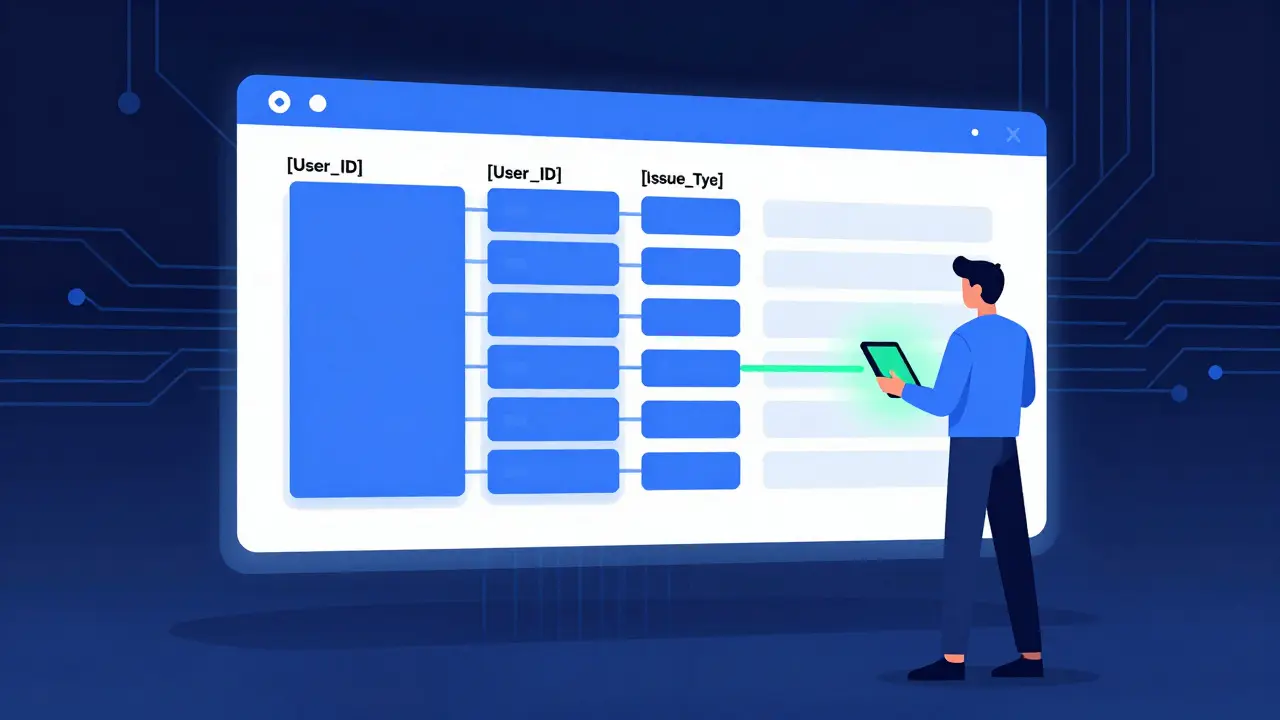
Consider a typical customer service bot scenario. Without a template, a user might ask, "Hey, my order is late, what gives?" The model processes this casually, perhaps generating a long, empathetic paragraph before checking the database. Now imagine a structured prompt template that forces the interaction into specific slots: [User_ID], [Order_Status], [Issue_Type]. The model skips the chitchat, goes straight to the logic, and returns a concise resolution. This isn't just about speed; it's about precision. Studies from 2024 showed that direct decision instructions combined with specific terminology reduced false positives by 87-92%. In plain English: you stop paying for mistakes.
How Prompt Templates Optimize Token Usage
At its core, a prompt template is a blueprint. It replaces variable parts of a request with placeholders while keeping the structural instructions constant. This consistency allows the LLM to predict patterns more efficiently, reducing the computational load required to understand the task.
Here is how the magic happens under the hood:
- Token Reduction: Research from Capgemini in 2025 demonstrated that green prompting techniques can cut token consumption by 30-45%. Fewer tokens mean lower API bills and faster response times.
- Structural Guidance: When you use role prompting (e.g., "Act as a senior Python developer") or chain-of-thought (CoT) structures, you guide the model’s reasoning path. CoT prompting, for instance, has been shown to reduce energy consumption by 15-22% for coding models like Qwen2.5-Coder compared to baseline zero-shot approaches.
- Task Decomposition: Instead of asking for a massive, complex output in one go, modular prompts break tasks into sequential steps. For example, instead of saying "Write a report on renewable energy," a template might first ask for key statistics, then advantages, then a summary. This approach reduced token usage from 3,200 to 1,850 in one documented case, a savings of over 40%.
The key takeaway is that structure equals efficiency. The less the model has to guess, the less compute power it needs to expend.
Comparing Prompting Strategies for Efficiency
Not all templates are created equal. The effectiveness of a prompt depends heavily on the strategy used and the model architecture. Here is a breakdown of common approaches and their impact on waste reduction:
| Strategy | Avg. Energy/Token Savings | Best Use Case | Limitations |
|---|---|---|---|
| Zero-Shot | Baseline (0%) | Simple, generic queries | High variability in output quality |
| Few-Shot | 12.3% improvement | Tasks requiring format consistency | Requires careful example selection |
| Chain-of-Thought (CoT) | 15-22% reduction | Complex reasoning, coding, math | Can increase token count if not constrained |
| Modular/Sequential | 35-40% better than monolithic | Large reports, multi-step workflows | Requires orchestration layer (e.g., LangChain) |
Note that smaller language models (SLMs) like Phi-3-Mini or StableCode-Instruct-3B respond even better to these optimizations, showing 20-25% greater responsiveness to prompt tuning than their larger counterparts. If you are running lighter models, prompt templating is your biggest lever for performance gains.
Real-World ROI: What Developers Are Seeing
Theoretical savings are nice, but do they translate to the bottom line? Absolutely. In early 2025, developers on platforms like Reddit and GitHub reported significant wins. One engineer using AWS Bedrock shared that implementing variable-based templates with LangChain cut their token usage from 2,800 to 1,600 per request consistently. That is a 42% reduction in direct infrastructure costs.
Enterprise users are seeing similar trends. Capgemini clients reported a 30% drop in LLM service costs after formalizing prompt optimization protocols. However, there is a catch. Optimizing prompts takes time. A survey of developers on Stack Overflow found that 68% spend 3-5 hours weekly refining prompts. The initial investment is real, but the long-term payoff is substantial, especially as regulatory pressures mount. The EU’s AI Act amendments in March 2025 now require "reasonable efficiency measures" for commercial deployments, making prompt optimization not just a best practice, but a compliance necessity.
Implementing Effective Prompt Templates
You don’t need a PhD to start saving money. Here is a practical, step-by-step approach to building efficient prompt templates:
- Identify High-Frequency Tasks: Look for repetitive queries in your application-customer support tickets, code generation requests, or data extraction jobs. These are your low-hanging fruit.
- Define Clear Variables: Replace dynamic content with placeholders. Instead of writing "Translate 'Hello' to French," use "Translate '{text}' to {language}." This keeps the static instruction minimal.
- Add Constraints: Explicitly limit output length and format. Add instructions like "Return only JSON" or "Limit response to 50 words." This prevents the model from rambling.
- Use Few-Shot Examples: Include 1-3 examples of ideal input-output pairs within the template. This drastically reduces error rates and helps the model align with your expectations faster.
- Test and Iterate: Prompt engineering is iterative. Track metrics like token count, latency, and output accuracy. Refine your templates based on this data. Expect 5-7 refinement cycles to hit optimal efficiency.
Tools like LangChain and PromptLayer have become essential here. They allow you to manage, version, and monitor your prompts at scale. With 85% of enterprise users adopting these frameworks, they offer the infrastructure needed to maintain consistency across model updates.

Pitfalls to Avoid
While prompt templating is powerful, it is not a silver bullet. Over-optimization can backfire. If you constrain a creative task too much, you risk reducing output diversity and quality by 15-20%. Templates work best for structured, logical tasks like coding, classification, and data processing. For open-ended creative writing, leave some room for flexibility.
Also, beware of vendor lock-in. Prompts optimized for one model family (like OpenAI’s GPT series) may lose 40-50% of their efficiency when transferred to competing architectures (like Anthropic’s Claude or Meta’s Llama). Keep your templates modular so they can be adapted easily if you switch providers.
The Future of Prompt Efficiency
By 2027, Gartner predicts that 60% of enterprise prompt templates will be automatically generated and optimized by AI itself. We are moving toward a future where the system learns which prompts work best and adjusts them in real-time. Until then, manual optimization remains a high-value skill. The Partnership on AI’s release of the Prompt Efficiency Benchmark (PEB) framework in late 2025 provides standardized metrics to measure success, ensuring that efficiency gains are tracked rigorously across dimensions like energy consumption and output quality.
In short, prompt templates are no longer optional. They are the bridge between experimental AI and scalable, sustainable business operations. Start small, measure everything, and watch your costs drop.
What is a prompt template?
A prompt template is a pre-defined structure for interacting with an LLM, containing fixed instructions and variable placeholders. It ensures consistency, reduces ambiguity, and optimizes token usage by guiding the model’s behavior precisely.
How much can prompt templates reduce LLM costs?
Studies indicate that well-designed prompt templates can reduce computational waste and associated costs by 65-85%. Specific techniques like modular prompting can cut token usage by 35-40% for complex tasks.
Are prompt templates effective for all types of AI tasks?
They are most effective for structured tasks like code generation, data extraction, and classification. For highly creative or open-ended tasks, overly restrictive templates may reduce output quality by 15-20%, so balance is key.
Do I need special software to use prompt templates?
No, you can write simple templates manually. However, for enterprise-scale applications, tools like LangChain or PromptLayer help manage, version, and optimize templates efficiently, especially when dealing with frequent model updates.
Why are prompt templates important for sustainability?
LLMs consume significant energy. By reducing token usage and processing time, prompt templates directly lower carbon emissions. Research shows prompt optimization can reduce energy use by approximately 36% in coding applications, contributing to greener AI practices.
Is prompt optimization legally required?
In some regions, yes. The EU’s AI Act amendments from March 2025 require "reasonable efficiency measures" for commercial LLM deployments, effectively mandating techniques like prompt optimization to ensure resource efficiency.