
You just asked your AI assistant to refactor a complex database query. It spat out clean, efficient code in seconds. But while you were celebrating the speed, did you stop to think about what actually left your machine? In the world of vibe coding, where natural language prompts turn into functional software, every keystroke and prompt generates data. This isn't just metadata; it's often your proprietary logic, internal API structures, and sensitive business context flying across the wire.
For developers who treat their repositories as sacred ground, this raises a serious red flag. We are moving from manual coding, where data stays local until you push, to agentic environments where tools constantly communicate with backend models. The question isn't whether these tools collect data-they do. The real issue is understanding exactly what gets sent, where it goes, and how you can control it before a compliance audit catches you off guard.
The Hidden Cost of Convenience
Vibe coding tools like Cursor, Cline, and Claude Code have democratized development. They let you build apps by talking to them. But this convenience comes with an invisible tax: telemetry. Telemetry is the automated collection of data about how these tools work. For the vendor, it helps improve the model. For you, it might mean your specific project structure or error logs are being analyzed remotely.
Think about what you type into a prompt. You might say, "Fix the authentication bug in our user service." That simple sentence reveals your tech stack (user service), your current problem (auth bug), and potentially hints at your architecture. Now multiply that by hundreds of interactions per day. If your tool sends raw prompts to a cloud server for processing, you aren't just sharing code snippets; you're sharing your intellectual property.
This isn't hypothetical. Industry standards are shifting toward OpenTelemetry as the universal standard for collecting this data. While this sounds great for interoperability, it also means there’s a standardized pipe through which your data flows. If you don't configure the valve, everything pours out.
How Major Tools Handle Your Data
Not all vibe coding tools are created equal when it comes to privacy. Some default to sending everything; others require you to explicitly opt-in. Understanding these defaults is critical for maintaining security.
Claude Code from Anthropic has taken a notably privacy-conscious approach. Their telemetry system is opt-in, meaning nothing leaves your machine unless you tell it to. Even then, user prompts are redacted by default. This is a huge win for developers working on confidential projects. To enable detailed metrics, you have to set specific environment variables, such as CLAUDE_CODE_ENABLE_TELEMETRY=1. This explicit configuration forces you to make a conscious decision about data sharing.
In contrast, Google’s Gemini tool takes a different stance. By default, its setting GEMINI_TELEMETRY_LOG_PROMPTS is set to true. This means your actual prompts-the ones containing your business logic-are logged and potentially transmitted unless you manually disable this feature. If you’re using Gemini without tweaking this config, assume your prompts are visible to the provider.
Other tools like Codex use configuration files (like TOML) to manage telemetry. While flexible, they often lack the robust privacy-by-default settings seen in newer entrants. The variation is stark: one tool protects you by silence, another exposes you by default.
| Tool | Default Telemetry State | Prompt Logging Default | Configuration Method |
|---|---|---|---|
| Claude Code | Opt-in | Redacted | Environment Variables |
| Gemini | Enabled (Local) | Logged (True) | Env Vars / JSON Config |
| Codex | Configurable | Varies | TOML Config File |
| Cursor/Cline | Varies by Plan | Check Settings | UI Settings / Extensions |
What Exactly Is Leaving Your Repo?
It’s not just code. When we talk about telemetry in AI-assisted development, we’re dealing with three distinct types of data signals, all flowing via the OpenTelemetry Protocol (OTLP).
- Metrics: These are numbers. How many tokens did you use? How long did the request take? What was the error rate? Metrics are usually safe, but aggregated over time, they can reveal usage patterns and team productivity levels.
- Logs: This is where things get risky. Logs contain structured event records. If your tool logs errors, those errors might include variable names, stack traces, or even snippets of the code that failed. If your tool logs prompts, it’s logging your intent.
- Traces: Traces show the path of a request. They can reveal the sequence of operations, which might expose your application’s architecture or dependency chains.
The danger lies in the combination. A trace showing a slow response combined with a log entry revealing a timeout in a specific microservice tells a competitor more about your infrastructure than any single data point would.
The Feedback Loop Risk
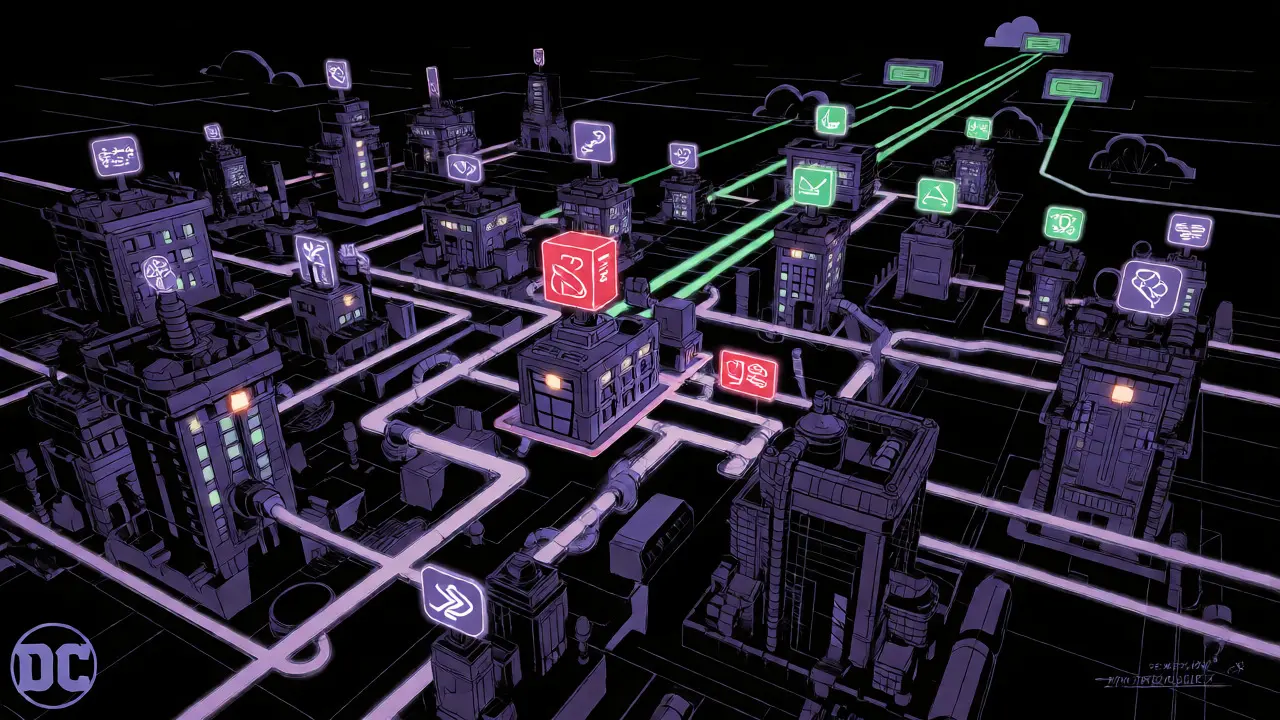
Here’s where it gets tricky. Modern vibe coding isn’t just one-way communication. It’s becoming a closed loop. Tools now use the Model Context Protocol (MCP) to fetch context from external sources, including observability platforms like Sentry. Imagine this scenario: You ask the AI to fix a bug. The AI queries Sentry via MCP to see recent errors. Sentry sends back execution data. The AI uses that data to generate a fix.
In this flow, your runtime telemetry (how your app behaves in production) is being fed directly into the AI’s context window. This improves accuracy, yes, but it also means your production data is being processed by third-party LLM providers. If you haven’t audited these connections, you might be leaking production insights alongside your development code.
Controlling the Flow: Practical Steps
You don’t have to choose between productivity and privacy. You just need to be intentional. Here is how to tighten up your setup.
- Audit Your Defaults: Don’t assume. Check the documentation for your specific tool. Look for flags like
logPromptsortelemetryEnabled. If the default is "on," turn it off unless you have a specific reason to keep it. - Use Local Collectors: Instead of sending data straight to the cloud, configure your OTLP endpoint to point to a local collector (e.g.,
http://localhost:4318). This keeps data within your network boundary. You can then decide if and when to forward anonymized metrics to a cloud dashboard. - Sanitize Prompts: Be mindful of what you paste into the chat. Avoid pasting entire config files with hardcoded secrets. Use placeholders or reference file paths instead of raw content whenever possible.
- Leverage Enterprise Controls: If you’re part of a larger org, look for managed settings. Tools like Claude Code support mobile device management (MDM) distribution for settings. This ensures no developer accidentally enables verbose logging on a secure project.
Instrumenting with Intent
Finally, change how you prompt. Instead of treating telemetry as a background noise, make it part of your instruction. Ask your AI to instrument the code it writes. Try prompts like: "Write this handler and include OpenTelemetry spans for each major step," or "Track retries and log external API status codes."
This does two things. First, it gives you visibility into the generated code’s behavior. Second, it makes you actively think about what data matters. You move from passive data leakage to active data governance. You define what is worth tracking, rather than letting the tool decide for you.
Vibe coding is here to stay. It speeds up development and lowers barriers to entry. But speed shouldn’t come at the cost of security. By understanding the telemetry pipelines of your chosen tools and configuring them with care, you can enjoy the benefits of AI assistance without compromising the integrity of your repository.
Does vibe coding send my entire codebase to the AI?
No, most tools do not send your entire codebase continuously. They typically send relevant context windows, such as the current file, open tabs, or selected code blocks, along with your prompt. However, some features like "chat with your repo" may index or send larger portions of your code for semantic search, so check your specific tool's indexing settings.
What is OpenTelemetry and why does it matter for privacy?
OpenTelemetry is a vendor-neutral standard for collecting telemetry data (metrics, logs, traces). It matters because it allows you to route this data anywhere-local storage, a private server, or a public cloud-rather than being locked into the AI tool's proprietary backend. This gives you control over where your sensitive data resides.
Are prompts always sent to the cloud?
It depends on the tool and configuration. Cloud-based LLMs (like GPT-4 or Claude 3) process prompts on remote servers, so the text must leave your machine to get a response. However, local models (running via Ollama or similar) keep prompts on your device. Additionally, some tools offer options to redact prompts from telemetry logs even if the inference happens in the cloud.
Can I prevent my IP address from being tracked?
While you can't completely hide your IP during HTTPS requests to cloud APIs, you can minimize tracking by using corporate proxies, VPNs, or routing traffic through a self-hosted gateway. Some enterprise plans also offer data residency guarantees, ensuring data stays within specific geographic regions.
What is the Model Context Protocol (MCP)?
MCP is a standard that allows AI agents to connect to external data sources and tools securely. It enables bidirectional communication, letting the AI fetch real-time context (like error logs or database schemas) to inform its responses. While powerful, it creates new data pathways that should be audited for privacy implications.



Kendra Edmonds
November 7, 2026 AT 17:19Everyone is panicking over nothing. The data isn't leaving your repo in the way you think it is.
Arundhati M
November 9, 2026 AT 08:20While the sentiment regarding privacy concerns is valid, one must consider the technical nuances of OpenTelemetry implementation.
The distinction between metrics and traces is critical here. Metrics are generally low-risk as they represent aggregated numerical data, whereas traces can inadvertently expose architectural dependencies if not properly sanitized at the source. For enterprise environments, configuring a local OTLP collector before forwarding to cloud endpoints is the standard best practice for maintaining data sovereignty while retaining observability capabilities.
Furthermore, the mention of Model Context Protocol (MCP) highlights an emerging vector for data leakage that many developers overlook. When AI agents query external observability platforms like Sentry via MCP, the context window expands significantly. This bidirectional communication means production runtime data enters the inference loop, which requires strict access controls and audit logs to prevent inadvertent exposure of proprietary business logic.
Melanie visto
November 9, 2026 AT 14:37They are watching us!! 😱 Every single keystroke is being recorded and sold to advertisers or worse, competitors! 🕵️♀️ We have no idea where our code really goes once it hits their servers. It’s a total surveillance trap disguised as convenience. 🚫👀 Don't trust the defaults, folks. They want your IP, your prompts, your soul! 🔥💻
Patrick Sarandi
November 11, 2026 AT 00:43great point about the local collectors. i’ve been running my otlp endpoint on localhost for months now and it makes me feel way safer without losing visibility
also curious how people handle mcp connections securely. seems like a new attack surface we need to watch out for
Taylor Lewis
November 11, 2026 AT 07:57Obviously. If you don't understand basic network architecture, maybe vibe coding isn't for you.