Bridge Village AI - Page 2

29 March 2026 What Makes a Language Model 'Large': Beyond Parameter Counts and Into Capabilities
What Makes a Language Model 'Large': Beyond Parameter Counts and Into Capabilities

Explore why parameter counts are no longer the gold standard for AI. Learn about Virtual Logical Depth, emerging capabilities, and the real cost of scaling large language models.


28 March 2026 AI Watermarking Mandates and Technical Trade-Offs for 2026
AI Watermarking Mandates and Technical Trade-Offs for 2026

Explore the 2026 landscape of AI watermarking mandates, including the EU AI Act, technical implementations like SynthID and AudioSeal, and the trade-offs between robustness and privacy.

27 March 2026 Governance ROI for Generative AI: Reducing Incidents & Boosting Audit Readiness
Governance ROI for Generative AI: Reducing Incidents & Boosting Audit Readiness

Explore how Generative AI governance delivers tangible ROI by reducing security incidents and ensuring continuous audit readiness through automated policy enforcement.

26 March 2026 Target Architecture for Generative AI: Data, Models, and Orchestration Strategy Guide
Target Architecture for Generative AI: Data, Models, and Orchestration Strategy Guide

A comprehensive guide to building a target architecture for Generative AI in 2026. Covers the five-layer framework, RAG vs. Fine-tuning strategies, security compliance, and implementation roadmaps for enterprise success.

25 March 2026 Prompting Large Language Models for Code: Patterns for Unit Tests and Refactors
Prompting Large Language Models for Code: Patterns for Unit Tests and Refactors

Learn how to use Prompt Engineering with Large Language Models to generate reliable code. Discover patterns for Unit Tests and Refactors that ensure your AI-generated code passes validation.

24 March 2026 Enterprise Integration of Vibe Coding: Embedding AI into Existing Toolchains
Enterprise Integration of Vibe Coding: Embedding AI into Existing Toolchains

Enterprise vibe coding embeds AI into development toolchains to cut software delivery time by 25-40%. Learn how leading platforms like ServiceNow and Salesforce integrate AI with security guardrails, what skills teams need, and how to avoid common pitfalls.

23 March 2026 Unit Economics of Large Language Model Features: Pricing by Task Type
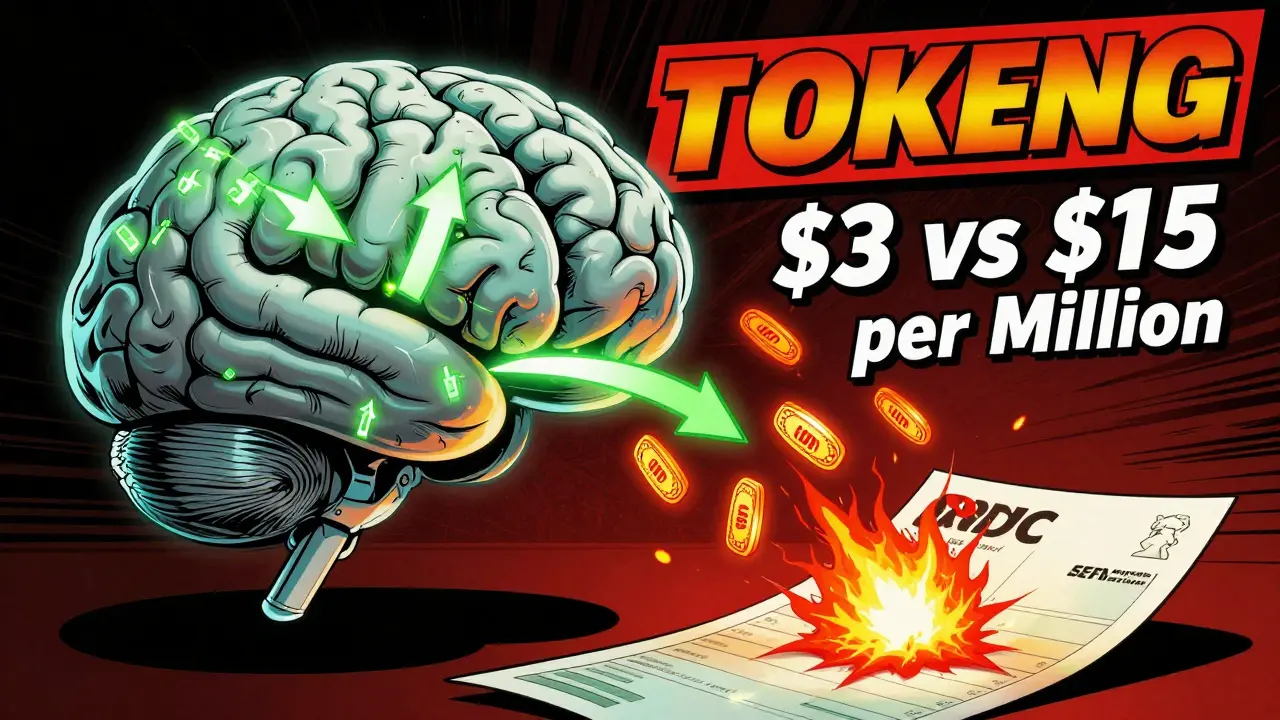
Unit Economics of Large Language Model Features: Pricing by Task Type

LLM pricing isn't one-size-fits-all. Learn how input, output, and thinking tokens drive costs by task type-and how budget models, fine-tuning, and batching can slash your AI expenses in 2026.

21 March 2026 Rotary Position Embeddings (RoPE) in Large Language Models: Benefits and Tradeoffs
Rotary Position Embeddings (RoPE) in Large Language Models: Benefits and Tradeoffs

Rotary Position Embeddings (RoPE) have become the standard in large language models by enabling long-context reasoning without retraining. Learn how it works, where it shines, and the hidden tradeoffs developers face.

20 March 2026 When to Rewrite AI-Generated Modules Instead of Refactoring
When to Rewrite AI-Generated Modules Instead of Refactoring

AI-generated code often works but isn't maintainable. Learn when to rewrite instead of refactor to avoid technical debt, security risks, and wasted time. Data-driven guidelines for modern development teams.

19 March 2026 Vibe Coding Policies: What to Allow, Limit, and Prohibit in AI-Assisted Development
Vibe Coding Policies: What to Allow, Limit, and Prohibit in AI-Assisted Development

Vibe coding with AI can speed up development-but without clear policies, it invites security risks and compliance failures. Learn what to allow, limit, and prohibit to build safe, maintainable AI-assisted software.

18 March 2026 NLP Research Trends Shaping the Next Generation of Large Language Models in 2026
NLP Research Trends Shaping the Next Generation of Large Language Models in 2026

In 2026, large language models have moved beyond size to focus on reasoning, multimodal input, autonomy, and efficiency. Key trends include 200K+ token context windows, chain-of-thought reasoning, MoE architectures, RAG for accuracy, and on-device deployment.

17 March 2026 Chain-of-Thought Prompting for Better Reasoning in Large Language Models
Chain-of-Thought Prompting for Better Reasoning in Large Language Models

Chain-of-thought prompting improves AI reasoning by making large language models explain their steps. It boosts accuracy on math, logic, and complex tasks without retraining. Learn how it works, where it shines, and where it fails.